
 atisusanti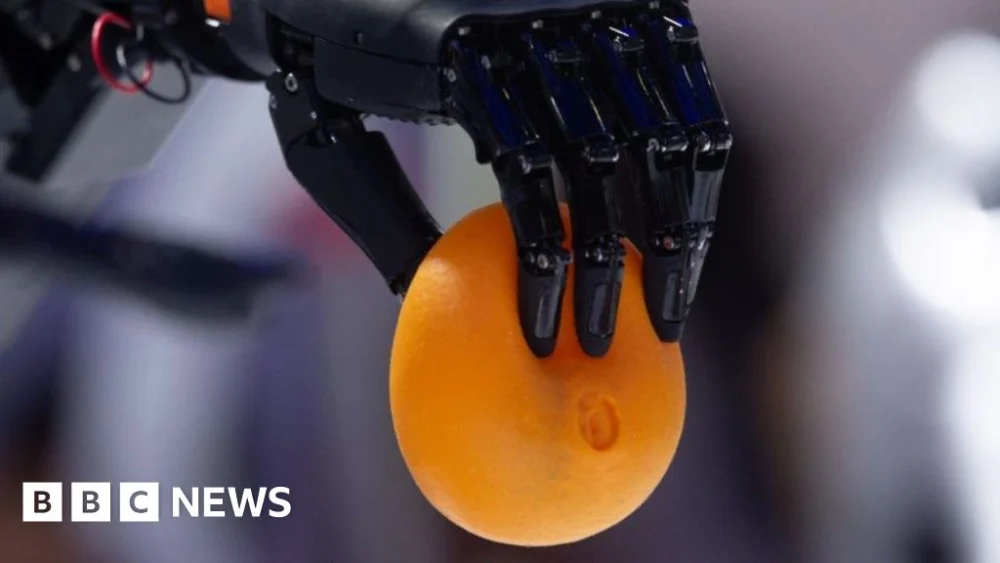
The quest for robotic hands that can truly mimic human dexterity is proving to be one of the most formidable challenges in the field of robotics, with companies and researchers grappling with complex engineering, cost barriers, and the elusive goal of human-level tactile sensing. From the humble beginnings of wood, springs, and rubber bands to sophisticated systems with intricate motor controls and advanced sensors, the evolution of robotic hands highlights a persistent and vital area of innovation.
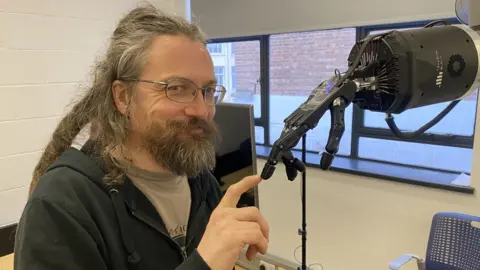
Rich Walker, a director at Shadow Robot, fondly recalls the company’s early days in the late 1990s, when their first robotic hand was constructed from readily available materials. "A lot of it was done with just stuff that we had," Walker explains, looking at Shadow Robot’s latest creations at their north London headquarters. These modern iterations feature cylindrical "forearms" housing miniature electric motors, known as actuators, which manipulate metal tendons to control the fingers with remarkable precision. During a demonstration, sensors were attached to the reporter’s fingers, and after a few simple instructions, the robotic hands smoothly and accurately manipulated blocks and cups, defying initial expectations of clumsy, flailing movements.
Currently, around 200 of these advanced robotic hands are in use, primarily by researchers in academic institutions and technology firms. "This is essentially a development kit for dexterity," Walker elaborates. "You get this hardware, you explore what can be done in terms of dexterity, then that helps you work out what you want to build if you’re going to build a bigger system, or a bigger project, or deploy something." This developmental approach is crucial for robots to effectively navigate the human-designed world, where nearly all tools and devices are calibrated for human hands.
Bren Pierce, founder of the Bristol-based robotics startup Kinisi, echoes this sentiment, stating, "I think the hand is the hardest, most complex part of any humanoid robot." Kinisi’s KR1 robots, ten of which are currently undergoing commercial trials, can be equipped with various grippers, such as robust "gorilla" pincers for heavy lifting or suction devices for delicate items. However, like many in the industry, Pierce aspires to develop a single, versatile hand capable of performing a wide range of tasks. "Everyone has been dreaming for 40 years of one robot hand to rule the world. A lot of people think it could be the humanoid hand," Pierce remarks.
Kinisi has developed a three-fingered hand that Pierce describes as "pretty good," but he acknowledges the significant hurdles ahead. "But now it’s a case of how do you make it robust, how do you make it at scale, and how do you actually make it at a reasonable price?" The prototype hand cost Kinisi approximately £4,000 ($5,400) to produce, a tenfold increase compared to the £400 cost of their simpler pincer attachments.
The immense difficulty in creating a robust, dexterous, and affordable robotic hand was underscored by Elon Musk, CEO of Tesla, at the All-In Summit in Los Angeles last September. He identified hand development as one of the three most challenging aspects of humanoid robotics, alongside creating advanced artificial intelligence and achieving mass production. Consequently, considerable attention will be focused on the upcoming launch of Tesla’s humanoid robot, Optimus, with Musk promising it will possess "the manual dexterity of a human, meaning a very complex hand."
However, Professor Nathan Lepora, a leading expert in Robotics and AI at Bristol University, expressed skepticism regarding such ambitious timelines. "Rubbish," he declared, emphasizing that human-level dexterity is still a considerable distance away. "It won’t happen in two years, but we might be talking about 10 years for this to happen, and that’s still a short period of time." Lepora, who has dedicated his career to robot hand development, also works with tendon-driven designs, similar to Shadow Robot’s approach. He believes that "longer-term I think that tendon-driven hands using more sophisticated mechanisms will result in more affordable and capable hands."
Despite his focus on tendon systems, Lepora has been impressed by the advancements made by Chinese firms that are integrating motors directly into the fingers and hands for movement, eschewing tendons altogether. "In China, the people who make motors are getting together with the people who make hand hardware and basically creating bespoke motors that can fit within joints and fingers. It’s probably going to work as an effective hand," he observes.
Wuji Technology, a Shanghai-based company, exemplifies this innovative approach. Their latest hand features four independently controlled joints per finger, enabling intricate movements. Yunzhe Pan, a co-founder of Wuji, asserts the hand’s durability and promises further improvements in future generations. Currently priced at $12,000 (£8,800) per hand, Pan indicated that affordability will be a key focus for future iterations.
A significant feature of the Wuji hand is its incorporation of piezoelectric sensors. These sensors convert pressure into an electrical charge, providing the robot with a rudimentary sense of touch. The development of durable tactile sensing capabilities is considered a major breakthrough for humanoid robots. However, Bren Pierce points out that this area also requires substantial advancement. "When you go around research labs, or you talk to start-ups, they have really good sensors, and then you ask them how long they work. They say ‘six months’. That’s great for R&D… but in industry, I want this robot to work for 10 years," he states.
Despite these ongoing challenges, there are grounds for optimism. Lepora notes that tactile sensing has historically been a technology perpetually "10 years away." However, he believes the substantial multi-billion dollar investments pouring into humanoid robotics are driving tangible progress. "Things are changing," he concludes, suggesting that the combined efforts of researchers and industry are steadily bringing the dream of highly dexterous and capable robotic hands closer to reality.


 George Anjay
 Nakalama John
 Ramos Leo
 Roy Suryo
 Nana Banana