
 George Anjay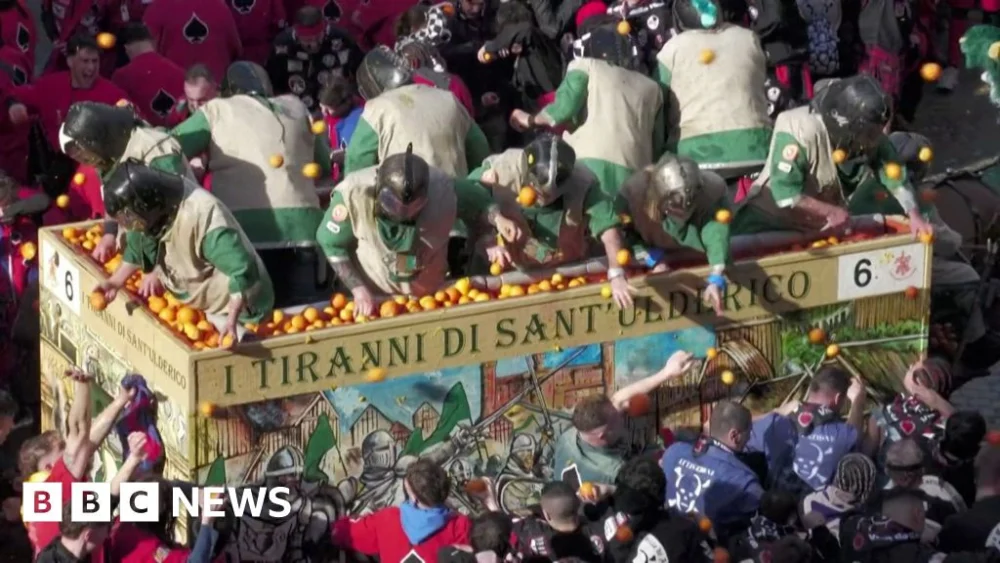
The air in Ivrea, a picturesque medieval town nestled in the foothills of the Italian Alps near Turin, crackles with an energy unlike any other as it erupts into its legendary Battle of the Oranges. This centuries-old tradition, a cornerstone of Ivrea’s vibrant Carnival, transforms the cobblestone streets into a riotous arena where thousands of citizens, armed with citrus, engage in a cathartic and historically resonant conflict. Far from a mere fruit-flinging free-for-all, the Battle of the Oranges is a deeply symbolic reenactment, a living testament to a pivotal moment in Ivrea’s storied past, a legend of liberation that continues to echo through the town’s ancient stones.
The genesis of this extraordinary spectacle lies in the captivating legend of Violetta, a courageous miller’s daughter who, in the 12th century, became the unlikely catalyst for Ivrea’s freedom. The tale recounts a period of brutal oppression under the tyrannical rule of Ranieri di Biandrate, a feudal lord who, through a cruel decree, imposed a devastating famine upon the town. His avarice and cruelty choked the lifeblood out of Ivrea, leaving its inhabitants on the brink of despair. It was then, amidst this suffocating darkness, that Violetta, a symbol of resilience and defiance, emerged. The legend claims that Violetta, driven by an unyielding spirit and a fierce love for her people, rallied the townsfolk. Her pivotal act of rebellion, a defiant strike against the tyrant, is said to have ignited the spark that led to the town’s liberation. The Battle of the Oranges, in its most fundamental interpretation, serves as a vibrant and visceral commemoration of this uprising, a historical echo of the people’s triumph over tyranny.
The modern-day manifestation of this ancient struggle is a meticulously orchestrated, yet ferociously energetic, affair. The town is divided into nine distinct districts, each represented by a team of "aranceri," or orange throwers, on foot. These brave souls, adorned in period-appropriate costumes, embody the spirit of the rebellious townsfolk who fought for their freedom. They are the common people, the artisans, the farmers, the very heart of Ivrea, armed with the humble, yet potent, weapon of the orange. Their objective is to symbolically "defeat" the feudal armies, represented by the orange throwers positioned on elaborately decorated, horse-drawn carriages. These carriages, a majestic sight in themselves, carry the "assault teams," who hurl oranges with practiced precision, aiming to strike the aranceri on foot. The dynamic of the battle is thus established: the foot soldiers represent the relentless spirit of the uprising, while the carriage teams embody the oppressive forces they sought to overthrow.
The sheer scale of the fruit involved is astonishing. In the days leading up to and during the three-day Carnival, an estimated 500,000 kilograms of oranges are consumed, a testament to the intensity and scale of the battle. These are not just any oranges; they are specifically sourced, often from Sicily and Southern Italy, chosen for their size and resilience, capable of withstanding the rigorous aerial bombardment. The throwing itself is an art form, a blend of skill, strategy, and sheer exuberance. Participants aim for accuracy, but there’s also an element of raw, unadulterated fun that permeates the atmosphere. The air is thick with the scent of citrus, the thud of impact, and the roar of the crowd. Spectators line the streets, many donning protective gear, a testament to the ferocity of the engagement, while others immerse themselves in the spectacle, their faces alight with excitement.
The historical significance of the battle extends beyond the symbolic representation of Violetta’s revolt. It speaks to a broader theme of popular sovereignty and the enduring power of collective action. The nine teams, each with their distinct heraldry and historical lineage, represent the organized resistance that was crucial for Ivrea’s liberation. Their unity and determination, mirrored in the modern-day aranceri, are celebrated as the very essence of what allowed the town to break free from its oppressors. The carriages, with their imposing presence and powerful throws, serve as a constant reminder of the formidable forces that the people had to overcome. The battle, therefore, is not just about throwing oranges; it’s about remembering who you are, where you come from, and the sacrifices that were made to ensure the town’s continued existence and freedom.
Beyond the immediate spectacle, the Battle of the Oranges is deeply intertwined with the broader traditions of Ivrea’s Carnival. The festivities commence weeks earlier, with a series of events that build anticipation and engage the community. These include parades, musical performances, and the iconic "Granfesta" (Great Party). The "Generala," a symbolic figure representing the town’s mayor and commander of the people, plays a crucial role, leading the celebrations and presiding over the historic moments. The entire period is steeped in a sense of communal joy and shared identity, culminating in the dramatic climax of the orange battle.
The participants in the battle are more than just enthusiastic revelers; they are custodians of a living history. The aranceri dedicate themselves to their teams throughout the year, practicing their throws, maintaining their costumes, and fostering a deep sense of camaraderie. The tradition is passed down through generations, with families eagerly participating, ensuring that the legend of Violetta and the spirit of rebellion remain alive and well. This intergenerational transmission of heritage is a vital aspect of the Battle of the Oranges, solidifying its place as a cornerstone of Ivrea’s cultural identity.
The impact of the Battle of the Oranges extends far beyond the immediate geographical confines of Ivrea. It has become a renowned tourist attraction, drawing visitors from across Italy and around the globe who come to witness this unique and exhilarating event. The spectacle, the history, and the sheer unadulterated fun create an unforgettable experience. However, the town also faces the logistical and environmental challenges associated with such a large-scale fruit-based event. The meticulous planning required to source, transport, and distribute the vast quantities of oranges, as well as the subsequent cleanup, are testament to the dedication and effort involved in maintaining this tradition.
In essence, the Battle of the Oranges is a potent fusion of historical narrative, communal celebration, and athletic endeavor. It is a testament to the enduring power of stories, the resilience of the human spirit, and the vibrant tapestry of Italian cultural heritage. As the last orange is hurled and the cheers of the crowd begin to subside, the echoes of Violetta’s defiance and the town’s hard-won freedom linger in the air, a powerful reminder that history, when celebrated with such passion, can truly come alive. The flying oranges of Ivrea are not just fruit; they are potent symbols of liberation, unity, and the enduring spirit of a town that remembers its past with every exhilarating, citrus-filled moment.




 Roy Suryo

 Nakalama John
 atisusanti
 Ramos Leo
