atisusanti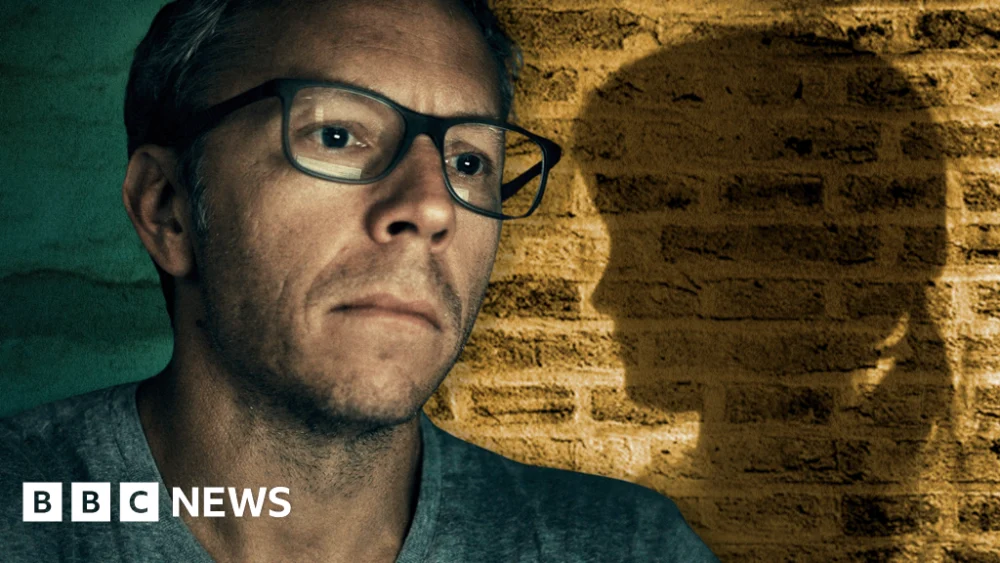
Specialist online investigator Greg Squire had reached a critical dead end in his desperate efforts to rescue a young girl, whom his team had code-named "Lucy," from the clutches of her abuser. Disturbing images of the 12-year-old were being disseminated on the dark web, an encrypted and clandestine corner of the internet accessible only through specialized software designed to render its users virtually untraceable. Even with this advanced level of subterfuge, the abuser was clearly conscious of "covering their tracks," meticulously cropping or altering any potentially identifying features within the circulated images, leaving Squire and his team with no viable leads to Lucy’s identity or whereabouts. The breakthrough, as it turned out, was hidden in plain sight, a seemingly insignificant detail within the background of Lucy’s bedroom.
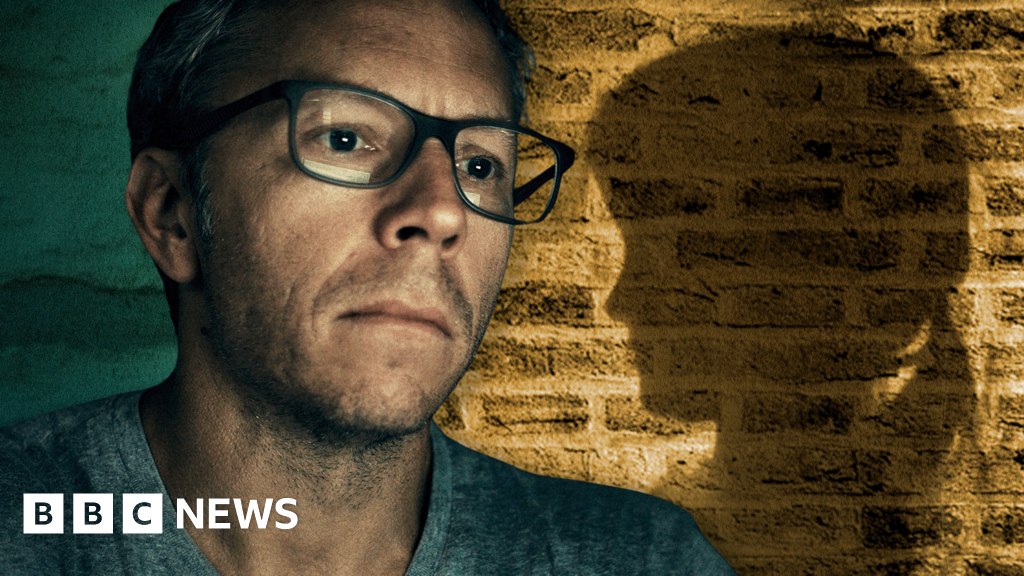
Greg Squire is a dedicated operative with the U.S. Department of Homeland Security Investigations, a member of an elite unit tasked with identifying children who appear in sexual abuse material. For five years, a BBC World Service team has been documenting the work of Squire and similar investigative units across Portugal, Brazil, and Russia. Their efforts have led to the successful resolution of harrowing cases, including the recovery of a kidnapped and presumed-dead seven-year-old in Russia and the apprehension of a Brazilian man who operated five of the largest child abuse forums on the dark web. This unprecedented access reveals a stark reality: these complex investigations are often cracked not by cutting-edge technology, but by the meticulous observation and identification of minute, revealing details within images and online communications.
Lucy’s case, which Squire tackled early in his career, became a driving force behind his enduring commitment to this challenging field. The situation was particularly agonizing for him, as Lucy was around the same age as his own daughter. The constant stream of new, horrifying images depicting her abuse, seemingly captured within her own bedroom, fueled his determination. Squire and his colleagues were able to deduce, from the specific types of light sockets and electrical outlets visible in the images, that Lucy was located somewhere in North America. However, this broad geographical indicator offered little in the way of actionable intelligence.
In their initial attempts to gain traction, Squire’s team reached out to Facebook, which at the time was the dominant social media platform. They requested assistance in scouring uploaded family photographs to see if Lucy appeared in any of them. Despite possessing advanced facial recognition technology, Facebook stated that it "did not have the tools" to fulfill their request, citing privacy concerns and the need for a formal legal process. This response forced Squire and his team to intensify their own meticulous analysis of every visible element within Lucy’s bedroom. They scrutinized the bedspread, her clothing, and even her stuffed toys, searching for any item that might offer a clue to her identity or location.
A minor but significant breakthrough emerged when the team identified a sofa featured in some of the images. Through further investigation, they discovered that this particular sofa model was sold only on a regional basis, not nationally, significantly narrowing down its potential customer base. However, even this reduced pool still comprised approximately 40,000 individuals. "At that point in the investigation, we’re [still] looking at 29 states here in the US," Squire explained. "I mean, you’re talking about tens of thousands of addresses, and that’s a very, very daunting task."
The team continued their relentless search for more clues. It was during this phase that they realized an element as mundane as the exposed brick wall in Lucy’s bedroom could provide a crucial lead. "So, I started just Googling bricks," Squire recounted, "and it wasn’t too many searches [before] I found the Brick Industry Association." He then connected with a woman at the association who proved instrumental. "She was like, ‘how can the brick industry help?’" she inquired, offering to share the photograph with brick experts across the country. The response was, as Squire described, almost immediate.
Among those who responded was John Harp, a seasoned veteran in the brick sales industry, with a career dating back to 1981. Harp’s expertise allowed him to meticulously analyze the image. "I noticed that the brick was a very pink-cast brick, and it had a little bit of a charcoal overlay on it," he observed. "It was a modular eight-inch brick and it was square-edged. When I saw that, I knew exactly what the brick was," he stated with certainty. He identified it as a "Flaming Alamo" brick. Harp explained that his company had manufactured this specific brick from the late 1960s through the mid-1980s, and he had personally sold millions of bricks from that particular plant.
Initially, Squire was filled with optimism, anticipating access to a digitized customer list from Harp’s company that could pinpoint the brick’s distribution. However, Harp delivered a sobering reality: the sales records from that era were merely a "pile of notes" spanning decades. Yet, Harp provided another critical piece of information that would prove pivotal: "He goes: ‘Bricks are heavy.’ And he said: ‘So heavy bricks don’t go very far.’" This seemingly simple statement fundamentally altered the direction of the investigation.
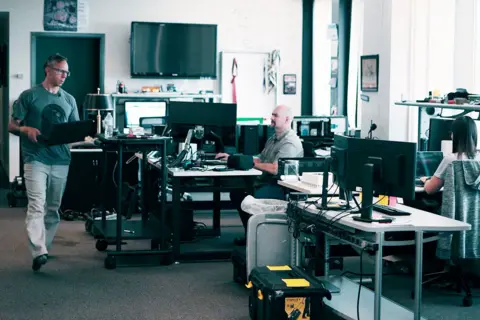
The team returned to the list of sofa customers and began to filter it, focusing solely on those clients who resided within a 100-mile radius of Harp’s brick factory in the southwestern United States. This narrowed down the potential customer base to a more manageable list of 40 to 50 individuals. From this significantly smaller group, it became considerably easier to locate and meticulously review their social media profiles. It was during this phase that they finally found a photograph of Lucy on Facebook, accompanied by an adult who appeared to be close to the girl, potentially a relative.
Using this information, they determined the woman’s address and then leveraged that to identify all other addresses connected to her, as well as all individuals she had ever lived with. This further refined Lucy’s possible location, but the investigators were hesitant to conduct direct door-to-door inquiries. Making an incorrect assumption about the address could risk tipping off the suspect, alerting him that he was under scrutiny by the authorities.
Instead, Squire and his colleagues began sending images of these potential properties to John Harp, the brick expert. The "Flaming Alamo" bricks were not visible on the exteriors of these houses, as the properties were clad in other materials. However, the team asked Harp to assess the style and exterior of these homes to determine if they were likely to have been constructed during the period when "Flaming Alamo" bricks were being sold. "We would basically take a screenshot of that house or residence and shoot it over to John and say ‘would this house have these bricks inside?’" Squire explained.

Finally, a breakthrough emerged. They identified an address that Harp believed was highly likely to feature an interior "Flaming Alamo" brick wall and was also present on the original sofa customer list. "So we narrowed it down to [this] one address… and started the process of confirming who was living there through state records, driver’s license… information on schools," Squire stated. The team discovered that the household containing Lucy also included her mother’s boyfriend, a convicted sex offender. Within hours, local Homeland Security agents apprehended the offender, who had been systematically raping Lucy for six years. He was subsequently sentenced to over 70 years in prison.
John Harp, the brick expert, expressed profound relief upon hearing that Lucy was safe, especially given his own personal experiences as a long-term foster parent. "We’ve had over 150 different children in our home. We’ve adopted three. So, doing that over those years, we have a lot of children in our home that were [previously] abused," he shared. He acknowledged the immense burden carried by investigators like Squire: "What [Squire’s team] do day in and day out, and what they see, is a magnification of hundreds of times of what I’ve seen or had to deal with."
The immense pressure of his work began to take a significant toll on Squire’s mental health a few years prior. He candidly admitted that outside of work, "alcohol was a bigger part of my life than it should have been." He explained the dual nature of his dedication: "At that point my kids were a bit older… and, you know, that almost enables you to push harder. Like… ‘I bet if I get up at three this morning, I can surprise [a perpetrator] online.’ But meanwhile, personally… ‘Who’s Greg? I don’t even know what he likes to do.’ All of your friends… during the day, you know, they’re criminals… All they do is talk about the most horrific things all day long." This intense focus on the dark underbelly of society, coupled with the emotional strain, ultimately led to the breakdown of his marriage and he began to experience suicidal thoughts.
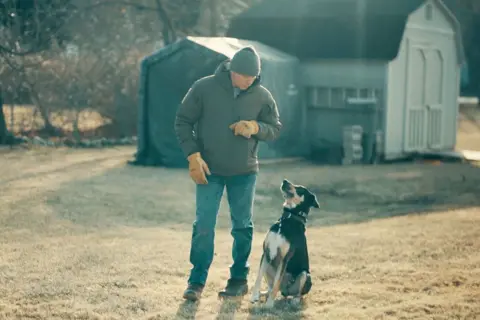
It was his colleague, Pete Manning, who recognized the severity of Squire’s struggle and encouraged him to seek professional help. "It’s hard when the thing that brings you so much energy and drive is also the thing that’s slowly destroying you," Manning reflected. Squire views exposing his vulnerabilities as the crucial first step towards recovery and enabling him to continue his vital work, a job he is immensely proud of. "I feel honoured to be part of the team that can make a difference instead of watching it on TV or hearing about it… I’d rather be right in there in the fight trying to stop it," he stated.
Last summer, Greg met Lucy, now an adult in her twenties, for the first time. She shared that her newfound ability to discuss her traumatic experiences was a testament to the support system she now has around her. "I have more stability. I’m able to have the energy to talk to people [about the abuse], which I could not have done… even, like, a couple years ago," she explained. She recounted that at the moment Homeland Security intervened, she had been "praying actively for it to end." She described the intervention as a "prayer answered," a sentiment Squire deeply understood. He expressed to her his wish that he could have communicated to her that help was imminent. "You wish there was some telepathy and you could reach out and be like, ‘listen, we’re coming’," he said.
When questioned by the BBC about why Facebook could not utilize its facial recognition technology to aid in the search for Lucy, the company responded: "To protect user privacy, it’s important that we follow the appropriate legal process, but we work to support law enforcement as much as we can."
If you’ve been a victim of child sexual abuse, a victim of crime, or have feelings of despair, and are in the UK, you’ll find details of help and support at bbc.co.uk/actionline.




 Nana Banana
 Ramos Leo
 Roy Suryo