
 atisusanti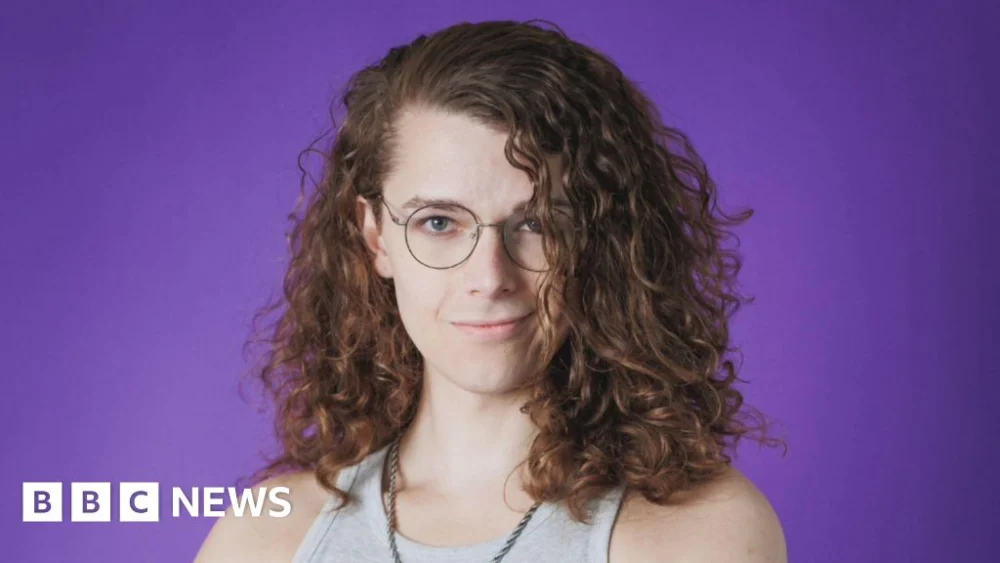
Alastair, more widely recognized by his online alias Eret, stands as a prominent figure within the Twitch streaming community, boasting an impressive following of over one million users. This US-based British content creator, who opts to keep his surname private, manages a Discord server that hosts approximately 60,000 members. For many, including Eret, Discord serves as a vital digital sanctuary. "A lot of people use the online world as a place where they can talk about things that they might not feel safe talking about with people in the real world, where being queer might result in being prosecuted," he explained to the BBC. This sentiment underscores the deep trust and reliance many users place on the platform for safe and open communication.
However, this sense of security is now being challenged by Discord’s new age verification measures, which have sparked significant concern among influential streamers like Eret and Toby, known online as Tubbo. Eret’s primary apprehension stems from a lack of faith in Discord’s data handling practices. "I really do not want to send Discord my ID given their track record – I do not trust them," he stated unequivocally. This distrust is rooted in a data breach that occurred last October, where Discord acknowledged that the official ID photos of approximately 70,000 users may have been exposed due to a security lapse at a third-party vendor responsible for age verification.
Despite Discord’s subsequent attempts to allay user fears by clarifying that its age estimation technology would exempt the "vast majority" of users from manual checks, a palpable unease persists. The platform’s recent pilot of age-checking software, provided by Persona in the UK, has drawn particular scrutiny. Concerns have been amplified by the fact that Persona is backed by an investment firm co-founded by Peter Thiel, the head of the controversial US data firm Palantir. This association has led some to question the privacy implications of the data being collected and the security of its storage.
The repercussions of these developments are already being felt within the online community. Searches for "Discord alternatives" have surged globally, and various social media platforms have seen users expressing their dissatisfaction, with some even claiming to have cancelled their Discord subscriptions. This exodus signals a significant erosion of trust and highlights the delicate balance platforms must strike between implementing safety features and maintaining user confidence.
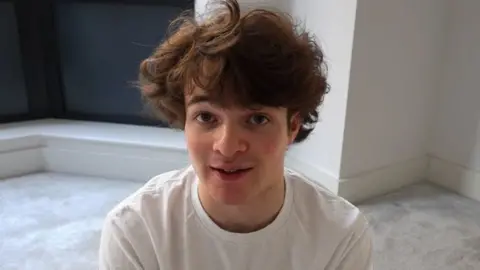
Toby, or Tubbo, a celebrated British content creator renowned for his Minecraft streams and commanding audiences of over 5.2 million on Twitch and 2.7 million on YouTube, shares Eret’s reservations. Even with Discord’s assurances, Tubbo remains skeptical about the security of his personal data should he be compelled to verify his age. "I just think it’s kind of a dangerous precedent for social media companies to request 3D scans of your face or official documents without there being any kind of knowledge of how that information is being protected or stored," he articulated to the BBC. Tubbo’s concern points to a broader anxiety about the increasing demand for biometric and sensitive personal information by digital platforms and the lack of transparency surrounding its protection.
Echoing these sentiments is Katie, an American streamer who goes by the online handle Pikachulita. She expressed uncertainty about the guarantees Discord can offer users regarding the protection of their information from hackers and "other malicious entities." Katie voiced a chilling possibility: "We live in a time when it’s not too far-fetched to believe that companies like Discord could share this data with state or federal agencies – in the US or elsewhere – for their benefit." This fear highlights a deep-seated concern about potential governmental access to private user data collected by tech companies, particularly in an era of heightened surveillance and data privacy debates.
The new age verification protocol, slated for a global rollout from March, will categorize all Discord users, both new and existing, into a "teen-by-default" experience. This means individuals will be unable to access sensitive content or age-restricted servers and channels unless they are verified as adults. These restrictions have already been in place for users in Australia and the UK since 2025. Discord’s initial approach will involve attempting to identify adult users based on their existing platform activity. However, for those whose age cannot be definitively determined through this method, the requirement to undergo a facial scan or submit identification will become mandatory to access the full platform.
Discord maintains that facial scans are processed directly on the user’s device and do not leave it, and that submitted identification documents are solely used for age verification purposes before being promptly deleted. Savannah Badalich, Discord’s head of product policy, has stated that these new default restrictions are designed to build upon existing safety measures, offering "teens strong protections while allowing verified adults flexibility."
Despite these assurances, experts and community members alike are voicing their concerns. Dr. Peter Macaulay, a senior lecturer in psychology at the University of Derby, commented on the backlash, observing that it reflects the inherent challenge tech firms face in implementing child safety tools without jeopardizing the trust of their user base. "Moving forward, age verification measures that verify age without retaining unnecessary personal identity information, and are transparent about data handling, are key," he advised the BBC.
Professor Carissa Vélez of the Institute for Ethics in AI at Oxford University further emphasized the difficulty of trusting companies to uphold their promises regarding data usage. "Companies have broken their word before, facing little to no consequences," she noted, underscoring a historical pattern of broken promises and a lack of accountability in the tech industry.
The streamers who spoke to the BBC, while acknowledging the necessity of protecting children on platforms like Discord, are adamant that these safety measures should not come at the expense of their users’ sensitive personal information. "I just want to be able to make my content," Alastair reiterated. "I want to interact with my community, and know that whatever platform they’re talking on, they’re going to be safe." Their plea highlights the desire for a solution that balances robust child safety with fundamental privacy rights, ensuring that the digital spaces users rely on remain both secure and trustworthy.
Additional reporting by Emma Calder.



 George Anjay
 Nakalama John
 Ramos Leo
 Roy Suryo
 Nana Banana