George Anjay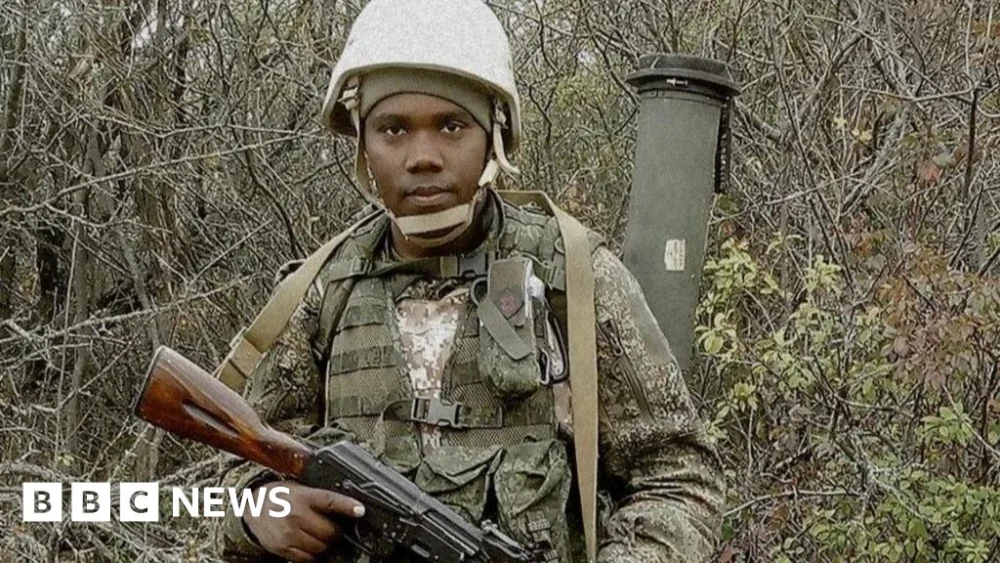
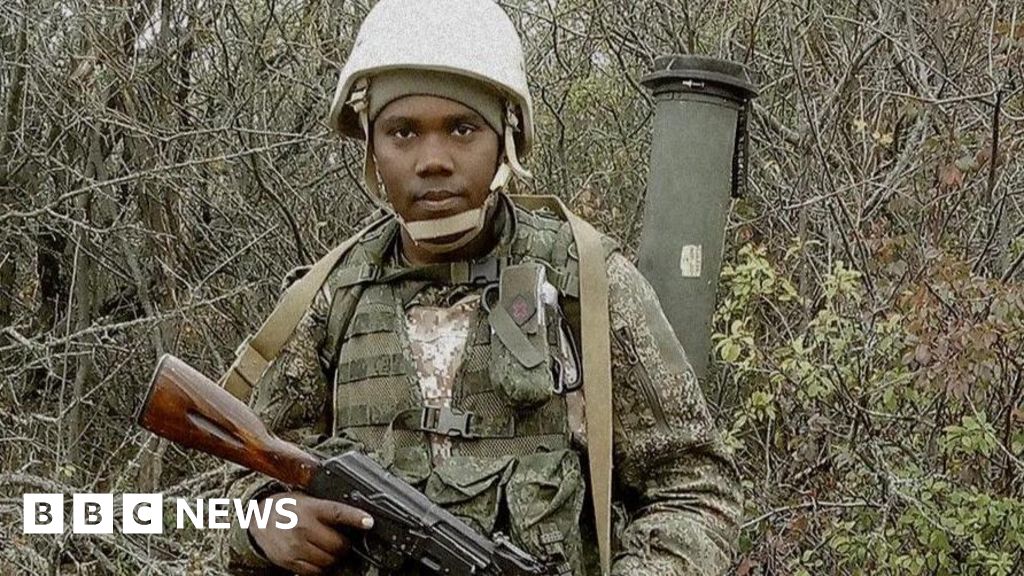
A staggering 1,000 Kenyans have reportedly been recruited to fight for Russia, according to a highly sensitive Kenyan intelligence report. This alarming revelation, submitted to parliament by Kenya’s National Intelligence Service (NIS) on Wednesday, paints a grim picture of a sophisticated network involving rogue officials and human trafficking syndicates facilitating the clandestine enlistment of Kenyan citizens into the brutal Russia-Ukraine conflict. As of February this year, the NIS report indicates that a significant contingent of 89 Kenyans were already on the front lines, facing the dire realities of war. The human cost of this operation is already evident, with at least one Kenyan confirmed dead and several others returning home with life-altering injuries and profound psychological trauma.
The intelligence dossier, presented to Members of Parliament by the Majority Leader Kimani Ichung’wah, exposed what he described as a "deeply disturbing" nexus of corrupt state officials allegedly collaborating with human trafficking rings. These syndicates are accused of systematically recruiting and transporting Kenyans, often under false pretences, to participate in the ongoing conflict. The spy agency’s findings detail a disturbing pattern of collusion, implicating recruitment agencies, rogue Kenyan airport staff, immigration officers, personnel from the Directorate of Criminal Investigations (DCI), anti-narcotics units, and even officials from the National Employment Authority. These individuals are allegedly involved in the illicit facilitation of the recruits’ passage out of Kenya.
Adding another layer of concern, Ichung’wah alleged that these clandestine operations extend to diplomatic circles, with reports of collusion involving staff at the Russian embassy in Nairobi and the Kenyan embassy in Moscow. This alleged complicity would have been instrumental in securing Russian visas for the unsuspecting recruits. In a swift response, the Russian embassy in Nairobi on Thursday vehemently dismissed the allegations as "dangerous and misleading." A statement from the embassy asserted that its staff has never been involved in any "rogue schemes" or engaged in illegal enlistment activities. "At no point in time throughout the ongoing crisis in Ukraine [has] the Embassy ever issued visas to Kenyan citizens who sought to travel to Russia with the stated purpose of participating in the Special Military Operation (SMO) in Ukraine," the statement read, further clarifying that the embassy has not encouraged any Kenyan citizen to do so.
While the embassy maintains it does not actively recruit foreigners, it noted that Russian law permits foreign nationals legally present in Russia to voluntarily enlist in its armed forces. During the parliamentary session, Ichung’wah underscored the critical need for accountability within Kenya’s diplomatic missions. He stated that Kenya’s ambassador to Moscow "must be able to identify the officers within the embassy that may have colluded with these criminals. Our embassy must be beyond reproach. It must be the place where Kenyans can seek refuge, not exploitation." He forcefully added, "Government offices are not to be used for criminal activities." The BBC has reached out to the Kenyan foreign ministry for an official comment on these serious accusations.
The NIS report provides a sobering breakdown of the recruits’ status beyond those actively engaged in combat. In addition to the 89 on the front lines, another 35 Kenyans have been deployed to military camps within Russia. A further 39 are reported injured, and a distressing 28 are currently unaccounted for, their fate unknown. The investigation reveals that the primary targets of these recruitment operations are predominantly ex-military personnel, former police officers, and unemployed Kenyans aged between 20 and 50. These individuals, often facing economic hardship, are enticed by promises of substantial financial rewards. Recruits are reportedly offered a monthly salary of up to 350,000 Kenyan shillings (approximately $2,400 or £2,000), supplemented by lucrative bonuses ranging from KSh 900,000 to KSh 1.2 million (approximately $6,200-$8,300 or £5,200-£7,000).
However, the reality upon arrival in Russia is starkly different from the alluring promises. Many recruits discover they are immediately deployed to front-line combat roles with minimal, if any, adequate military training. "They are told you are going to work as a guard… only to get there and you are taken to military camps," Ichung’wah revealed, highlighting the deceptive nature of the recruitment. "You’ve only trained for three weeks. They are basically just giving you a gun to go and die," he added with palpable concern. For those undergoing training in explosives and weaponry, the report indicates an alarmingly short training period of just nine days before deployment to the front lines.
Initially, the traffickers facilitated the departure of recruits through Nairobi’s Jomo Kenyatta International Airport (JKIA), utilizing tourist visas and transiting through countries like Turkey and the United Arab Emirates (UAE). However, as surveillance at JKIA intensified, these criminal networks reportedly adapted their methods, rerouting victims through South Africa, Uganda, and other neighbouring states to circumvent enhanced security measures. The NIS report has identified several of the rogue agencies allegedly orchestrating these recruitment drives, as well as the medical facilities used for pre-departure health screenings. Authorities confirm that several suspects, including the alleged mastermind behind this operation, are currently under active investigation, with further arrests anticipated. The investigation is ongoing, with officials actively seeking additional suspects and striving to locate and rescue Kenyans still trapped in the conflict zone.
In a broader effort to combat human trafficking and illicit overseas employment schemes, Kenya’s Foreign Minister Musalia Mudavadi stated in a recent BBC interview that Nairobi had taken decisive action by shutting down over 600 recruitment agencies suspected of defrauding Kenyans with false promises of lucrative jobs abroad. Mudavadi affirmed that Kenya is actively collaborating with Russia to curb these illegal recruitment practices. Discussions are reportedly underway concerning visa policies and bilateral labour agreements that explicitly exclude military conscription. The Foreign Minister is scheduled to visit Moscow next month to further address these critical issues. To date, 27 Kenyans who had been fighting in Russia have been successfully repatriated. Upon their return, authorities have provided them with essential psychological care to address their trauma and facilitate their "de-radicalisation" process.
The Kenyan government has faced mounting pressure to act following the recent discovery of more bodies of nationals from various African countries who had been recruited to fight for the Russian armed forces. Last November, Ukraine’s Foreign Minister reported that over 1,400 individuals from 36 African countries had been enlisted to fight for Russia. It is worth noting that Ukraine has also faced criticism in the past for its own efforts to recruit foreign nationals, including Africans, to fight on its behalf. Ukrainian officials have consistently warned that any individual fighting for Russia will be treated as an enemy combatant, and that the only viable path to safety is to surrender and be treated as a prisoner of war.



 Roy Suryo
 Nakalama John
 atisusanti
 Ramos Leo