
 atisusanti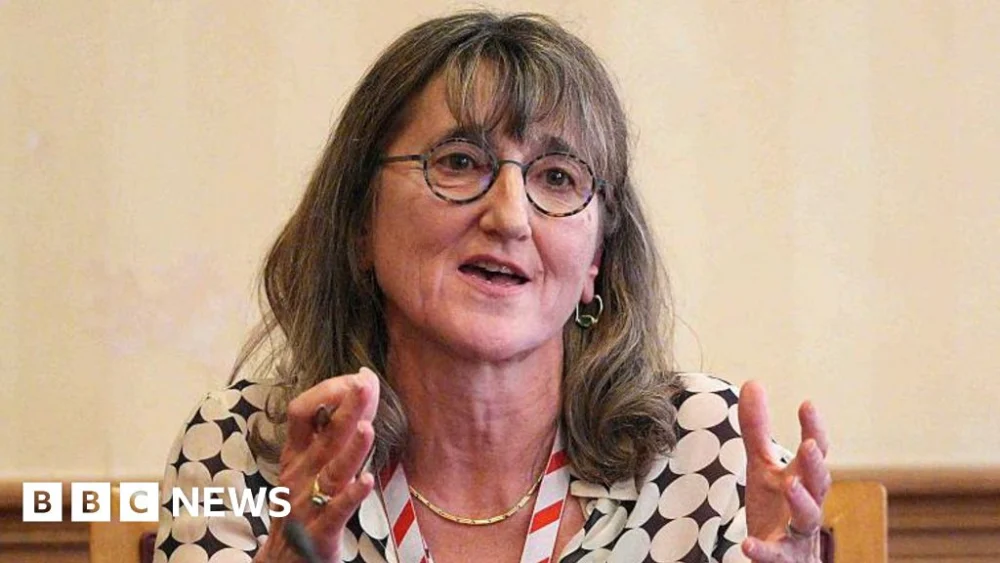
A prominent online safety campaigner has levelled serious accusations against Prime Minister Keir Starmer, labelling his approach to regulating social media and artificial intelligence as "appeasing" big tech firms and being "late to the party." Baroness Kidron, a crossbench peer and a leading voice in Parliament on digital safety, expressed her frustration in an interview with the BBC, urging Sir Keir to "get on with it" rather than initiating further consultations. She also took aim at the Prime Minister’s frequent references to his personal experience as a father of two teenagers navigating social media, arguing that this parental perspective does not equate to expertise and that his own children are likely "sheltered" compared to the wider population. The government, however, has staunchly rejected these criticisms, with a spokesperson asserting that it has already implemented "some of the strongest online safety protections in the world."
Sir Keir Starmer has recently unveiled a consultation aimed at banning under-16s from social media platforms and has pledged to tackle the addictive design features embedded within these applications. Despite these pronouncements, Baroness Kidron contends that many of the proposed measures have already been advanced in the House of Lords and could be adopted by the government as early as the following week, suggesting a lack of urgency and a potential for delay. The crossbench peer, who transitioned from an acclaimed film director to a member of the House of Lords, has established herself as a formidable advocate for online safety legislation.
In a candid discussion on BBC Radio 4’s "Political Thinking with Nick Robinson," Baroness Kidron highlighted a pattern of successive governments shying away from implementing crucial proposals. She specifically cited measures that could have prevented the use of AI chatbots for generating sexually explicit imagery, a capability that poses significant risks to children. When pressed for her message to Sir Keir, she invoked the historical words of Winston Churchill, stating, "the appeaser thinks that they feed the crocodile in the hope they’ll be eaten last." This powerful analogy underscores her belief that appeasing powerful tech companies will ultimately not resolve the fundamental issues and could lead to greater harm.
Baroness Kidron did not mince words in her criticism, accusing the Prime Minister of "rubbing up against the tech bros" and suggesting that the UK is "giving away our kids to Silicon Valley to please Trump." This inflammatory statement implies a perceived alignment with the interests of major technology corporations, potentially at the expense of child welfare and national sovereignty. Her remarks come in the wake of an article penned by Sir Keir himself, in which he articulated his desire to "crack down on the addictive elements of social media" that he believes "keep our children hooked on their screens for hours." He defiantly added, "And if that means a fight with the big social media companies, then bring it on."
A government spokesperson responded to Baroness Kidron’s criticisms by reiterating the government’s commitment to child safety. "We are clear: when it comes to children’s safety, nothing is off the table, and no company is too big to face the consequences," the spokesperson stated. The government pointed to recent actions, including calling out "abhorrent non-consensual intimate images being shared on Grok," which led to the removal of certain functionalities. Furthermore, ministers are reportedly legislating to criminalise "nudification" tools and extend the scope of the Online Safety Act to encompass additional chatbots. This defensive posture suggests a belief that the government is already taking robust action.
Sir Keir Starmer has frequently spoken about his personal experiences as a parent of two teenagers, often framing this as direct insight into the perils of social media for young people. However, Baroness Kidron found this approach to be "careless," arguing that viewing the issue "through the lens of his own children" is a limited and potentially misleading perspective. "I don’t think that anybody is an expert because they have their own children," she stated emphatically. She further elaborated that the Prime Minister’s children are "very particularly sheltered," benefiting from a privileged upbringing with educated, working parents who have access to extensive resources and information. This, she contends, stands in stark contrast to the experiences of children from less privileged backgrounds, who may be more vulnerable to the harms of the online world.
The debate around banning social media for under-16s is multifaceted, with opponents raising concerns that such a ban could simply drive young people to other, potentially less regulated corners of the internet, thereby failing to enhance overall safety. Baroness Kidron acknowledged that a complete ban is "not a silver bullet" but stressed the importance of a nuanced approach to digital participation. "My own personal view is that we are in a digital world, we have an AI future, and we can’t uninvite the next generation," she explained. "We have to let them participate in that. But I do think that access to children should be conditional, and it should be conditional on respecting their rights, on keeping them safe, on actually not addicting them and not extracting economic value out of their behaviour." This perspective advocates for a regulated and rights-respecting digital environment for young people, rather than outright prohibition.
The interview with Baroness Kidron on BBC Radio 4’s "Political Thinking with Nick Robinson" is scheduled to be broadcast at 17:30 GMT on Saturday and will also be available on BBC Sounds. Her forthright criticisms of the government’s approach to online safety and her calls for more decisive action highlight the ongoing and complex challenges in balancing technological advancement with the protection of vulnerable individuals, particularly children. The ongoing dialogue between campaigners, policymakers, and the tech industry remains critical in shaping the future of the digital landscape and ensuring it serves the best interests of society.




 George Anjay
 Nakalama John
 Ramos Leo
 Roy Suryo
 Nana Banana