
 atisusanti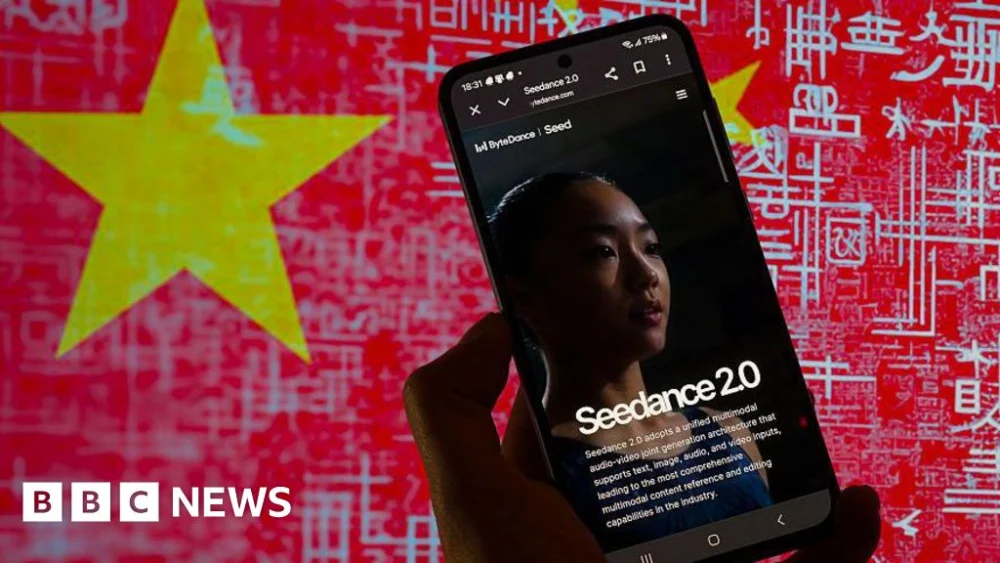
Osmond Chia, Business reporter and Suranjana Tewari, Asia Business Correspondent
A groundbreaking artificial intelligence (AI) video generation model, Seedance 2.0, developed by the Chinese tech giant ByteDance – the parent company of TikTok – has sent ripples of concern through Hollywood and the global creative industries. This sophisticated AI can conjure cinema-quality video, complete with immersive sound effects and dialogue, from mere text prompts. The emergence of Seedance 2.0 has amplified existing anxieties surrounding AI’s impact on intellectual property rights and the future of creative professions, sparking urgent discussions and legal challenges from major studios.
The initial launch of Seedance in June 2025 was relatively understated. However, the subsequent release of Seedance 2.0 eight months later has ignited a firestorm of attention. Industry experts are expressing unprecedented levels of apprehension. "For the first time, I’m not thinking that this looks good for AI. Instead, I’m thinking that this looks straight out of a real production pipeline," remarked Jan-Willem Blom, a representative from the creative studio Videostate. While Western AI video models have demonstrated impressive capabilities in translating user instructions into visually striking images, Seedance appears to have achieved a remarkable synthesis of various creative elements into a cohesive and professional output.
Similar to other generative AI tools such as Midjourney and OpenAI’s Sora, Seedance can produce videos from concise text descriptions. In some instances, a single prompt has been sufficient to generate high-quality video content. AI ethics researcher Margaret Mitchell highlighted the system’s particular impressiveness, noting its ability to seamlessly integrate text, visuals, and audio within a single, unified platform.
The impact and perceived realism of Seedance are being gauged through a rather unconventional benchmark: its ability to generate a clip of actor Will Smith consuming spaghetti. Reports indicate that Seedance can not only create a remarkably lifelike depiction of the star enjoying a plate of pasta but has also spawned viral videos featuring Smith engaged in fantastical scenarios, such as battling a spaghetti monster. The fidelity and cinematic quality of these generated clips are so convincing that they are often mistaken for genuine, big-budget film productions. Many industry professionals and filmmakers view Seedance as heralding a new epoch in the evolution of video-generation technology. David Kwok, who leads the Singapore-based animation studio Tiny Island Productions, observes that the complex action sequences produced by Seedance are more realistic than those generated by its competitors. He elaborated, "It almost feels like having a cinematographer or director of photography specializing in action films assisting you."
Despite its remarkable capabilities, Seedance has encountered significant legal hurdles, primarily revolving around copyright infringement – a pervasive and escalating challenge in the era of advanced AI. Experts are sounding the alarm that AI companies are increasingly prioritizing technological advancement over the rights and fair compensation of human creators, utilizing vast datasets without appropriate licensing or remuneration. Major Hollywood conglomerates have vociferously objected to Seedance’s alleged use of copyrighted characters, including iconic figures like Spider-Man and Darth Vader. In response, entertainment giants such as Disney and Paramount have issued formal cease-and-desist letters, demanding an immediate cessation of their intellectual property’s use. Furthermore, Japan is reportedly investigating ByteDance for potential copyright violations, following the viral dissemination of AI-generated videos featuring popular anime characters.
This issue is not isolated to Seedance. In 2023, The New York Times initiated legal action against OpenAI and Microsoft, alleging the unauthorized use of its articles for training AI models. Similarly, Reddit filed a lawsuit against Perplexity last year, accusing the AI firm of illegally scraping user posts. Disney has also expressed comparable concerns regarding Google’s data practices. Margaret Mitchell emphasizes the paramount importance of clear content labeling to prevent deception and foster public trust in AI, arguing that this is far more critical than the creation of "cooler-looking" videos. She advocates for the development of systems that effectively manage licensing and payment structures, and provide transparent recourse for individuals to challenge instances of misuse.
Illustrating the evolving landscape of AI integration and intellectual property, Disney reportedly entered into a substantial $1 billion (£730 million) agreement with OpenAI’s Sora, granting them permission to utilize characters from their lucrative franchises, including Star Wars, Pixar, and Marvel. Shaanan Cohney, a computing researcher at the University of Melbourne, suggests that Seedance’s developers were likely cognizant of the potential copyright ramifications associated with the use of Western intellectual property and proceeded regardless, perhaps viewing it as a calculated risk. "There’s plenty of leeway to bend the rules strategically, to flout the rules for a while and get marketing clout," he commented.

Notwithstanding the legal and ethical quandaries, for smaller production companies, the utility of Seedance is too significant to dismiss. David Kwok of Tiny Island Productions believes that AI of Seedance’s caliber will empower companies like his to produce films that would otherwise be prohibitively expensive. He cites the burgeoning market for short-form videos and micro-dramas in Asia, which typically operate on modest budgets, often around $140,000 for up to 80 episodes, each under two minutes in length. Historically, these productions have been constrained to genres like romance or family drama due to the high cost of visual effects. However, Kwok posits that AI can now "elevate low-budget productions into more ambitious genres such as sci-fi, period drama and, now, action."
The prominence of Seedance once again thrusts Chinese technology into the global spotlight. Cohney observes, "It signals that Chinese models are at the very least matching at the frontier of what is available. If ByteDance can produce this seemingly out of nowhere, what other kinds of models do Chinese companies have in store?" This sentiment echoes the impact of DeepSeek, another Chinese AI model that generated considerable attention last year with its cost-effective large language model, which rapidly surpassed ChatGPT as the most downloaded free application on Apple’s US App Store.
In the past year, Beijing has strategically placed AI and robotics at the core of its economic agenda, channeling substantial investment into advanced computer chip production, automation, and generative AI. This concerted effort aims to secure a technological advantage over the United States. While Seedance 2.0 garnered significant media attention, other major Chinese technology firms quietly rolled out their own new generative AI tools in the lead-up to the Lunar New Year holiday. China analyst Bill Bishop, in his newsletter, noted that the Spring Festival is increasingly becoming an "AI holiday," with companies strategically timing their product launches to coincide with a period when millions of people are at home and actively experimenting with new applications. Bishop predicts that 2026 could represent a pivotal moment for widespread AI adoption in China, extending beyond chatbots to encompass AI agents managing transactions, AI-integrated coding tools becoming routine in daily work, and AI becoming an indispensable component for video creators.


 George Anjay
 Nakalama John
 Ramos Leo
 Roy Suryo
 Nana Banana