
 George Anjay
Nasa’s highly anticipated Artemis II mission, poised to send astronauts back to the lunar surface for the first time in over half a century, has experienced a significant delay. The planned March 6th launch has been officially removed from consideration by the space agency due to unforeseen technical issues that emerged during crucial last-minute checks. This setback, while disappointing for those eagerly awaiting humanity’s next giant leap, underscores the meticulous and often challenging nature of deep-space exploration.
Just days before the originally slated liftoff, Nasa administrators had expressed a strong sense of optimism, suggesting that the Artemis II mission was on track and likely to receive the green light within weeks. However, this hopeful outlook was abruptly altered when NASA administrator Jared Isaacman announced on Saturday that further maintenance would be imperative, pushing back the launch window. The Artemis II mission is designed to carry four astronauts on a 10-day journey, circumnavigating the Moon and venturing to its far side – a trajectory that would mark the furthest distance humanity has ever traveled into space.
Administrator Isaacman acknowledged the understandable disappointment among the public and the mission teams, particularly given the recent success of a critical "wet rehearsal" conducted just the previous Thursday. This comprehensive test, which simulates all countdown procedures up to the ignition of the main engines, had appeared to go flawlessly, leading to the initial confidence in the March 6th launch date. The "wet rehearsal" involved fueling the massive Space Launch System (SLS) rocket with approximately 730,000 gallons of propellant over several hours, a process that the team described as feeling like "a big step in us earning our right to fly."
However, during the overnight hours following the successful rehearsal, engineers identified a critical anomaly: an interruption in the flow of helium, a vital component for launch operations. According to Nasa’s stringent protocols, any disruption to the helium supply is classified as a serious technical issue. Helium plays an indispensable role in space launches, primarily serving to pressurize the rocket’s fuel tanks and to cool essential rocket systems. Maintaining the correct pressure and temperature within these complex components is paramount for safe and successful liftoff.
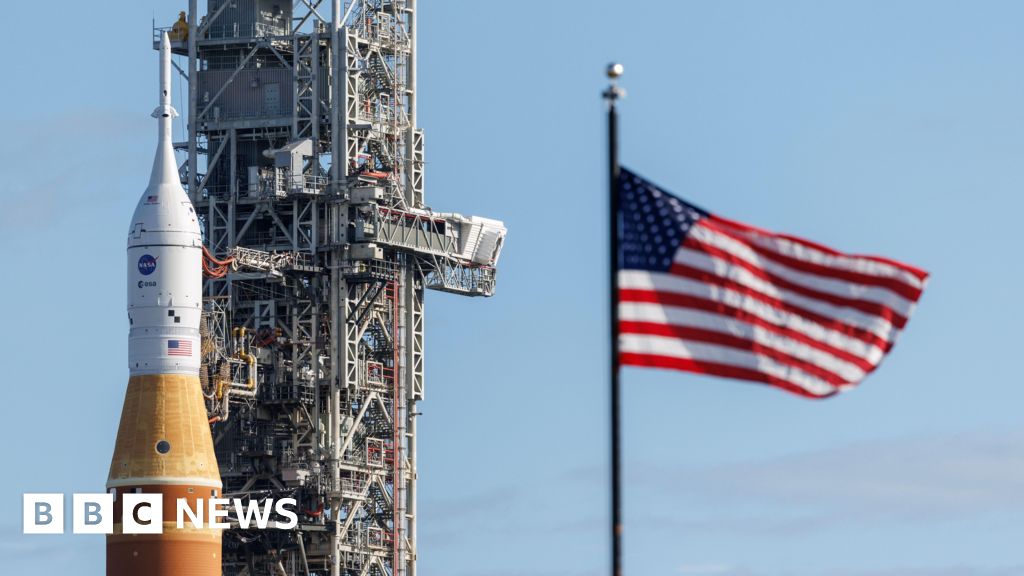
This latest challenge represents the second attempt at a full "wet rehearsal" for the Artemis II mission at the Kennedy Space Center in Florida. The previous attempt was halted due to earlier issues related to filters and seals, which had resulted in hydrogen leaks. These earlier problems were meticulously addressed and rectified by the engineering teams, leading to the more successful second rehearsal. The progression of these tests, despite the hurdles, highlights the iterative and problem-solving nature inherent in developing cutting-edge space technology.
Administrator Isaacman emphasized that setbacks are an intrinsic part of space missions, drawing a historical parallel to Neil Armstrong’s pioneering 1966 Gemini 8 mission. That mission, a precursor to Armstrong’s iconic moon landing three years later, was cut short due to a critical technical malfunction, demonstrating that even the most celebrated space endeavors have faced their share of challenges. This perspective helps to contextualize the current delay not as a failure, but as a necessary step in ensuring the safety and success of the Artemis II crew.
The four astronauts slated for this groundbreaking voyage are United States astronauts Reid Wiseman, Victor Glover, and Christina Koch, alongside Canadian astronaut Jeremy Hansen. Their mission aboard the colossal SLS rocket will provide them with an unprecedented opportunity to conduct detailed observations of the lunar surface for several hours at close range. This mission is not merely a symbolic return to the Moon; it is a crucial stepping stone towards the more ambitious Artemis III mission.
The ultimate goal of the Artemis program is to land astronauts on the Moon’s surface for the first time since the Apollo 17 mission in 1972. The Artemis II mission’s success is considered foundational to achieving this objective. Nasa has set a target date of 2028 for the Artemis III lunar landing, though the agency readily acknowledges that this timeline may prove to be an ambitious one, subject to the continued progress and resolution of technical challenges. The Artemis program represents a significant investment in humanity’s future in space, aiming to establish a sustainable presence on the Moon and to pave the way for future missions to Mars. The current delay, while a temporary pause, is a testament to Nasa’s unwavering commitment to safety and mission success, ensuring that when Artemis II finally embarks on its journey, it does so with the utmost confidence in its systems and its crew. The intricate dance of engineering, testing, and problem-solving continues, as Nasa and its international partners work diligently to reignite humanity’s lunar ambitions. The journey to the Moon is a marathon, not a sprint, and the current pause in the Artemis II mission is a carefully considered step in ensuring its eventual triumphant arrival.




 Roy Suryo

 Nakalama John
 atisusanti
 Ramos Leo
