
 George Anjay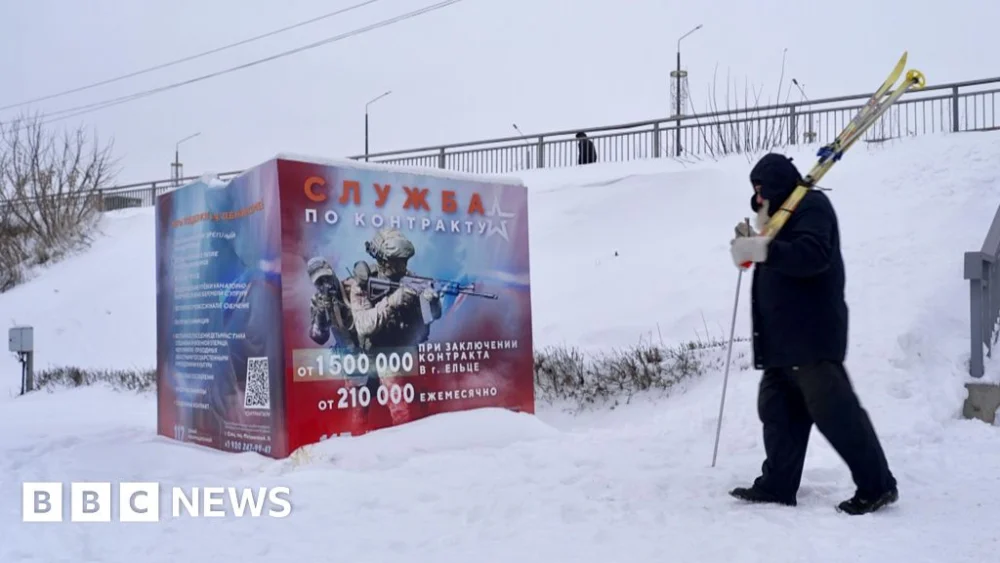
The town of Yelets, nestled 350 kilometers south of Moscow, presents a picturesque winter scene, reminiscent of a Russian fairy tale with its golden church domes and frozen river dotted with ice fishermen. However, this idyllic facade belies the tangible impacts of Russia’s prolonged military engagement in Ukraine. Army recruitment billboards, offering a substantial one-off payment of approximately £15,000 to new enlistees, are a stark visual reminder of the ongoing conflict. These posters, often featuring a soldier brandishing a Kalashnikov, bear slogans like "We’re there where we need to be," a testament to the Kremlin’s persistent narrative.
Launched on February 24, 2022, the full-scale invasion was initially envisioned by the Russian leadership as a swift operation to reintegrate Ukraine into Moscow’s sphere of influence and dismantle the post-Cold War European security order. The reality, however, has been a protracted and grinding conflict, now exceeding the duration of Nazi Germany’s war against the Soviet Union. The consequences of this prolonged war are evident even in seemingly remote towns like Yelets.
A colossal mural adorning a nine-story apartment block in Yelets serves as a somber memorial, depicting the faces of five local men who perished fighting in Ukraine, with the inscription "Glory to the heroes of Russia!" emblazoned above. While the Russian authorities refrain from releasing official casualty figures for what they term the "special military operation," the sheer volume of such memorials across towns and villages visited over the past two years underscores the immense human cost. Separate sections dedicated to recent war dead are now commonplace in local cemeteries.
Irina, a ticket collector at the Yelets bus station, shared her grief and confusion. "My friend’s husband was killed fighting there. The son of my cousin, too. And grandson," she recounted, her voice heavy with sorrow. "Lots of people have been killed. I feel sorry for these lads." Despite her personal losses and the economic hardship she faces, with "utility bills suffocating us" and "prices crushing us," Irina contributes to aid packages for soldiers on the front lines. She expresses a profound disconnect from the war’s current objectives, contrasting it with the clarity of purpose during the Great Patriotic War. "In the Great Patriotic war, we knew what we were fighting for," she mused. "I’m not sure what we’re fighting for now."
The proximity of Yelets to the Ukrainian border, a mere 250 kilometers away, has translated into tangible threats. Ukrainian drones have targeted this region of Russia, prompting the installation of emergency shelters in public spaces like bus stops and parks. These concrete structures, standing as stark monuments to the "special military operation," represent a new reality for Russia, a reality that did not exist before the full-scale invasion. Apartment blocks also feature designated shelters in their basements. "The sirens go off almost every night," Irina explained, "But I don’t leave my building. We just go into the corridor where there are no windows."
The war’s influence permeates everyday life in Yelets in unexpected ways. Even a local pancake cafe prominently displays the Latin letters ‘V’ and ‘Z’ in its name, symbols of the "special military operation," accompanied by the boastful slogan, "Grab a pancake, then the whole world." This audacious statement echoes President Vladimir Putin’s pronouncements, such as his declaration in St. Petersburg last year: "Where the foot of a Russian soldier steps, that’s ours." Previously, in Moscow, an electronic billboard proclaimed Putin’s assertion: "Russia’s borders do not end anywhere."
The financial strain of prolonged warfare is palpable. Russia’s growing budget deficit and stagnating economy have led to a VAT increase from 20% to 22%, with the Finance Ministry earmarking the additional revenue for "defence and security." State television, exemplified by anchor Dmitry Kiselev, urges public understanding and acceptance of the war’s financial implications, framing it as a conflict "forced on us by the West" that "we have to win."
Small businesses are particularly vulnerable. In a Yelets bakery, the aroma of fresh pastries masks the economic pressures. Owner Anastasiya Bykova explained the necessity of price increases due to escalating utility bills, rent, and taxes, further compounded by the VAT hike affecting ingredient costs. "Imagine we all have to shut down: our bakery, and the restaurant opposite," she lamented. "We try to make our town look good. But if we close, what’s left? Just a dark grey patch."
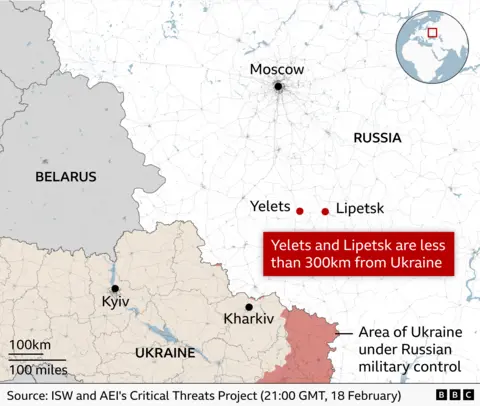
An hour’s drive away, in the regional capital of Lipetsk, similar reminders of the war persist: more military posters and more shelters. However, for pensioner Ivan Pavlovich, the immediate concern within his apartment building’s stairwell is a leaking pipe, ice on the wall, and a non-functional lift. He expresses his frustration with the lack of repairs and, like many, voices grievances about high prices and escalating utility bills.
When asked if the war is to blame, Ivan stated, "If I was younger, I’d go and fight there. The special military operation is excellent. It’s just that prices keep rising. Pensions go up, but then prices go up even more. So, what do I gain? Nothing." He conceded, "Of course, we’d live more comfortably if there was no special operation. They spend a lot of money on it. People also give what they can. We need to help. I’m not complaining."
A pervasive sentiment among Russians is that life is becoming increasingly difficult, with a prevailing sense of powerlessness to alter this trajectory. As the war enters its fifth year, optimism is scarce. Many are simply enduring, hunkering down and waiting for better times.



 Roy Suryo

 Nakalama John
 atisusanti
 Ramos Leo
