atisusanti
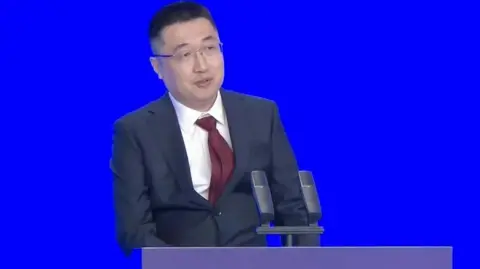
The reclusive founder of fast-fashion behemoth Shein, Xu Yangtian, known more commonly as Sky Xu, has broken his characteristic silence with a significant public address, strongly reaffirming his company’s deep-seated connections to China and its unwavering commitment to bolstering the nation’s vital clothing industry. This rare public engagement, delivered at a high-profile business conference in Guangdong, the very heartland of China’s garment manufacturing prowess, signals a strategic recalibration of Shein’s public narrative, emphasizing its origins and ongoing investment in the region. Xu announced a substantial injection of 10 billion yuan (approximately £1.08 billion or $1.45 billion) into Guangdong, a sum earmarked for the development of a cutting-edge, high-tech fashion hub.
During his address, Xu effusively praised the Chinese government and articulated how the "nourishment" received from Guangdong has been "inseparable" from Shein’s meteoric rise to global prominence. This sentiment stands in stark contrast to Shein’s recent years of strategic internationalization, which saw the company relocate its headquarters to Singapore and explore potential stock market listings in major Western financial centers like New York and London. The juxtaposition of these moves with Xu’s current emphasis on his Chinese roots suggests a deliberate effort to strengthen ties with Beijing amidst growing geopolitical complexities and increased scrutiny of Chinese technology and retail giants.
The High-quality Development Conference in Guangzhou, a city synonymous with global manufacturing and the epicenter of China’s textile production, provided the stage for Xu’s remarks. It is within the sprawling network of Guangzhou’s factories that Shein has forged its operational backbone, enabling its renowned ability to rapidly translate fleeting online trends into ultra-low-cost apparel, delivered to consumers worldwide within weeks. Xu lauded the "world-class business environment" cultivated by local officials and the region’s "complete industrial ecosystem," factors he credited for enabling the thriving success of companies like Shein. He specifically highlighted the local support as instrumental in Shein’s growth, which has, in turn, become a significant employer in the area, generating over 600,000 jobs.
Describing Guangdong as "fertile ground" for development, Xu pledged to integrate more digital services into the region and to further enhance the efficiency of its factories. This commitment to modernization and technological integration within the supply chain underscores Shein’s ambition to not only maintain its competitive edge but also to contribute to the upgrading of China’s manufacturing capabilities. The company had initially unveiled plans for the 10 billion yuan investment in 2023, with the funds specifically allocated to optimizing and strengthening the province’s intricate supply chains. Xu emphatically stated that Shein will "remain firmly rooted in Guangdong and build a world-class fashion industry cluster," a declaration that resonates deeply within the local economic landscape.
Xu’s live-streamed speech, delivered to an audience comprising provincial officials and fellow business leaders, has garnered widespread attention across Chinese social media platforms and has been extensively covered by local news outlets. This public appearance is particularly noteworthy given Xu’s long-standing preference for operating behind the scenes. Even as Shein achieved unprecedented global expansion, reaching customers in over 160 countries, its founder remained largely an enigma, rarely engaging with the media or the public. His current visibility suggests a strategic decision to project a more accessible and domestically oriented image, perhaps in response to the evolving political and economic climate.
Shein has, in recent years, navigated a complex web of challenges, exacerbated by rising tensions between Beijing and Western nations, which have intensified scrutiny of Chinese enterprises. The company has faced persistent criticism regarding the environmental toll of the fast-fashion model and allegations concerning labor conditions within its extensive supply chain. In response to such concerns, Shein has stated its commitment to rectifying issues, including the removal of problematic product listings, the banning of offending sellers, and the implementation of stricter platform regulations. The controversy surrounding the sale of dolls that allegedly bore a resemblance to a character from the animated series "Anne of Green Gables," which sparked backlash in Europe, particularly in Paris, where it coincided with protests against Shein’s first physical retail presence in France, serves as a recent example of the reputational hurdles the company continues to face.
The company’s rapid ascent is a testament to its innovative approach to e-commerce and supply chain management. By leveraging China’s vast manufacturing base and its own sophisticated data analytics, Shein has perfected a model of ultra-fast fashion, producing garments at remarkably low prices and with unprecedented speed. This business model, while highly successful, has also drawn criticism for its potential contribution to overconsumption and its environmental impact. Xu’s renewed emphasis on his Chinese roots and investment in Guangdong can be interpreted as an attempt to solidify his company’s position within China’s economic framework, potentially seeking to secure greater support and mitigate some of the international pressures it faces.
The investment in a high-tech fashion hub in Guangdong is not merely about financial outlay; it represents a strategic pivot towards innovation and sustainability within Shein’s operational paradigm. By focusing on advanced manufacturing techniques, digital integration, and potentially more environmentally conscious production methods, Shein aims to address some of the criticisms leveled against the fast-fashion industry. This initiative also positions Guangdong as a leader in the future of fashion manufacturing, attracting further investment and talent to the region. Xu’s words suggest a vision of a more sophisticated and technologically advanced Chinese fashion industry, with Shein at its vanguard.
The decision to make such a public statement, coupled with the significant investment announcement, underscores the growing importance of Shein’s relationship with its home country. As global markets become increasingly interconnected yet politically fractured, companies like Shein must carefully balance their international reach with their domestic allegiances. Xu’s rare public appearance serves as a powerful signal that Shein, despite its global ambitions, remains deeply invested in its Chinese heritage and committed to contributing to the nation’s economic and industrial development. This strategic positioning is likely to be crucial for Shein as it continues to navigate the complex landscape of global trade and international relations. The company’s future trajectory will undoubtedly be shaped by its ability to maintain this delicate equilibrium between its Chinese origins and its worldwide aspirations.



 Nana Banana
 Ramos Leo
 Roy Suryo