
 George Anjay
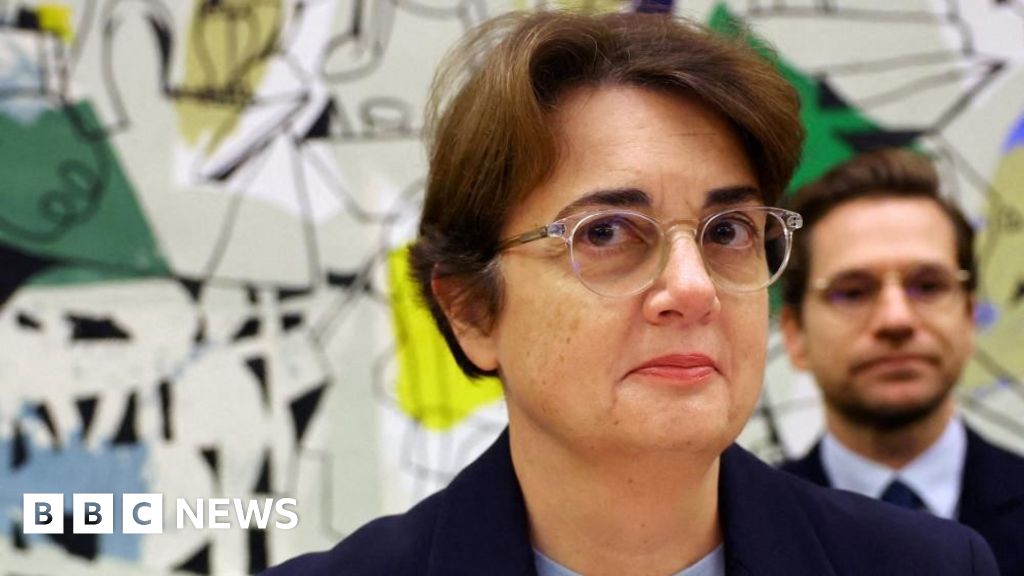
Laurence des Cars, the esteemed director of the Louvre Museum in Paris, has tendered her resignation, a decision that comes several months after a daring and high-profile heist that saw several of France’s crown jewels vanish from the world-renowned institution. The resignation, submitted to President Emmanuel Macron, was met with praise from his office, which stated that the museum was in need of "calm and a strong new impetus to successfully carry out major projects involving security, and modernisation." In a swift move, Christophe Leribault, currently the director of the Palace of Versailles, has been appointed as the new head of the Louvre, tasked with navigating the museum through this period of transition and addressing the critical security concerns that have come to the fore.
The audacious theft, which occurred in October, involved a meticulously planned operation where thieves utilized a stolen vehicle-mounted mechanical lift to gain access to the museum from a balcony situated near the River Seine. This sophisticated breach of security left many stunned, particularly given the Louvre’s status as one of the world’s most visited and heavily guarded museums. While four main suspects have since been apprehended by authorities, the fate of eight prized pieces of jewelry, collectively valued at an estimated €88 million (£76 million; $104 million), remains unknown. Among the missing treasures are a magnificent diamond and an emerald necklace, historically significant gifts from Emperor Napoleon to his wife, embodying a rich tapestry of French history and imperial grandeur.
The newly appointed director, Christophe Leribault, faces an immediate and pressing mandate to bolster the museum’s defenses. France’s culture ministry, in a statement announcing his appointment, emphasized that Leribault’s primary objectives will be to "strengthen the safety and security of the building, the collections, and people, to restore a climate of trust, and to carry forward, together with all the teams, the necessary transformations for the museum." This directive clearly underscores the urgent need to rebuild confidence and implement robust security protocols to safeguard the invaluable cultural heritage housed within the Louvre’s hallowed halls.
Adding to the drama surrounding the heist, the Louvre recently released the first image of a 19th-century diamond-studded crown belonging to Empress Eugénie. The crown, a testament to Napoleonic-era opulence, was discovered damaged after being dropped by the fleeing thieves. Despite the evident damage, the museum expressed optimism that the artifact, described as "nearly intact," could be fully restored by skilled conservators. The image, circulating widely, provided a stark visual reminder of the near-miss and the audacity of the perpetrators.
In the immediate aftermath of the raid, Laurence des Cars herself admitted to significant security vulnerabilities. She conceded that the CCTV surveillance systems around the Louvre’s perimeter were "weak and ageing." A particularly damning revelation was that the sole camera monitoring the exterior wall where the thieves breached the museum was positioned to face away from the critical balcony leading to the Gallery of Apollo, the very location housing the stolen jewels. This admission highlighted a systemic lapse in surveillance that proved instrumental in the thieves’ successful infiltration.
The Louvre, a colossal institution that attracts over 8.7 million visitors annually, has grappled with the challenge of keeping its security infrastructure up-to-date with the escalating sophistication of criminal elements. Des Cars had previously pointed to the significant budget constraints that large cultural institutions often face, making it difficult to implement the necessary upgrades and investments in state-of-the-art security technology. Her tenure, which began in 2021, saw her advocate for doubling the number of CCTV cameras, a measure that, in hindsight, was tragically insufficient or too late in its implementation.
Adding further weight to the gravity of the situation, a parliamentary inquiry into the security failures that enabled the heist is currently underway. The findings of this inquiry are slated for release in May, but a preliminary report, published just last week, has already painted a concerning picture, speaking of "systemic failures" that facilitated the audacious break-in. These findings are expected to shed more light on the precise breakdowns in protocol and oversight that allowed such a significant theft to occur, potentially leading to further accountability and reforms.
The stolen jewels represent not only immense monetary value but also profound historical and cultural significance. The theft has sent ripples through the international art and heritage community, raising critical questions about the security measures in place at the world’s most treasured museums. The resignation of Laurence des Cars, while perhaps a predictable outcome given the circumstances, marks the end of an era for the Louvre under her leadership. Her successor, Christophe Leribault, inherits a formidable challenge: to not only recover the lost treasures but also to fundamentally re-evaluate and fortify the security architecture of one of the world’s most iconic cultural landmarks, ensuring that such a brazen violation of security never recurs. The focus now shifts to rebuilding trust, implementing advanced technological solutions, and fostering a culture of vigilance that matches the immense value of the art and history the Louvre preserves. The investigation into the theft and the parliamentary inquiry are ongoing, with the hope that they will provide comprehensive answers and pave the way for a more secure future for the museum.



 Roy Suryo

 Nakalama John
 atisusanti
 Ramos Leo
