George Anjay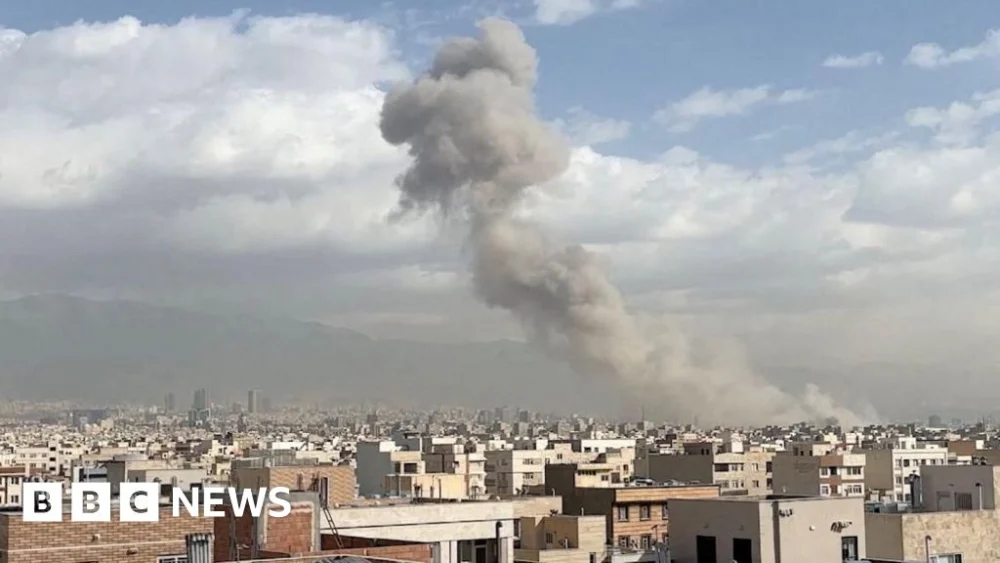
The decision by the United States and Israel to plunge into a new war with Iran creates a highly dangerous moment with unpredictable consequences. Israel used the word "pre-emptive" to justify its attack, a term that implies a response to an immediate and undeniable threat. However, the evidence suggests this was not a response to an imminent danger, but rather a calculated "war of choice." Both Israel and the United States appear to have assessed that the Islamic regime in Iran is currently vulnerable. This assessment is based on several factors: the regime’s struggle with a severe economic crisis, the lingering fallout from the brutal crackdown on widespread protests earlier in the year, and damage to its defensive capabilities sustained during last summer’s conflict. Their conclusion, therefore, seems to have been that this presented a strategic window of opportunity that should not be squandered. This action also represents another significant blow to the increasingly fragile system of international law.
In their public statements, both President Donald Trump and Prime Minister Benjamin Netanyahu articulated that Iran poses a danger to their respective nations, with Trump characterizing it as a "global danger." While it is undeniable that the Islamic regime is a bitter adversary to both the US and Israel, the legal justification of self-defense becomes difficult to uphold, given the immense disparity in military power between the US-Israeli bloc and Iran. War, by its very nature, is a political act, and armed conflict, once initiated, is notoriously difficult to control. Leaders embarking on such paths require exceptionally clear and achievable objectives.
For Benjamin Netanyahu, Iran has been perceived as Israel’s most formidable enemy for decades. This military action, from his perspective, offers a chance to inflict maximum damage on the regime in Tehran and severely degrade Iran’s military capabilities. Furthermore, Netanyahu faces a general election later in the year. The historical pattern from Israel’s two-year war with Hamas suggests a belief that his political standing is strengthened when the nation is engaged in conflict.
Donald Trump’s objectives, characteristic of his approach, have been fluid and prone to change. In January, he publicly addressed protesters in Iran, promising that "help was on its way." At that time, a significant portion of the US Navy was engaged in operations in Venezuela, limiting immediate military options. While the US was deploying two carrier strike groups to the region, alongside substantial land-based firepower, Trump frequently emphasized the dangers of Iran’s nuclear ambitions. This was despite his earlier declaration, following last summer’s war, that the Iranian nuclear program had been "obliterated." The Iranian regime has consistently denied any intention of developing nuclear weapons, yet it has enriched uranium to levels that exceed the requirements for civilian nuclear power programs. At the very least, it appears to be pursuing the option of building a nuclear bomb. To date, neither Israel nor the US has presented concrete evidence that such a development is imminent.
In a video message, Trump addressed the Iranian people, proclaiming that "the hour of freedom" was at hand. Prime Minister Netanyahu echoed a similar sentiment, suggesting that the war would provide the Iranian people with an opportunity to overthrow their government. However, the likelihood of such an outcome is far from certain. There is no historical precedent for regime change occurring solely as a result of airstrikes. The overthrow of Saddam Hussein in Iraq in 2003 necessitated a massive US-led invasion force. Similarly, Muammar Gaddafi in Libya was deposed in 2011 by rebel forces who received crucial air support from NATO and several Arab states. In both instances, the aftermath was characterized by state collapse, protracted civil war, and immense loss of life. Libya remains a failed state, and Iraq continues to grapple with the devastating consequences of the invasion and the ensuing bloodshed.
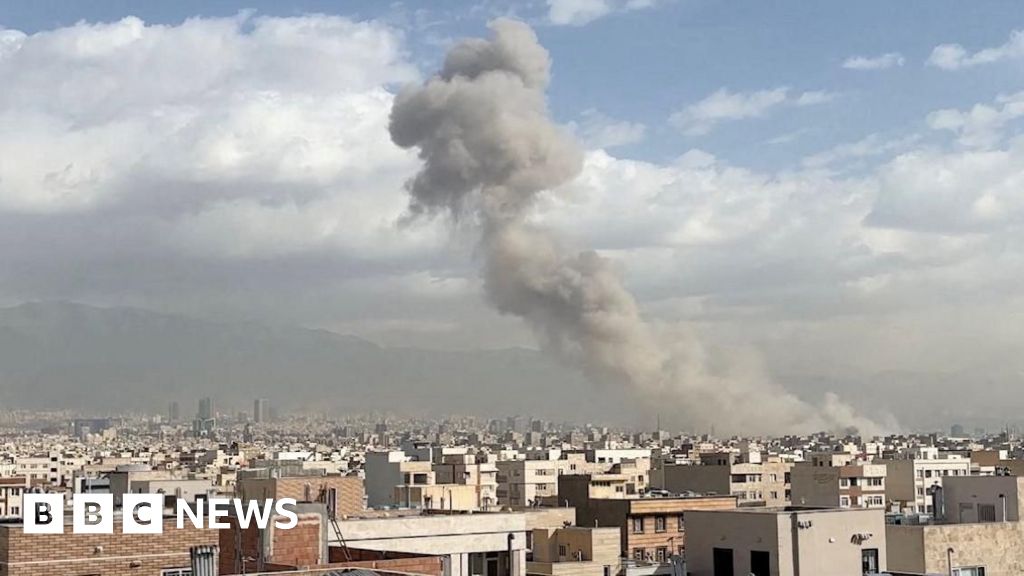
Even if this conflict were to become the first instance of regime change achieved through air power alone, it is highly improbable that the Islamic regime would be replaced by a liberal democracy committed to upholding human rights. There is no credible alternative government in exile poised to assume power. Over nearly half a century, the Iranian regime has cultivated a complex political system sustained by a blend of ideological fervor, pervasive corruption, and, when necessary, the ruthless application of force. The regime in Tehran demonstrated its willingness to use lethal force against protesters in January. Its security forces have proven their readiness to shoot and kill thousands of their own citizens who challenge the system and demand freedom.
It is possible that the US and Israel are attempting to assassinate Iran’s Supreme Leader, Ayatollah Ali Khamenei. Israel has historically employed assassination as a strategic tool, evidenced by the killings of leaders and high-ranking officials from Hamas in Gaza and Hezbollah in Lebanon in recent years. However, the Islamic regime in Iran is a distinct entity. It presides over a state, not merely an armed movement, and its leadership structure is not monolithic. Should the Supreme Leader be killed, he would almost certainly be replaced by another cleric, supported by Iran’s Islamic Revolutionary Guard Corps (IRGC). The IRGC operates alongside the conventional armed forces, with the specific mandate of defending the regime against both domestic and international threats.
President Trump has extended an offer of immunity to IRGC members who lay down their arms, or face certain death. However, the IRGC is unlikely to be swayed by such an offer. Martyrdom is a deeply ingrained motif within the ideology of the Islamic Republic and Shia Islam, a concept that transcends transactional considerations. Trump’s worldview, as articulated in his writings, often emphasizes the transactional nature of politics and life, framing it as "the art of the deal." Yet, effectively engaging with Iran necessitates a profound understanding and incorporation of the powerful influence of ideology and deeply held beliefs, factors that are considerably more challenging to quantify and predict.
As this crisis has escalated since the beginning of the year, and the United States has amassed its naval forces in the region, there have been increasing indications that the leadership in Tehran viewed war as an unavoidable outcome. They engaged in diplomatic talks, aware that similar discussions were ongoing last summer when Israel launched its attack, with the US joining them. The Iranian leadership harbors deep mistrust of both the US and Israel. During his first term, President Trump withdrew the United States from the Joint Comprehensive Plan of Action (JCPOA), the landmark nuclear deal negotiated under the Obama administration that had placed restrictions on Iran’s nuclear program.
There have been indications that Iran might have been willing to accept a revised JCPOA, or a "JCPOA mark two," at the very least to gain time. However, the United States appears to have also demanded stringent limitations on Iran’s missile program and its support for regional allies who oppose Israel and the US. Such demands would be unacceptable to Iran, amounting to a complete capitulation. In the eyes of the Iranian leadership, relinquishing their missile capabilities and abandoning their allies might render them even more vulnerable to regime change than the perceived threat – and now the reality – of direct attack.
The leaders in Tehran will now be engaged in complex calculations regarding how to navigate and survive this conflict, and how to manage its inevitable consequences. Their neighbors, particularly Saudi Arabia, are likely to be deeply dismayed by the immense uncertainty and the potential repercussions of these events. Given the Middle East’s historical capacity to export instability, the eruption of renewed and intensified warfare in this region further exacerbates the instability of an already turbulent, violent, and dangerous world. The complex interplay of geopolitical ambitions, regional rivalries, and the deeply ingrained ideological convictions of the Iranian regime creates a volatile landscape where the current military actions represent a dangerous gamble with far-reaching and unpredictable consequences for global security. The world watches with apprehension as this dangerous moment unfolds, with both the US and Israel seemingly driven by a perception of an unmissable strategic opportunity, a gamble that could profoundly reshape the Middle East and beyond.


 Roy Suryo