atisusanti
The delicate dance between climate, tree physiology, and farming techniques that defines mango cultivation, already a challenging endeavour, is becoming increasingly precarious for India, the undisputed global leader in mango production. Annually, the nation harvests a staggering 23 million tonnes of this beloved fruit, accounting for nearly a fifth of its total fruit output. However, for a growing number of farmers, the once-predictable rhythm of mango cultivation has been disrupted, demanding a significant shift towards modernisation.
Upendra Singh, a fourth-generation farmer with 16 acres of mango orchards in Malihabad, Uttar Pradesh, articulates the growing unease. "Mango farming has become unpredictable," he states, his voice reflecting the anxieties of many. "Seasons no longer follow a pattern. Flowering, fruiting, and harvesting all shift every year because of climate change." This climatic volatility directly impacts input costs, which have surged for pesticides, labour, and irrigation, while simultaneously diminishing yields. "Farmers are spending more money but earning less from mango orchards," Singh laments.
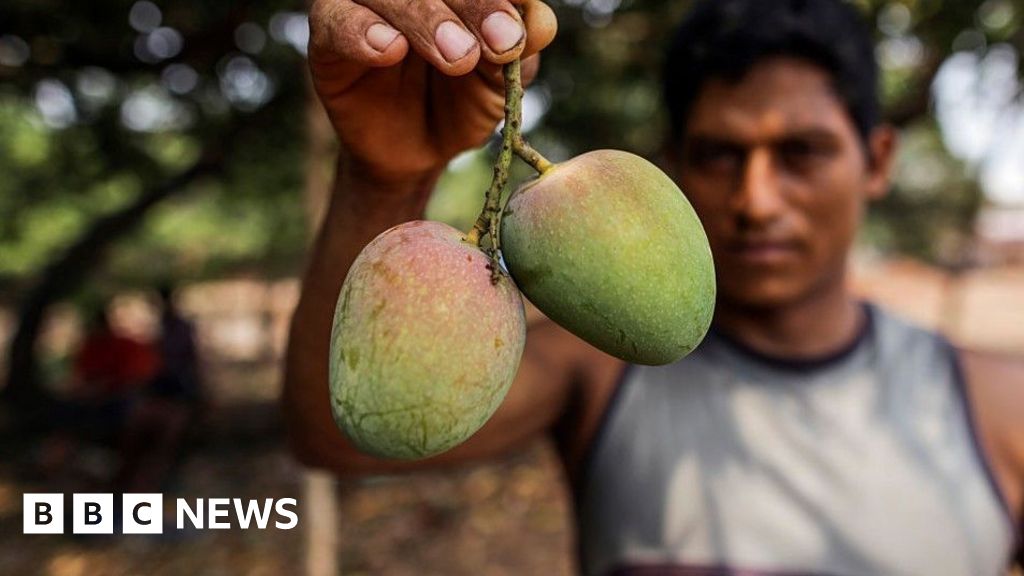
India boasts an astonishing diversity of mangoes, with almost 700 varieties cultivated across its diverse regions. Northern India favours the Dasheri, Maharashtra is synonymous with the Alphonso, and the Langra and Malda varieties are prominent in Bihar and West Bengal. Yet, the pervasive influence of climate change spares few of these regional specialities.
Dr. Hari Shankar Singh, a scientist at the Central Institute for Subtropical Horticulture (ICAR), underscores the critical temperature dependence of mangoes. "With erratic weather patterns becoming the norm, mango farming is under pressure," he explains. He recounts recent seasons where early flowering was followed by strong winds that damaged fruit development, leading to rapid maturity and significant crop loss. Conversely, prolonged low temperatures in North India this past year delayed flowering altogether.
To combat these challenges, researchers are actively engaged in developing new mango varieties with enhanced tolerance to a wider range of temperatures and greater resistance to pests and diseases. However, the inherent biological characteristics of mango trees present a significant hurdle. Mango trees typically take five to ten years to flower after breeding, and their heterozygous nature means offspring rarely resemble their parent varieties. "Mango breeding is a multi-decade scientific commitment, not a quick innovation," Hari Singh notes.
Fortunately, advancements in genetic science are accelerating this process. In 2016, a group of Indian scientists, led by ICAR, announced the sequencing of the mango genome, with a specific focus on the Alphonso variety. This groundbreaking work allows researchers to identify specific genes linked to desirable traits such as fruit colour, aroma, sweetness, flowering behaviour, climate resilience, and disease tolerance. According to Hari Singh, this genomic understanding has "significantly" reduced the traditional 10 to 20 years required for mango breeding.
Farmers like Upendra Singh are demonstrating a readiness to embrace these innovations. He has introduced coloured mango varieties, planted at a higher density than his traditional orchards. "The biggest advantage of coloured varieties is they give fruit every year," he observes, contrasting this with the intermittent bearing of traditional varieties like Dasheri and Langda. Beyond new varieties, modern cultivation techniques are also proving invaluable. Singh employs scientific pruning, canopy management, and growth regulators to control tree size, induce flowering, and ensure uniform harvests.
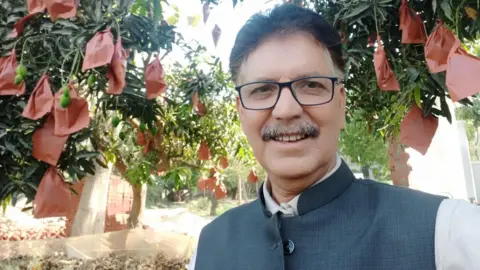
The ICAR actively promotes a suite of techniques to bolster crop quality. "Bagging," a simple yet effective method, involves enclosing individual fruits in breathable protective covers during their early development. This creates a micro-environment that shields the fruit from pests, fungal pathogens, mechanical damage, and excessive solar radiation, according to Dr. T. Damodaran, Director of ICAR. Another recommended practice is "girdling," which entails making a controlled ring cut on selected branches. This induces a mild stress on the tree, redirecting its energy towards enhanced flowering and fruit development.
Older mango orchards can also benefit from rejuvenation through pruning the trees down to a height of 14 to 18 feet. Hari Singh explains that this process "improves flowering dramatically, increases fruit size, and most fruits become A-grade instead of B or C grade."
Neeti Goel’s journey into mango farming began as a hobby ten years ago with a few curious plantings. Today, she manages over 1,100 trees across 27 acres in Alibaug, Maharashtra. Her approach is firmly rooted in scientific cultivation. "We start every season with soil and leaf analysis," she states. "Without that, fertiliser application is guesswork, not farming. Micronutrients like boron and zinc play a decisive role in fruit, so ignoring them directly impacts yield." Goel’s forward-thinking vision includes the construction of greenhouses to precisely control temperature, emphasizing, "If one does not adopt innovative methods we are doomed."
Saravanan Achari, founder of Berrydale Foods, a company exporting Indian mangoes to 13 countries, echoes the sentiment that controlled cultivation is the future. Pests represent a major concern for his export-oriented business, as international markets demand zero tolerance. "Even if inspectors find a single fruit fly, the entire consignment is discarded, leading to huge losses," he explains. Climate change has exacerbated pest management challenges, with unpredictable rainfall patterns leading to the emergence of pests at unusual times of the year. "Climate change has become the single biggest risk factor for mango exports today," Achari declares.
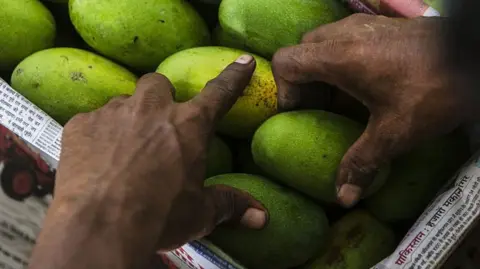
Consequently, Achari is actively experimenting with greenhouses on Berrydale’s farms, drawing inspiration from countries like Japan and Israel that have already adopted protected cultivation to navigate similar climate challenges. He firmly believes that "Indian farmers will also have to move in this direction if we want consistent quality and reliable exports." The imperative for Indian mango farmers to modernise, therefore, is not merely a suggestion but a critical necessity for sustained success and global competitiveness in the face of evolving environmental and market demands.




 Roy Suryo
 George Anjay
 Nakalama John
 Ramos Leo