atisusanti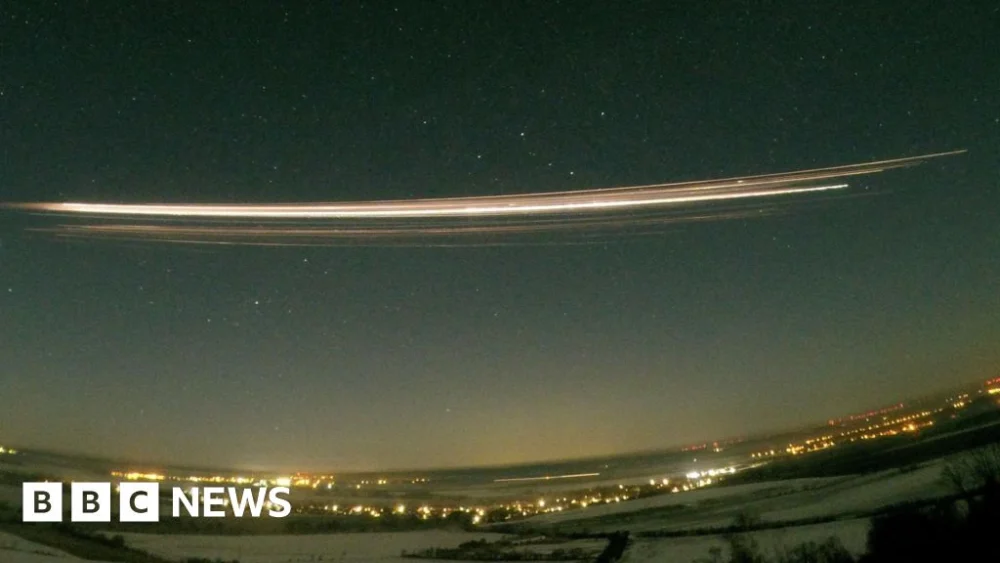
When a SpaceX rocket’s fiery demise illuminated the skies over western Europe last February, questions arose about potential atmospheric pollution. Now, scientific investigations have established a direct correlation between the uncontrolled re-entry of a SpaceX Falcon 9 rocket and a significant plume of lithium detected less than 100 kilometers above Earth. This marks the first documented instance where researchers have definitively linked a known piece of space debris crashing back to our planet with measurable atmospheric contamination. The implications are profound, especially as SpaceX CEO Elon Musk outlines ambitious plans to launch a million satellites in the coming years, suggesting that this lithium plume could be just the beginning of a larger environmental challenge.
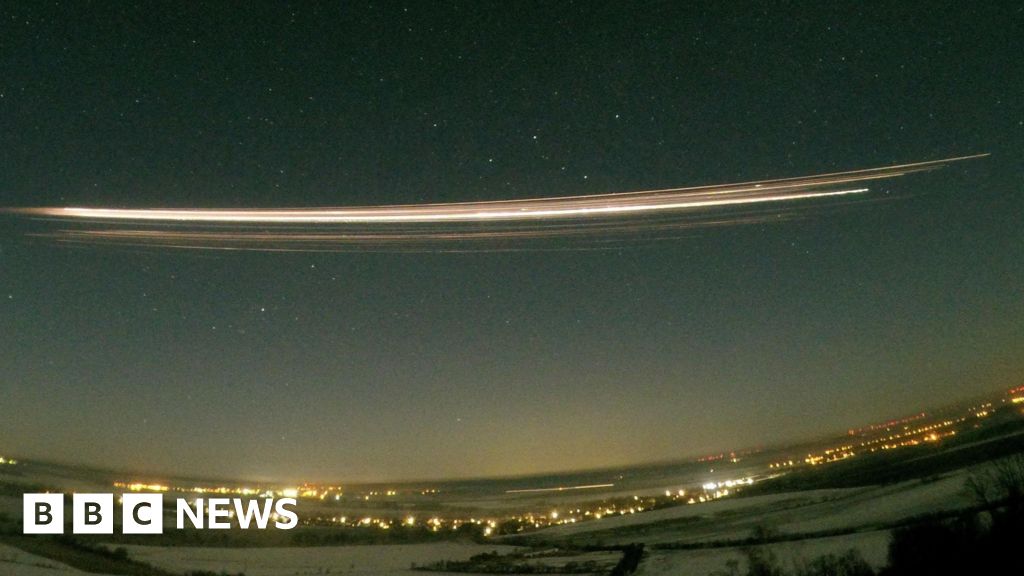
The research team, already engaged in studying the growing issue of atmospheric pollution from space debris, identified the SpaceX Falcon 9 failure as a prime opportunity for investigation. On February 19, 2025, the rocket experienced a catastrophic in-flight anomaly, fragmenting and creating spectacular fireballs as it blazed through Earth’s atmosphere. Debris scattered across Ireland, England, and Germany, with a significant piece, measuring approximately 1.5 meters by 1 meter, even discovered by a resident in Komorniki, Poland, behind his warehouse.
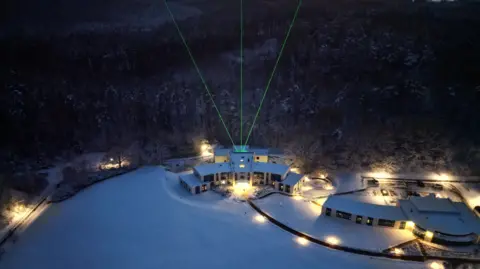
Professor Robin Wing from the Leibniz Institute of Atmospheric Physics in Germany explained the serendipitous nature of the discovery. "We saw the news that this rocket had crashed into Poland. It had flown almost directly over us, and we thought, ‘oh, this is a great chance’," he stated. This prompted the team to deploy their advanced Lidar (Light Detection and Ranging) system, a sophisticated laser technology used to probe the upper atmosphere.
The Lidar system detected metal atoms released from the rocket body, which is constructed from an aluminum-lithium alloy. In collaboration with Professor John Plane at the University of Leeds, the scientists were able to quantify the atmospheric impact. Their measurements revealed a tenfold increase in the concentration of lithium in the atmosphere at an altitude of approximately 100 kilometers.
"The atmosphere naturally gets about 50-80g daily from small meteors," Professor Wing clarified. "So, a single Falcon 9 rocket has about 30kg, so this is quite a lot more." This substantial injection of material into the upper atmosphere raises significant environmental concerns.
The primary worry for Professor Wing and his colleagues centers on the interaction of aluminum and aluminum oxides with the ozone layer. While the long-term consequences of this specific pollution event on Earth’s atmospheric composition remain unknown, scientists are concerned about potential disruptions to atmospheric aerosols. These aerosols play a crucial role in moderating our climate and regulating Earth’s temperature.
"This is a new scientific field. It’s hard to speculate because it’s changing so quickly," Professor Wing admitted. He drew a parallel to the historical case of chlorofluorocarbons (CFCs), once widely used in refrigerants, which caused significant damage to the ozone layer and were eventually banned. The hope is that by initiating measurements now, scientists can stay ahead of potential problems and identify emerging issues before they escalate into serious environmental threats.
Previous research has already suggested that a substantial portion of atmospheric aerosols, estimated at 10%, are already contaminated by space debris. SpaceX has not yet responded to requests for comment from the BBC, nor did they reply to the researchers who shared their findings with the company.
The problem of space debris is escalating. It is estimated that nearly 30,000 pieces of debris are currently in orbit, accumulating from rocket breakups and satellite disintegration. This orbital congestion poses a significant threat, increasing the risk of collisions with rockets, the International Space Station, and even falling to Earth.
Elon Musk’s SpaceX is a dominant force in the global rocket launch industry, responsible for crewed spaceflights and the operation of the Starlink satellite internet constellation, which comprises 10,000 satellites. Musk’s recent announcement of plans to launch one million satellites to support artificial intelligence (AI) data centers in space further amplifies these concerns. As humanity increasingly moves its activities off-planet, the volume of debris returning to Earth, and the associated atmospheric pollution, is expected to rise.
In response to these growing challenges, a coalition of researchers from NASA, the University of Plymouth, and the University of Texas last year urged the United Nations to incorporate the protection of Earth’s orbit into its sustainable development goals. The scientific community is advocating for stronger enforcement of existing space treaties and the implementation of more robust regulations for space debris.
Professor Andy Lawrence, an astronomer at the University of Edinburgh, highlighted the inadequacy of current international space regulations. "Space regulations don’t cover the new problems emerging – interference with astronomical observations, risk of collision in orbit, risk of stuff falling on our heads, and now it is becoming clear, atmospheric pollution," he stated. "The international community is working hard trying to set standards and new regulations, but space commerce is changing faster than we can keep up." The lithium plume from the SpaceX rocket serves as a stark reminder of the urgent need for proactive measures to address the environmental impact of our expanding presence in space. The material composition of rockets, the sheer volume of launches, and the re-entry processes all contribute to a complex and evolving atmospheric pollution landscape that demands immediate scientific attention and regulatory action. The long-term ecological consequences of these metallic injections into the upper atmosphere, particularly their interaction with vital atmospheric layers like the ozone layer, require extensive and ongoing study. As Professor Wing suggested, the current situation is a nascent scientific field, and understanding the full scope of the problem is crucial to developing effective mitigation strategies before these atmospheric disturbances become irreversible. The spectacle of a rocket re-entering the atmosphere, once a symbol of human ingenuity and progress, may increasingly be viewed through the lens of its potential environmental cost.




 George Anjay
 Ramos Leo
 Nakalama John
 Roy Suryo