
 George Anjay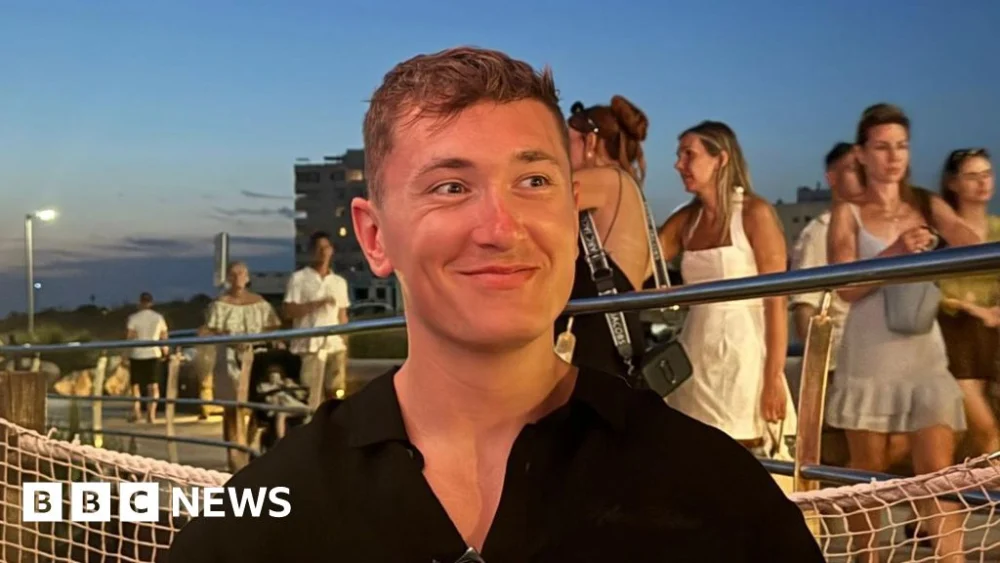
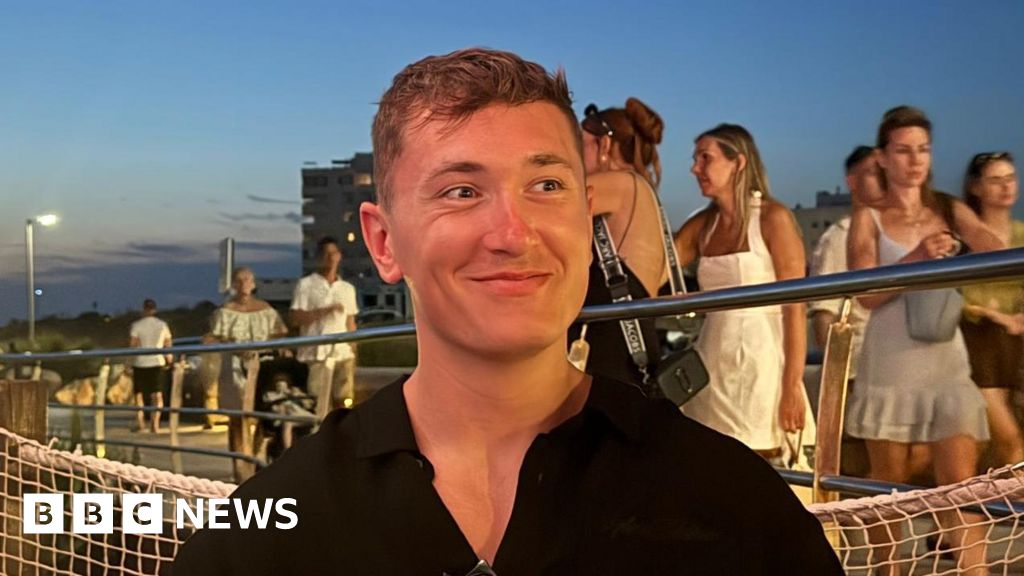
When Will Bailey stepped off a plane in Dubai in the early hours of Saturday morning, it was supposed to mark a new chapter in his life, a meticulously planned transition into a city he envisioned as a vibrant hub for his fitness coaching business and a place to secure residency. However, within a mere 24 hours of his arrival, the British fitness influencer found himself a reluctant witness to a chilling reality: Iranian missile attacks striking some of the United Arab Emirates (UAE)’s most exclusive and iconic neighborhoods. The surreal experience, captured in a series of increasingly anxious Instagram stories, painted a stark contrast to the idyllic image Dubai often projects.
"That was metres away from us," Bailey recounted, his voice still tinged with disbelief, as he shared a video on Instagram showcasing thick plumes of dark smoke billowing from the vicinity of Fairmont the Palm, a prestigious hotel located in the ultra-luxurious Palm Jumeirah district. The incident, which authorities confirmed resulted in a fire and injured four people, left Bailey profoundly shaken. The attacks, launched by Iran on Saturday in retaliation for perceived US and Israeli strikes on its territory, have extended into Monday, with reports confirming at least one fatality in the UAE. "Since this happened, everything changed," Bailey confessed to BBC News, his initial excitement replaced by a palpable sense of unease. "Now we are in the middle of all of this chaos that is going on." The uncertainty cast a long shadow over his relocation plans. "I am not sure what the plans are; I don’t know if I will stay here or I will go back to the UK. I just don’t know," he admitted, the dream of a new life in Dubai now clouded by the immediate threat of regional conflict.
For years, Dubai has meticulously cultivated an image of glitz, glamour, and opportunity, attracting a global influx of expatriates drawn by its burgeoning business landscape and its allure as a premier travel destination. It has also long been perceived as a secure sanctuary, a bastion of stability amidst the often volatile geopolitical climate of the wider Middle East. However, the recent scenes of destruction and the palpable fear they have engendered have forced many, including Bailey, to question the very foundation of the "Dubai dream." The ripple effect of the attacks has extended beyond immediate residents, with other prominent social media personalities expressing their shock and apprehension.
Arabella Chi, a former contestant on the popular reality show Love Island, who is based in Dubai, described the situation on social media as "a very scary time." Similarly, British model and influencer Petra Ecclestone shared her distress, stating, "We came to Dubai to feel safe, and we finally felt like we were settling in, and now this has happened." Their sentiments reflect a broader concern that the perceived invincibility of Dubai as a safe haven has been compromised.
Yet, amidst the fear and uncertainty, a counter-narrative is also emerging. Some individuals argue that the situation has been amplified, emphasizing the resilience of the city and the effectiveness of its defense systems. Hofit Golan, a Canadian-Israeli influencer and television personality, acknowledged that "the first day of the war was a shock" but quickly pivoted to a more optimistic outlook. "Money is flowing in and [the attacks] showed Dubai’s air defences are strong," she asserted. Golan, who made a trip to the mall on Monday, noted that while the atmosphere was "a bit subdued," the mall was still bustling. "Life goes on," she told the BBC, suggesting a return to normalcy despite the underlying tension.
This perspective is echoed by Afsha Farooqui, a 34-year-old food blogger originally from India, who has been a Dubai resident for years. Despite the ongoing events, she expressed a strong sense of security within the city. "I feel safe in Dubai despite what is going on. It’s natural to feel concern but day to day, schools are open, and families are out," she stated. "We don’t live in fear," she added, underscoring her belief that the attacks have not fundamentally altered the fabric of daily life for most residents.
It is important to note that public criticism of the government is strictly prohibited in the UAE. This legal constraint may contribute to the prevalence of positive and reassuring messages being disseminated online, particularly by influencers who often align their content with the prevailing narrative of stability and security. Many influencers have been actively promoting the idea that Dubai’s missile defense systems are robust and that there is no cause for undue alarm, emphasizing that the majority of incoming threats have been successfully neutralized.

While the effectiveness of the UAE’s missile defense systems in intercepting most of the incoming projectiles is acknowledged, the visual impact of the attacks – the plumes of smoke rising over iconic structures and the subsequent circulation of these images online – may serve as a potent psychological blow, potentially eroding the carefully constructed image of Dubai as an unassailable haven.
Yasser Elsheshtawy, a professor of architecture at Columbia University who lived in Dubai for two decades, believes that the recent events have significantly impacted the city’s long-held reputation. "The image of Dubai as a prosperous and contemporary city ‘is now being punctured’," he told the BBC. "When you begin to see plumes of smoke rising in the city and sounds of explosion in some of the most exclusive places," he elaborated, "it ‘shatters that image of Dubai as this haven of security and safety’." Elsheshtawy predicts that the repercussions of these attacks will be long-lasting, stating, "It will suffer for years to come."
Karen Young, a senior research scholar at the Center on Global Energy Policy at Columbia University, who previously resided in Dubai for six years, highlighted the unprecedented nature of Iran’s decision to target civilian infrastructure, particularly areas frequented by tourists. "I think for many people it just seemed impossible that the tourist infrastructure would ever be targeted in such a way, so it’s kind of pierced the facade of safety," Young observed. She further emphasized the diverse demographic of Dubai’s population, noting that while the city is associated with a glamorous elite, it also comprises a significant population seeking refuge from conflict in their home countries. "I think a lot of people are rightly afraid, and many people, particularly from the region, are in Dubai because they’ve escaped war somewhere else," she added, underscoring the irony and tragedy of such individuals finding themselves in a similar situation of vulnerability.
The psychological impact of these attacks extends beyond the immediate physical damage. For many, Dubai represented an escape from regional instability, a promise of security and a gateway to a prosperous future. The intrusion of conflict into this perceived sanctuary forces a reevaluation of that promise, potentially leaving many residents and potential investors grappling with a newfound sense of precariousness. The glittering skyline, once a symbol of aspiration and safety, now carries the haunting specter of vulnerability, a stark reminder that even in seemingly impregnable havens, the winds of regional conflict can blow with devastating force.

Additional reporting by Ethar Shalaby.



 Roy Suryo

 Nakalama John
 atisusanti
 Ramos Leo
