
 George Anjay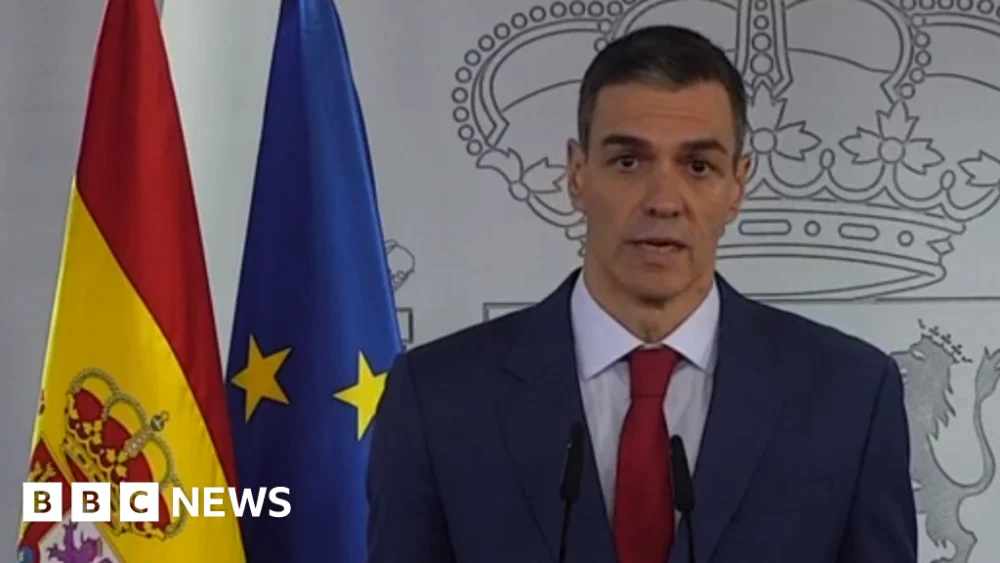
Spanish Prime Minister Pedro Sánchez has delivered a forceful repudiation of United States President Donald Trump’s threat to sever trade ties with Spain, unequivocally stating his nation’s commitment to peace and condemning the erosion of international law. The Prime Minister’s firm stance comes amid escalating tensions and serves as a direct response to Trump’s bellicose pronouncements, which have cast a shadow over transatlantic relations and the delicate global geopolitical landscape. In a carefully considered, 10-minute televised address from the iconic La Moncloa, the seat of the Spanish government, Sánchez articulated a vision for Spain’s foreign policy rooted in diplomacy and a rejection of militaristic solutions, drawing parallels between current global conflicts and historical precedents.
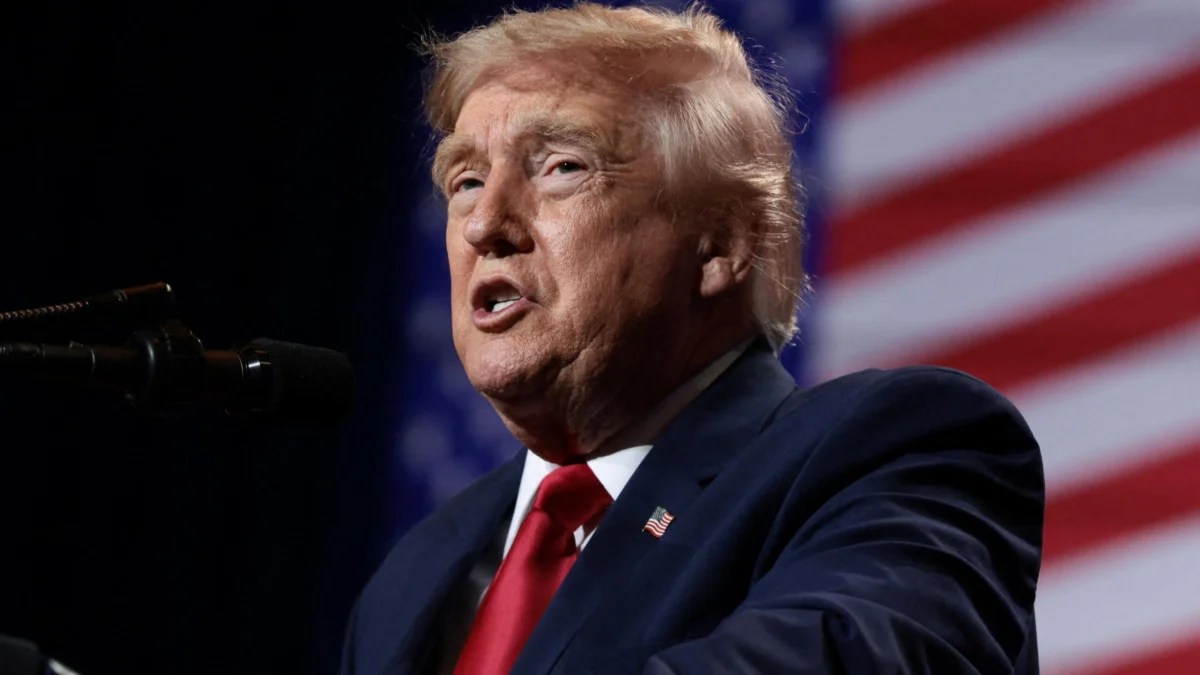
The genesis of this diplomatic standoff can be traced to Spain’s refusal to grant the United States permission to utilize the strategically vital, jointly operated bases at Morón and Rota for potential strikes against Iran. This decision, framed by Madrid as a commitment to de-escalation and adherence to international norms, was met with swift and severe criticism from former President Trump. During a meeting with German Chancellor Friedrich Merz on Tuesday, Trump publicly declared, "Spain has been terrible. We’re going to cut off all trade with Spain. We don’t want anything to do with Spain." This rhetoric, laden with protectionist undertones and a clear disregard for established alliances, has sent ripples of concern through both European and global economic circles.
Chancellor Merz, in his subsequent remarks, clarified the broader European perspective, emphasizing that any attempt to forge bilateral trade agreements at the expense of an allied nation was untenable. He stated unequivocally that he had communicated to Trump that a separate agreement with Germany, or indeed any part of Europe, that excluded Spain was not a viable proposition. This collective European stance underscores a commitment to solidarity and a shared understanding of the interconnectedness of their economic and political destinies.
Trump’s ire was not solely directed at Spain’s stance on Iran. He also levied accusations against Spain, labeling it a "terrible partner" within the North Atlantic Treaty Organization (NATO) for its perceived failure to meet the alliance’s defense spending target of 5% of its Gross Domestic Product (GDP). This criticism, while ostensibly focused on defense contributions, appears to be intertwined with Trump’s broader transactional approach to international relations, where alliances are viewed through the lens of immediate economic and political benefit.
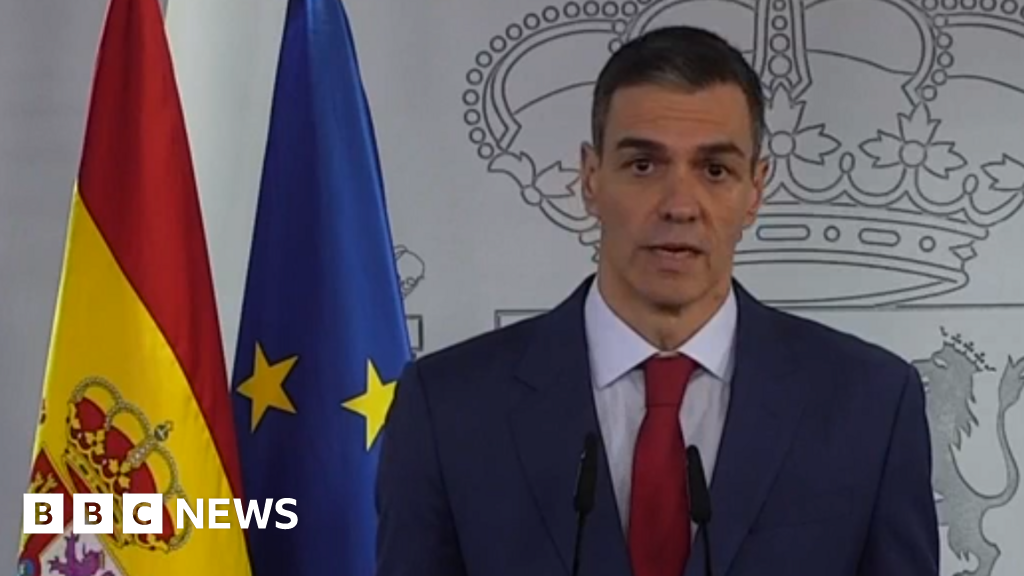
In his address, Prime Minister Sánchez acknowledged the potential economic ramifications of such trade disputes and assured the Spanish people that the government was actively studying measures to mitigate any adverse impacts. He underscored a fundamental principle of international relations: that one act of illegality cannot be met with another, a sentiment that resonated particularly strongly in the context of the ongoing "disaster" unfolding in the Middle East. This allusion to the conflict in Gaza, which followed Sánchez’s recent impassioned appeals for both sides to exercise restraint and uphold international law, highlights his consistent engagement with the complexities of the region.
The Spanish Prime Minister meticulously drew a parallel between the current situation and Spain’s established position on other significant global conflicts, notably the war in Ukraine. Sánchez has been a vocal critic of Israel’s military response to the Hamas attacks of October 2023, advocating for a diplomatic resolution and adherence to humanitarian principles. His government’s policy, he explained, is guided by a consistent principle: "No to war." This refrain encapsulates a broader philosophy of prioritizing peace and dialogue over military intervention, a stance that has increasingly defined Spain’s role on the international stage under his leadership.
Looking back over two decades, Sánchez invoked the controversial 2003 invasion of Iraq. He reminded his audience that this preemptive military action, launched under the guise of dismantling weapons of mass destruction, ultimately failed to achieve its stated objectives and, in fact, exacerbated the suffering of ordinary people in the region. He warned that any potential military escalation involving Iran, spurred by the current geopolitical tensions, could similarly trigger widespread economic disruption, impacting millions of lives across the globe. This historical perspective serves as a cautionary tale, emphasizing the unpredictable and often detrimental consequences of military adventurism.
Sánchez directly challenged the narrative that might seek to portray Spain as siding with adversaries, stating, "It’s unacceptable that some presidents use the fog of war to cover up their failures." He deftly reframed the core issue, asserting, "The question is not if we are on the side of the ayatollahs – nobody is. The question is whether we are in favour of peace and international legality." This powerful rhetorical maneuver shifts the focus from perceived political allegiances to fundamental principles of global order, aligning Spain with a universal aspiration for a world governed by law and mutual respect rather than coercion and conflict.
The Prime Minister’s address was not merely a diplomatic response but a clear articulation of Spain’s values and its vision for a more stable and just world order. By invoking historical parallels and emphasizing the interconnectedness of global peace and economic stability, Sánchez sought to rally domestic support and project an image of principled leadership on the international stage. His rejection of Trump’s threats, coupled with his unwavering commitment to diplomacy and international law, positions Spain as a significant voice advocating for de-escalation and multilateralism in an increasingly volatile global environment. The echoes of his "No to war" message resonate as a call for a more considered and humane approach to international relations, a stark contrast to the transactional and often confrontational rhetoric that has characterized recent global political discourse. The implications of this exchange extend beyond bilateral trade, touching upon the very foundations of international cooperation and the future of global governance. Spain, under Sánchez, has chosen to stand firm on principles, even when faced with potent economic threats, signaling a commitment to a foreign policy that prioritizes peace and international legality above all else.



 Roy Suryo

 Nakalama John
 atisusanti
 Ramos Leo
