
 George Anjay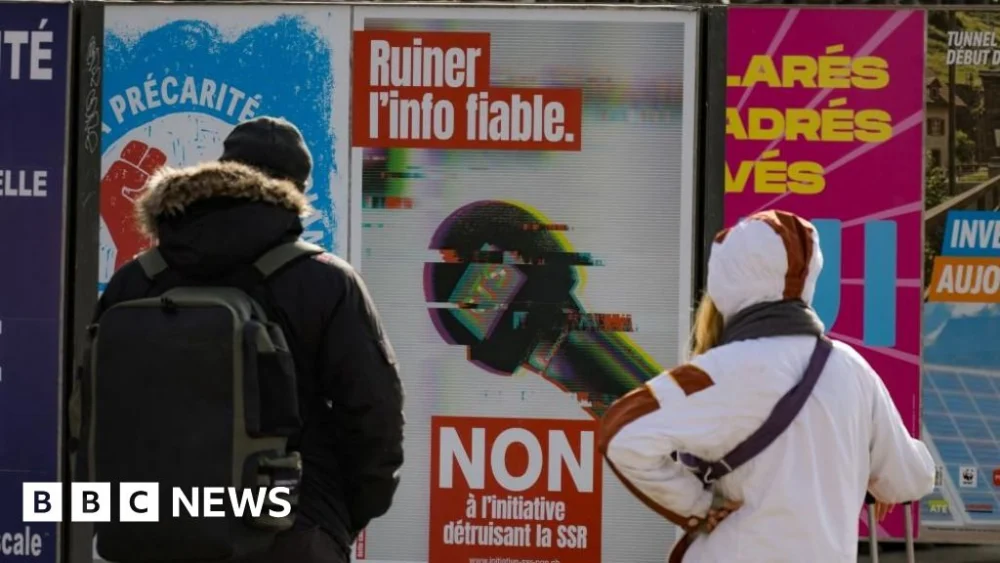
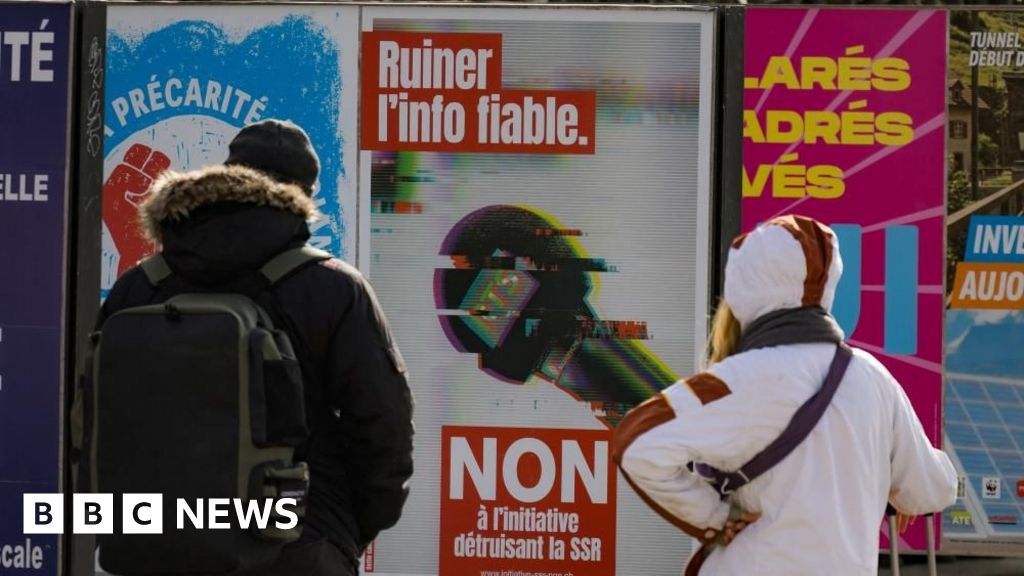
In a significant decision shaping the future of public service media in Switzerland, voters have decisively rejected a right-wing initiative aimed at drastically slashing the annual licence fee for the Swiss Broadcasting Corporation (SBC). The referendum, held on Sunday, saw a clear majority favouring the continuation of the current funding model, rebuffing attempts by the Swiss People’s Party (SVP) to reduce the fee and exempt businesses. Initial projections indicate that approximately 62% of voters opted to maintain the licence fee at its existing level, with only 38% supporting the proposed cuts.
The contentious initiative, championed by the SVP, had sought to lower the annual household licence fee from its current 335 Swiss francs (£320; $435) to a mere 200 Swiss francs (£190; $260), while also removing the obligation for businesses to contribute. The SVP argued that the existing fee was an undue burden on citizens, particularly in light of the escalating cost of living. They pointed to the fact that the Swiss licence fee is considerably higher than those in neighbouring countries like Austria and Germany, suggesting an imbalance in public service funding. Proponents of the cut also frequently highlighted the perceived inefficiencies and alleged political leanings of the SBC, arguing that a reduced budget would force greater accountability and a more focused mandate.
However, the government and a broad coalition of parliamentary parties, along with numerous civil society organisations, vigorously opposed the SVP’s proposal. Their counter-arguments centred on the crucial role of the SBC in upholding Switzerland’s unique linguistic diversity. With four national languages – German, French, Italian, and Romantsch – the SBC is seen as a vital institution for ensuring that all linguistic communities have access to high-quality, independent news and cultural programming in their own language. Critics of the initiative warned that a substantial reduction in funding would inevitably lead to cuts in services, potentially diminishing the representation of minority languages and reducing the breadth and depth of content produced.
Beyond linguistic representation, concerns were also raised about the potential impact on the SBC’s foreign news coverage and its provision of sports broadcasting. The ability to maintain a global news presence and broadcast a wide range of sporting events, often at significant cost, was seen as a valuable public service that could be jeopardized by severe budget constraints. Supporters of the current funding model argued that a well-funded SBC contributes to an informed citizenry, fosters national cohesion, and projects a positive image of Switzerland on the international stage. They also stressed the importance of independent journalism in an era of widespread misinformation, asserting that the SBC provides a reliable and trustworthy source of information.
It is worth noting that the Swiss government had already embarked on a path to gradually reduce the licence fee, albeit not as drastically as proposed by the SVP. Under a prior decision, the fee is slated to decrease to 300 Swiss francs by 2029. This pre-existing plan also includes provisions for exempting more companies from the fee, acknowledging some of the concerns raised by the business sector. The outcome of Sunday’s referendum effectively signals public endorsement of this more moderate, government-led approach to fee adjustments.
In a separate, but equally significant, referendum held on the same day, Swiss voters also cast their ballots on the future of cash in the digital age. Two distinct proposals sought to enshrine the availability of physical currency in the Swiss constitution. The first, an initiative titled "Cash is Freedom," was introduced by a citizens’ movement, MSL. This proposal specifically advocated for the explicit constitutional protection of "coins and banknotes." The second option was a counter-proposal put forth by the government, which also aimed to anchor cash in the constitution but used the broader term "cash."
Initial projections suggest a strong endorsement for the government’s counter-proposal, with around 70% of voters reportedly backing it. This outcome indicates a public desire to ensure the continued accessibility of cash, while favouring the government’s more encompassing approach. The MSL, on the other hand, had argued that their initiative, with its specific mention of "coins and banknotes," provided a more robust guarantee and that the government’s proposal did not go far enough in safeguarding the public’s right to use physical currency. The government’s proposal, however, included a commitment from the Swiss National Bank to guarantee the supply of cash, a provision that appears to have resonated with a majority of the electorate.
The dual referendums highlight a Swiss electorate engaged in debating the fundamental aspects of public services and individual freedoms in a rapidly evolving society. The rejection of the SVP’s drastic cuts to the public broadcaster’s licence fee underscores a public appreciation for the role of independent media and the importance of linguistic diversity. Simultaneously, the strong support for enshrining the availability of cash signals a desire for tangible, accessible forms of payment in an increasingly digital world, demonstrating a nuanced approach to modernization that values both innovation and tradition. The decisions made on Sunday will have lasting implications for the media landscape and the financial infrastructure of Switzerland.




 Roy Suryo

 Nakalama John
 atisusanti
 Ramos Leo
