Nana Banana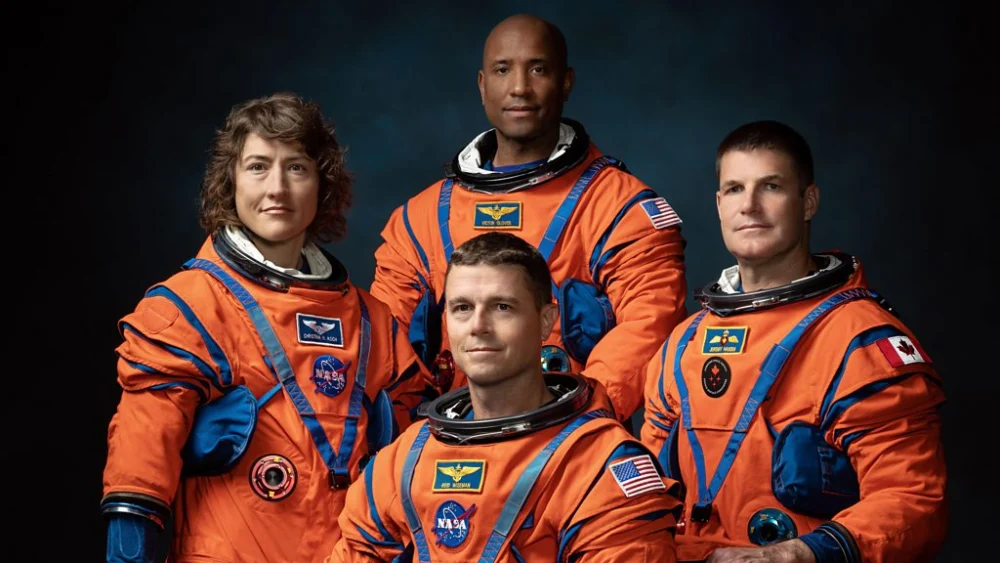
Fifty years since humanity last set foot on the lunar surface, a new era of space exploration is dawning, characterized by an unprecedented scramble back to Earth’s celestial neighbour. This rekindled ambition, vividly explored in the BBC Sounds episode "The new race to the Moon," signals not merely a nostalgic return but a profound shift in global priorities, driven by geopolitical prestige, scientific discovery, and the tantalizing prospect of lunar resources. The initial, thrilling dash to the Moon during the Cold War was a binary competition between two superpowers; this new race is a multi-faceted endeavour, involving established space agencies, emerging nations, and an increasingly influential commercial sector, all vying for a foothold on the Moon.
At the forefront of this resurgence is NASA’s ambitious Artemis program, a testament to renewed American leadership in crewed spaceflight. More than half a century after the final Apollo mission, Artemis aims not just to revisit the Moon, but to establish a sustainable human presence there. The program began with Artemis I, an uncrewed test flight of the powerful Space Launch System (SLS) rocket and the Orion spacecraft in late 2022. This mission successfully orbited the Moon, ventured farther into space than any human-rated spacecraft before it, and returned safely to Earth, proving the capabilities of the hardware. Its success paved the way for the pivotal Artemis II mission, slated for 2024. This crewed flight will carry astronauts farther from Earth than any human has travelled in decades, performing a lunar flyby and testing Orion’s critical systems with a human crew onboard. This mission is a crucial dress rehearsal, an essential step towards the ultimate goal of Artemis III: landing astronauts, including the first woman and the first person of colour, on the lunar surface, potentially as early as 2026. The vision extends beyond flag-planting; Artemis seeks to build the Lunar Gateway, an orbiting outpost that will facilitate access to the lunar surface and serve as a staging point for deeper space exploration, including Mars. The program also boasts significant international collaboration, with partners like the European Space Agency (ESA), Japan Aerospace Exploration Agency (JAXA), and the Canadian Space Agency (CSA) contributing modules and expertise, underscoring a shared commitment to lunar exploration among Western allies.
Simultaneously, China has been diligently and quietly advancing its own formidable plans for a crewed Moon landing, demonstrating a strategic long-term vision that mirrors, and in some aspects, challenges, NASA’s timelines. The China National Space Administration (CNSA) has made remarkable strides in recent years, exemplified by its Chang’e series of robotic lunar missions. These missions have included orbiters, landers, rovers, and even the unprecedented Chang’e 4, which achieved the first-ever soft landing on the Moon’s far side in 2019. More recently, Chang’e 5 successfully returned lunar samples to Earth in 2020, marking China as only the third nation to achieve such a feat. Beyond the Moon, China’s Tianwen-1 mission successfully orbited, landed, and deployed a rover on Mars in 2021, showcasing a comprehensive deep-space capability. For the Moon, China’s ambitions are clear: a crewed landing by the early 2030s, followed by the establishment of an International Lunar Research Station (ILRS), often in collaboration with Russia. This systematic, methodical approach signals China’s intent not just to visit the Moon, but to establish a sustained, independent presence, positioning itself as a formidable competitor in the burgeoning lunar landscape.
Some experts, like the BBC’s Science Editor Rebecca Morelle, suggest that these parallel and accelerating programs unequivocally signal the start of a new space race. However, this contest is distinct from its Cold War predecessor. While prestige undoubtedly plays a role – demonstrating technological prowess and national capability on the global stage – the motivations are far more complex and multifaceted. The pursuit of lunar resources stands as a primary driver. Scientific research has confirmed the presence of water ice in permanently shadowed craters at the Moon’s poles. This ice is a game-changer; it can be processed into potable water for life support, and crucially, split into hydrogen and oxygen to produce rocket fuel. This "in-situ resource utilization" (ISRU) capability could drastically reduce the cost and logistical complexity of future missions, making the Moon a self-sustaining outpost and a fueling station for deeper space exploration, particularly to Mars. Beyond water, discussions also revolve around potential rare earth elements and helium-3, a light isotope that some envision as a fuel for future fusion reactors, although its viability remains highly speculative.
The Moon is also seen as a crucial scientific laboratory. Its undisturbed geological record holds clues to the early solar system, Earth’s formation, and the origins of life. Establishing observatories on the far side of the Moon, shielded from Earth’s radio interference, could open new windows into the cosmos. Furthermore, the development of long-term habitats and support systems on the Moon will serve as invaluable testbeds for the technologies and human factors required for a successful human mission to Mars. The Moon, in essence, is becoming the proving ground, the stepping stone, for humanity’s ultimate journey to the Red Planet.
The current lunar race is also defined by the prominent role of commercial entities. Private companies like SpaceX, Blue Origin, Astrobotic, and Intuitive Machines are no longer merely contractors but active participants, developing launch vehicles, landers, and other crucial infrastructure. SpaceX’s Starship, for example, has been selected by NASA as the Human Landing System for Artemis III, illustrating the blurring lines between public and private space endeavours. This commercialization introduces new dynamics, potentially accelerating development, driving down costs, and fostering innovation, but also raising questions about regulation, property rights, and commercial exploitation of space.
From the perspective of BBC Science Editor Rebecca Morelle, the challenges inherent in this new race are immense. Technologically, developing reliable, safe, and cost-effective systems for sustained lunar operations is an enormous undertaking. The financial investment required runs into hundreds of billions of dollars, demanding consistent political will and public support over decades. Safety remains paramount, with the unforgiving lunar environment posing significant risks to human life and equipment. Yet, Morelle would likely underscore that the opportunities far outweigh these hurdles. The drive to return to the Moon is spurring unparalleled innovation across multiple sectors, creating jobs, fostering international cooperation, and inspiring a new generation of scientists and engineers. Unlike the Cold War space race, which was largely a zero-sum game, the current competition, while intense, has elements of potential collaboration, particularly in areas of scientific data sharing and developing norms for space behaviour. The Artemis Accords, a US-led international agreement outlining principles for peaceful and sustainable lunar exploration, represent an attempt to establish such norms, though China and Russia have opted to pursue their own framework.
The implications for international relations are profound. A sustained presence on the Moon will necessitate discussions on space law, resource ownership, and potential security concerns. The Outer Space Treaty of 1967, while prohibiting national appropriation of celestial bodies, offers limited guidance on resource extraction and permanent settlements. The development of an "off-world economy" around lunar activities could redefine geopolitical power dynamics, making access to space and lunar resources critical strategic assets.
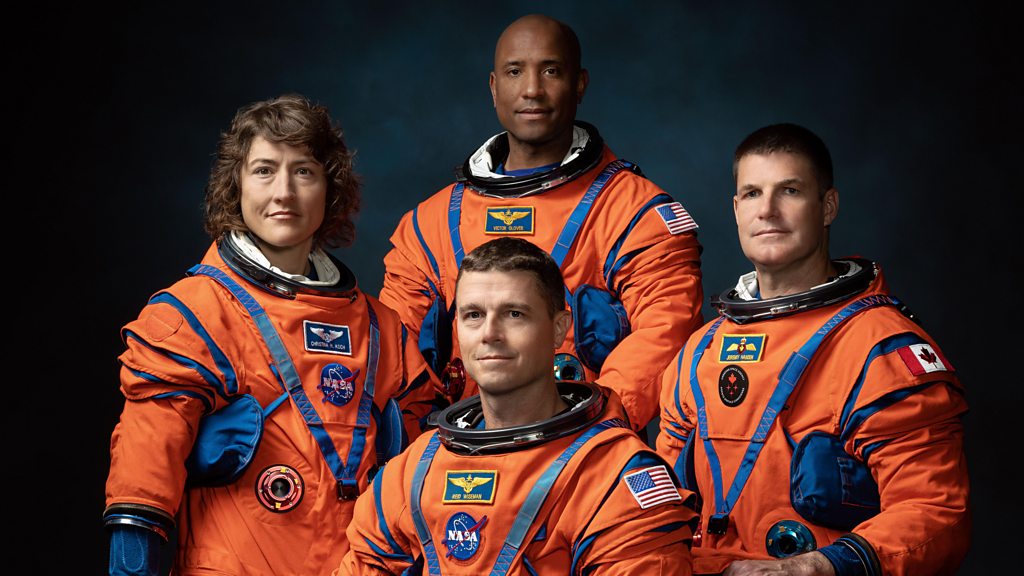
As the iconic image of the official Artemis crew portrait, captured by Josh Valcarcel/NASA and shared via EPA-EFE/REX/Shutterstock, reminds us, the human element remains central to this ambitious endeavour. These astronauts are not just explorers; they are pioneers at the vanguard of a new chapter for humanity. The BBC Sounds episode, thoughtfully produced by Valerio Esposito and Cat Farnsworth, with Executive Producer James Shield, Mix by Travis Evans, and Senior News Editor China Collins, serves as a timely and insightful exploration of this pivotal moment. It brings into sharp focus the blend of historical echoes, cutting-edge technology, and aspirational goals that define "The Global Story" of humanity’s renewed journey to the Moon. The lunar surface, once merely a distant beacon, is now firmly back in humanity’s sights, not just as a destination, but as a vibrant, contested, and crucial frontier for the 21st century and beyond.




 George Anjay
 Ramos Leo
 Roy Suryo