
 George Anjay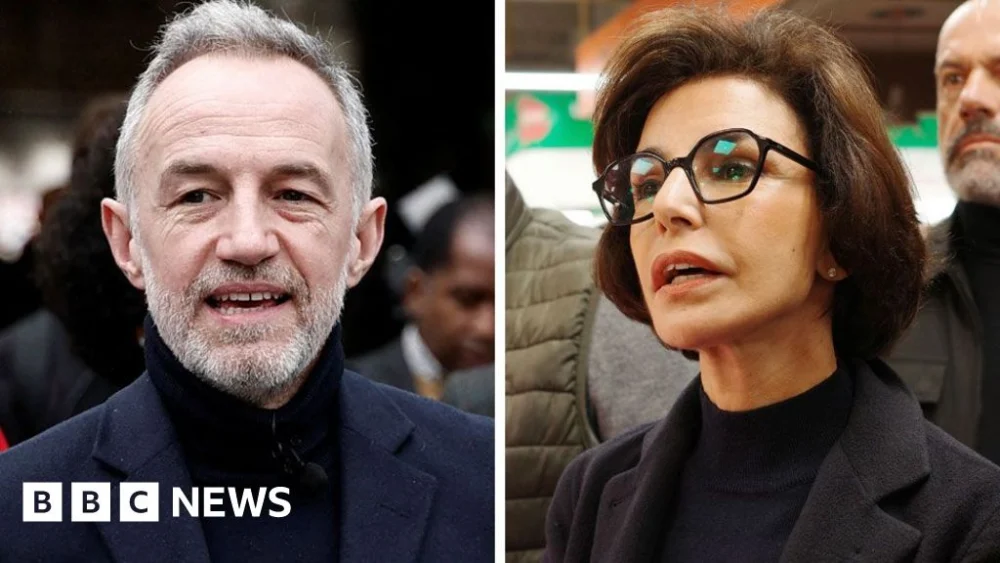
France is bracing for a crucial set of municipal elections, a nationwide litmus test that will offer a revealing glimpse into the country’s increasingly fractured political landscape and hint at the potential trajectories for next year’s presidential contests. While local governance is the immediate prize, the results are being keenly analyzed for broader national implications, particularly for the nationalist right, as Marine Le Pen’s National Rally (RN) eyes a significant uplift in support. This is particularly noteworthy as Le Pen herself awaits a judicial decision that could impact her eligibility to stand for head of state in 2027, adding another layer of anticipation to the RN’s performance.
These elections, held every six years in two rounds over successive Sundays, are more than just a tally of local preferences. They represent a critical assessment of how mainstream political parties navigate the challenging terrain of forming alliances, often being compelled to consider partnerships with both the far-left and the far-right. This strategic maneuvering is a direct consequence of France’s increasingly polarized political environment, a trend mirrored across much of Europe, where traditional parties find it increasingly difficult to secure electoral victories without at least tacit support from the fringes of the political spectrum. However, this necessity for broader alliances inevitably leads to accusations of pandering to extremist elements, a tightrope walk that risks alienating centrist voters and fracturing established coalitions.

The most prominent and closely watched contest is undeniably for the mayorship of Paris, a city that has been under left-wing stewardship for the past quarter-century. The prospect of this long-held socialist bastion shifting back to the right represents a significant potential symbolic victory for the opposition. The intricate electoral system, with its multi-round voting, means that alliances forged between the initial round and the subsequent run-off will be of paramount importance. In a complex scenario, it is plausible that as many as five distinct candidates in the capital could secure enough support to advance to the decisive second round on March 22nd, underscoring the fragmented nature of the Parisian electorate.
Defending the incumbent left-wing position is Emmanuel Grégoire, a 48-year-old Socialist and former deputy to the outgoing mayor, Anne Hidalgo. He faces a formidable challenge from Rachida Dati, a 60-year-old former culture minister and a notable protégé of ex-president Nicolas Sarkozy, who is leading the charge for the right. Dati’s campaign has strategically focused on the incumbent administration’s record on crime and urban cleanliness, often asserting, "Paris is dirty and unsafe." She has also sharply criticized the city’s financial management, pointing to a debt exceeding €10 billion (£8.7 billion). "Grégoire is the same as [current Paris Mayor Anne] Hidalgo, only worse," she declared at a recent rally, emphasizing his perceived lack of distinction from the current leadership. "He admits that the Socialists made mistakes – but he is the very incarnation of those mistakes. He was their co-pilot."
Grégoire, by his own admission, carries the burden of being the continuity candidate. Despite his team’s efforts to highlight a strained relationship with Mayor Hidalgo, he faces an uphill battle to convincingly present himself as a harbinger of change. However, he does possess two key advantages. The first is the city’s ambitious anti-car agenda, a policy that has demonstrably transformed Paris. This initiative has resulted in the creation of 1,500 kilometers (930 miles) of dedicated cycle lanes, the pedestrianization of riverside drives, and a significant reduction in pollution levels, estimated at 40% over the past decade. The Hôtel de Ville’s (mayor’s office) own figures indicate a dramatic decrease in car usage, down by 60% since 2001, a statistic that is readily apparent to anyone familiar with the city’s altered urban fabric. Cyclists now enjoy extensive networks, and car speeds in the capital have plummeted to an average of just 10 km/h (6 mph), a pace comparable to a leisurely jog. While Dati and her ally Sarah Knafo, representing the radical right Reconquest party, attempt to downplay these environmental gains, attributing them to broader European transport policy shifts, the tangible improvements to Parisian life are largely appreciated by its residents.

The second significant asset for Grégoire is the legal cloud hanging over Rachida Dati. She is scheduled to go on trial in September for allegedly receiving nearly €1 million (£700,000) from the Renault car company in exchange for lobbying on its behalf during her tenure as a Member of the European Parliament. While Dati maintains her innocence, the looming trial raises questions about her potential ability to govern effectively if elected, particularly the possibility of her resignation should she be convicted.
The electoral landscape in Paris also includes other significant contenders. Pierre-Yves Bournazel represents President Macron’s centrist Horizons party, while Sophia Chikirou stands for the radical left France Unbowed (LFI). Sarah Knafo represents the radical right Reconquest party, and Thierry Mariani is the candidate for the RN. Current polling consistently suggests that all candidates, with the potential exception of Mariani, are projected to surpass the 10% threshold required to advance to the second round. Should Mariani exceed 5% of the vote, he too would be eligible to form alliances for the run-off. This complex scenario creates intense pressure for Bournazel and Knafo to withdraw in favor of Dati, and for Chikirou to cede ground to Grégoire, to avoid splitting their respective votes and inadvertently paving the way for their opponents.
The inherent dilemma for mainstream parties is stark: if Dati were to forge an alliance with Knafo, she would face accusations of associating with "fascists." Conversely, if Grégoire were to align with Chikirou, he would be seen as collaborating with "violent antisemites." This political polarization has been further exacerbated by recent events, including the February killing of nationalist student Quentin Deranque in Lyon, an incident allegedly perpetrated by far-left militants. This tragedy has fueled calls for mainstream parties to boycott the LFI, mirroring the existing boycott of the RN. This same dynamic is playing out across thousands of towns and cities nationwide, as right- and left-wing populists assert their growing influence and demand a greater share of political power. Mainstream parties find themselves caught in an agonizing quandary: whether to resist this tide or to yield to its momentum.

This year’s municipal elections in Paris, as well as in Marseille and Lyon, are the first to be conducted under a revised electoral system. Voters now cast ballots not only for their local arrondissement (district) but also directly for the central city council, a shift from the previous system where district councillors elected the more influential Paris council. This change is anticipated to personalize campaigns, potentially benefiting well-known and charismatic figures like Dati.
Beyond the capital, other mayoral contests are drawing significant national attention. In Le Havre, former Prime Minister Edouard Philippe, the leader of the centrist Horizons party, is seeking re-election. He has openly stated that his presidential ambitions for next year would be significantly hampered by a failure to secure another term as mayor. In Nice, the right-wing vote is divided in a "fratricidal fight" between the incumbent Christian Estrosi of Horizons and Eric Ciotti, whose UDR party is aligned with the RN. In Marseille, the Socialist Mayor Benoît Payan faces a formidable challenge from the RN, while in Lyon, the Green incumbent Grégory Doucet is predicted to lose to businessman Jean-Michel Aulas, the former president of the Olympique Lyonnais football club. The National Rally, which has historically struggled to translate its national support into municipal victories, currently controls approximately 15 medium-sized towns. They harbor aspirations of adding Marseille, Toulon, Carcassonne, and Lens to their municipal holdings, underscoring the high stakes of this election cycle.



 Nakalama John
 atisusanti
 Ramos Leo
 Roy Suryo
 Nana Banana