Nana Banana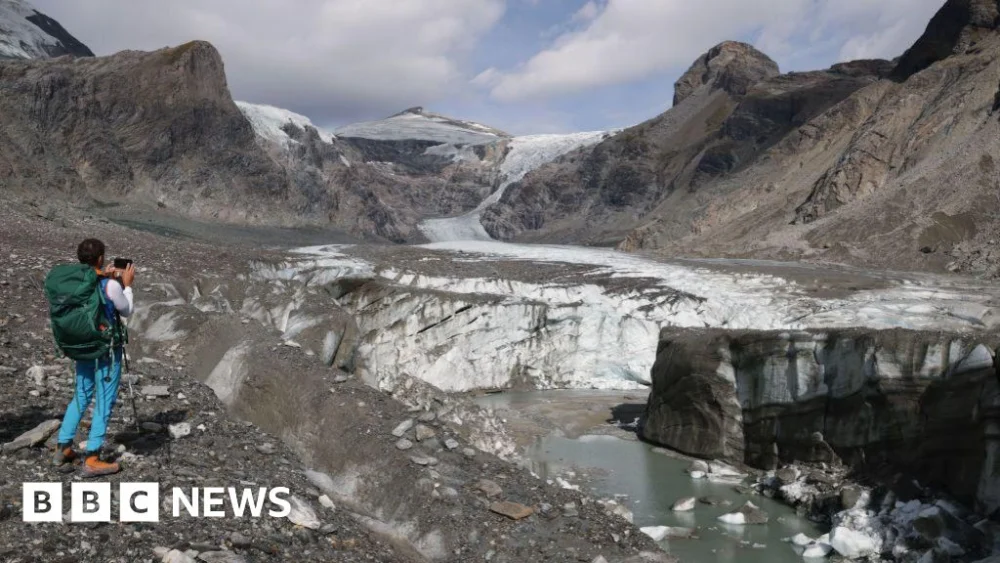
The majestic glaciers of the Austrian Alps, long symbols of enduring natural grandeur, are not merely receding but are now entering a perilous phase of structural disintegration, according to alarming new reports from leading scientists. This dramatic shift, directly attributed to the accelerating impacts of climate change, paints a stark picture of an ecosystem under severe and unprecedented threat. The latest annual report from the Austrian Alpine Club (ÖAV), a revered institution with a long history of glaciological monitoring, underscores the gravity of the situation, revealing that these ancient ice masses are diminishing "dramatically in length, area and volume."
Andreas Kellerer-Pirklbauer, a glaciologist from the University of Graz and a key author of the report, elaborated on the escalating crisis. "Many glaciers are not only shrinking in length but are increasingly entering a phase of structural disintegration," he warned. This isn’t just about a glacier getting smaller; it signifies a fundamental breakdown of its integrity. He described landscapes increasingly "shaped by exposed rock ledges, sections of ice breaking away and glacier tongues collapsing in on themselves." This structural failure indicates that the ice bodies are losing their coherence, fracturing into smaller, more vulnerable segments that accelerate melt rates and alter the very topography of the high Alps. The ice, once a monolithic, slow-moving force, is now losing its internal strength, leading to unpredictable dynamics and an increased risk of sudden collapses.
The statistical evidence presented in the ÖAV’s annual report is compelling and deeply concerning. Out of the 96 glaciers meticulously measured across Austria over the past year, an astonishing 94 exhibited significant shrinkage. This near-universal retreat underscores the systemic nature of the problem, affecting almost every major ice formation in the country. The report highlighted several particularly hard-hit glaciers, serving as poignant examples of the widespread devastation. The Alpeiner Ferner glacier, nestled in the picturesque region of Tyrol, suffered a staggering loss of 114.3 meters in length. Similarly, the Stubacher Sonnblickkees, located in the province of Salzburg, saw its length diminish by an alarming 103.9 meters. These figures represent not just abstract numbers but tangible losses of ice mass that have persisted for millennia, now vanishing within a single year.

Even Austria’s largest and most iconic glacier, the Pasterze, situated at the base of the Grossglockner in Carinthia, continues its relentless retreat. The report delivered a particularly grim forecast for the Pasterze, stating that it is "very likely" that its majestic glacier tongue will break off entirely in the coming years, effectively splitting the glacier into two distinct, smaller bodies. This fragmentation would not only be a profound symbolic loss but also accelerate the overall melting process, as smaller ice bodies have a greater surface area-to-volume ratio, making them more susceptible to atmospheric warmth. The Pasterze, a natural wonder that has drawn visitors for centuries, is thus on the brink of an irreversible transformation, signalling the end of an era for one of Europe’s most significant glacial features.
The underlying cause of this accelerated disintegration is unequivocally linked to anthropogenic climate change, according to the scientists. The report meticulously detailed the "extremely unfavourable" weather conditions that have plagued the Alps in recent years. A "warm winter with little snow" deprived the glaciers of the crucial accumulation of fresh ice and snow that typically replenishes their mass. This was followed by an "exceptionally warm early summer," with June experiencing temperatures almost 5°C warmer than the long-term average. Such elevated temperatures at critical melt periods leave the glaciers exposed and vulnerable, turning winter snow into slush and summer ice into torrents of meltwater. Furthermore, high-altitude monitoring stations recorded temperatures an alarming 2°C (3.6°F) above the long-term annual average, indicating that even at the highest elevations, the chilling grip of ice is loosening. These conditions exemplify a clear trend of rising temperatures, reduced snowfall, and extended melt seasons that are characteristic of a warming climate.
Gerhard Lieb, who co-manages the glacier monitoring service alongside Andreas Kellerer-Pirklbauer, emphasized a concerning new phenomenon: the diminishing resilience of the glaciers. He noted that "many glaciers are now losing so much mass that they barely react to periods of short-term cooling, such as that seen in July 2025." This observation is critical because it suggests that the glaciers have crossed a threshold. Even temporary dips in temperature or brief periods of increased snowfall are no longer sufficient to offset the overwhelming melt caused by prolonged warming. They have lost their buffering capacity, entering a state where their decline appears almost irreversible in the short to medium term. The historical composite images of the Alpeiner Ferner glacier, showing its drastic shrinkage between 1936, 2018, and a projected 2025, offer a stark visual testament to this accelerating loss, transforming once vast ice fields into rocky, barren terrain.
The scientists stressed that climate change is "particularly evident in the Alpine region," which acts as a sensitive barometer for global warming. The progressive rise in temperatures is not only melting glaciers but also leading to a cascade of "more extreme weather events and natural hazards." As glaciers retreat, they expose unstable rock faces, previously held together by permafrost, leading to increased risks of rockfalls, landslides, and debris flows. The formation of new glacial lakes, often dammed by unstable moraines, also poses a threat of sudden glacial lake outburst floods (GLOFs), which can devastate communities downstream.
The consequences extend beyond immediate hazards, impacting critical infrastructure and altering the very fabric of the Alpine landscape. Roads, railways, and mountain huts, built on what was once stable ground or permafrost, are increasingly vulnerable. The disappearance of glaciers also has profound hydrological implications. Glaciers serve as natural water reservoirs, slowly releasing meltwater during dry summer months, which is vital for downstream ecosystems, agriculture, hydropower generation, and drinking water supplies. Their loss threatens to disrupt these critical water cycles, potentially leading to water scarcity in regions dependent on glacial melt. The iconic beauty and recreational opportunities offered by the Alps, from skiing to mountaineering, are also profoundly affected, impacting local economies and cultural heritage.
Nicole Slupetzky, Vice-President of the Austrian Alpine Club, articulated the stark reality facing the region. "Climate change has long been a reality in the Alps, and we are experiencing its consequences… right now," she stated with conviction. Her words underscore a critical shift in perspective: the debate is no longer about the theoretical future impact of climate change, but about the very present and observable devastation. She concluded with a sobering assessment: "It is no longer a question of whether we can still save the glaciers in their former state. It is a question of mitigating the consequences for ourselves." This acknowledges that while past losses may be irreversible, urgent action is still required to adapt to the new reality, manage the risks, and aggressively pursue global efforts to curb greenhouse gas emissions to slow down further degradation. The disintegration of Austrian glaciers serves as a potent and visible warning, urging humanity to confront the profound and lasting changes brought about by a warming world.


 Roy Suryo
 George Anjay
 Ramos Leo
 atisusanti