
 George Anjay
In a significant and nuanced appeal to its most crucial ally, the Palestinian armed group Hamas has publicly called upon Iran to cease its retaliatory attacks targeting Gulf states. This rare public statement from Hamas, a group heavily reliant on Tehran for financial, military, and political backing, signals a complex and evolving regional dynamic. The call, issued in a formal statement, urged "brothers in Iran to avoid targeting neighbouring countries," emphasizing the need for all regional nations to foster cooperation and "preserve the bonds of brotherhood." This delicate messaging underscores Hamas’s tightrope walk, seeking to maintain its vital relationship with Iran while simultaneously expressing concern over the escalating regional tensions and their impact on civilian populations.
The statement emerged amidst a backdrop of heightened hostilities, with Iran launching drone and missile strikes that have reverberated across the Persian Gulf over the past two weeks. While Iranian authorities maintain these strikes are aimed at "American installations" on Gulf soil in retaliation for attacks by the United States and Israel, evidence and reports from affected nations suggest that civilian infrastructure has also been impacted. Hamas, in its communiqué, acknowledged this broader regional conflict, stating it was "following with deep concern the ongoing war in the region." The group then extended a plea to "all states and international organisations to work towards halting [the war] immediately," indicating a broader desire for de-escalation beyond its specific appeal to Iran.
The implications of Hamas’s appeal are multifaceted. Firstly, it highlights a potential divergence in strategic priorities between Hamas and Iran. While Hamas’s primary focus remains the conflict with Israel and the administration of Gaza, it appears to be increasingly sensitive to the collateral damage and instability that Iran’s actions are generating in its immediate neighbourhood. This sensitivity could stem from a concern that broader regional conflict could detract from its core objectives or even draw it into a wider war it is not yet prepared for. Secondly, the public nature of the statement suggests a calculated move by Hamas to project an image of moderation and regional responsibility, potentially to garner broader international sympathy or to differentiate itself from more hardline actors in the region.
Iran, a key architect of the "Axis of Resistance" that includes groups like Hamas and Hezbollah, has not publicly responded to Hamas’s statement. This silence could be interpreted in several ways. It might reflect Iran’s internal deliberations on how to address Hamas’s concerns without appearing to capitulate or weaken its regional posture. Alternatively, it could signify a pragmatic understanding of Hamas’s difficult position and the internal dynamics of the Palestinian movement. For Hamas, maintaining its relationship with Iran is paramount. Tehran’s sustained support has been instrumental in its ability to withstand Israeli pressure and project power. Therefore, Hamas’s appeal is likely calibrated to influence Iran’s actions without jeopardizing this critical alliance.
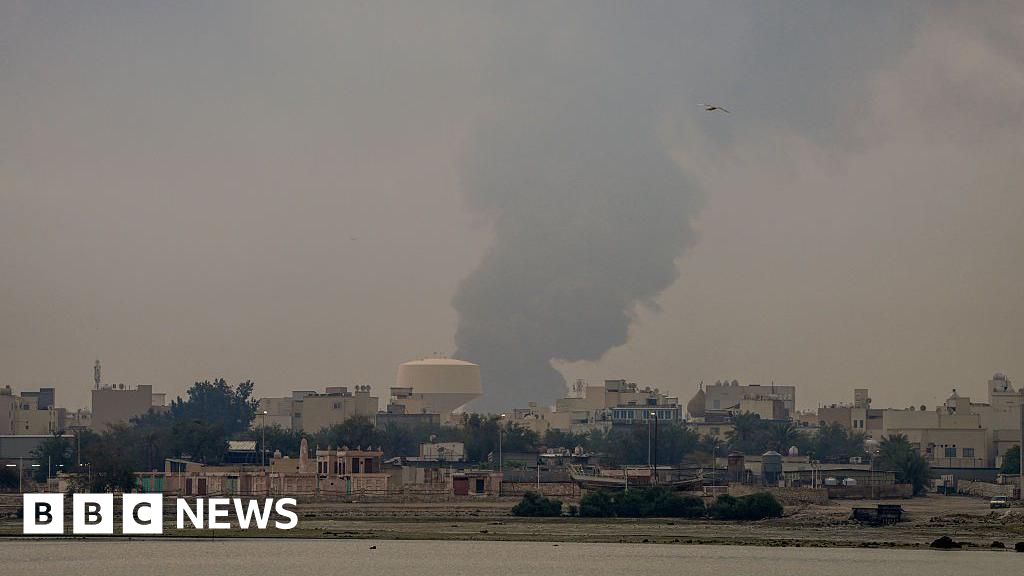
The human cost of the recent Iranian strikes has been significant, with at least 18 individuals reportedly killed across the region. The majority of these casualties have been security personnel or foreign workers. Specifically, the United Arab Emirates and Kuwait have each reported six fatalities, while Oman, Saudi Arabia, and Bahrain have each recorded two deaths. These figures underscore the tangible and tragic consequences of the ongoing hostilities, providing a stark humanitarian context for Hamas’s call for restraint. The visual evidence, such as plumes of smoke rising over fuel tanks in Muharraq, Bahrain, as captured by AFP via Getty Images on March 12th, further illustrates the reality of these attacks and the potential for widespread damage.
Hamas’s strategic dependence on Iran cannot be overstated. For years, Tehran has been its most significant benefactor, providing essential funds, weaponry, and political endorsement. This support has enabled Hamas to maintain its governance in Gaza and to engage in prolonged confrontations with Israel. The group’s ongoing conflict with Israel in the Gaza Strip, which has seen devastating consequences, has been a defining feature of its existence. While a US-imposed ceasefire came into effect in October, bringing a temporary respite, the fragile peace has been marred by accusations of near-daily violations from both sides. The Hamas-run health ministry has reported 649 fatalities in Gaza since the ceasefire took hold, illustrating the persistent violence and instability that continues to plague the region.
The current appeal from Hamas to Iran adds another layer of complexity to the already intricate geopolitical landscape. It suggests that even within alliances forged in opposition to shared adversaries like the US and Israel, there can be divergent views on strategy and acceptable levels of regional disruption. Hamas’s statement serves as a reminder that while ideological solidarity may bind these groups, the practical realities of governance, regional stability, and the protection of civilian populations can create points of friction. The effectiveness of Hamas’s appeal remains to be seen, but its public issuance marks a noteworthy moment in the ongoing regional power struggles and the evolving relationships between key actors in the Middle East. The international community will be watching closely to see if this plea for de-escalation from a key regional player can influence the trajectory of the current hostilities and foster a more stable environment for all nations in the Gulf.




 Nakalama John
 atisusanti
 Ramos Leo
 Roy Suryo
 Nana Banana