Nana Banana
This seemingly absurd situation arises from an outdated national grid that struggles to cope with the influx of renewable energy. Designed decades ago to transport power from large coal and gas plants located near major population centres, the existing transmission network lacks the capacity to seamlessly move vast quantities of electricity generated in remote, wind-rich areas like Scotland to where it’s needed in the south. This geographical mismatch and infrastructural bottleneck mean that even when abundant wind power is available, it often cannot be fully utilized.

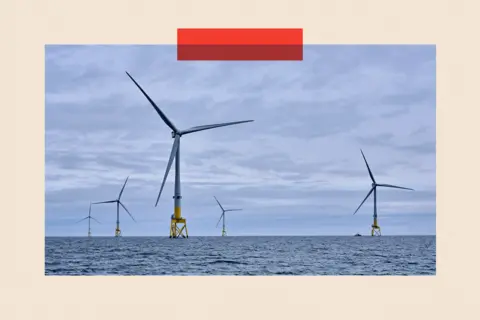
The consequences are dire and costly. Energy companies like Ocean Winds receive "constraint payments" – essentially compensation – when their wind farms are forced to curtail output because the grid cannot accommodate the power. For a mere half-hour period on 3 June, Ocean Winds was paid £72,000 to halt generation from its Moray Firth wind farms due to grid overload. Simultaneously, 70km east of London, the Grain gas-fired power station on the Thames Estuary received £43,000 to increase its electricity supply to meet demand in the south, highlighting the perverse nature of the current system.
These balancing payments are not isolated incidents; they occur virtually every day. Analysis by Octopus Energy revealed that Seagreen, Scotland’s largest wind farm, received an astonishing £65 million last year for restricting its output 71% of the time. This inefficient grid management has already cost the country over £500 million this year alone, a figure the National Electricity System Operator (NESO) projects could skyrocket to almost £8 billion annually by 2030. This exorbitant expense is directly passed on to consumers, inflating energy bills and directly contradicting the government’s promise that transitioning to net-zero would deliver cheaper electricity.

In response to this escalating crisis, the government is contemplating a radical overhaul: replacing the single national electricity market with several smaller, regional markets, a concept known as "zonal pricing." The hope is that this shift could significantly enhance system efficiency and ultimately reduce household bills, though its implementation is fraught with challenges and has ignited intense opposition.
The proposals have sparked what one senior energy industry executive described as "the most vicious policy fight" he has ever witnessed, leading to fractured relationships within the sector. The Prime Minister has reportedly requested a personal review of the "postcode pricing" plan, recognizing its potential political volatility. The stakes are incredibly high, as the government considers the most significant shake-up of the UK electricity market since its privatisation 35 years ago, with profound implications for energy security, investment, and consumer costs.

The policy debate is unfolding amidst growing political pressure on the net-zero agenda. Energy Secretary Ed Miliband finds his clean energy policies under unprecedented attack from various fronts. The Conservative Party has expressed reservations, while green politicians argue that the current approach isn’t delivering tangible benefits for ordinary citizens. Even former Prime Minister Tony Blair has weighed in with criticisms, highlighting the political vulnerability of the net-zero strategy. Reform UK, led by Richard Tice, has seized upon the issue, declaring that the next general election will be fought on "immigration and net stupid zero," believing it to be a major Achilles heel for the Labour government.
Public sentiment is largely driven by the cost of living crisis, with rising energy prices frequently cited as a primary concern. Miliband had initially championed his aggressive clean energy policies, promising that ensuring 95% of the country’s electricity from low-carbon sources by 2030 would slash the average electricity bill by £300. However, the potential for renewables to deliver these cost savings has not materialized for consumers. Despite renewables now generating over half of the country’s electricity, grid limitations necessitate the frequent use of gas-fired generation to balance the system, and because gas tends to be more expensive, it frequently sets the wholesale price, keeping overall costs high.

Proponents of zonal pricing argue that the current national pricing system inherently ties all electricity prices to the most expensive generator needed to meet demand, which is often gas. By creating regional markets, this dynamic could be disrupted. Consider Scotland, with its vast wind resources but a relatively small population of 5.5 million. Under zonal pricing, the argument goes, local prices would reflect local supply and demand. On a blustery day like 3 June, instead of paying wind farms to switch off, they would be compelled to sell their surplus power to local consumers, theoretically driving prices down dramatically, perhaps even offering free electricity on some occasions.
Other regions rich in renewable potential, such as Yorkshire, the North East, and parts of Wales, would also stand to benefit from significantly cheaper electricity. As solar investment expands across Lincolnshire and other parts of eastern England, these areas could likewise see a tumble in prices. This abundance of cheap, green power could fundamentally alter the economics of industry, attracting energy-intensive businesses like data centres, chemical manufacturers, and other heavy industries seeking lower operational costs.
While London and much of the south of England might experience higher electricity prices at times, supporters contend that the hundreds of millions of pounds saved by the overall system could be redistributed to ensure no one pays more than they currently do. Moreover, these regional price differentials could incentivize investors to build new wind and solar plants closer to major demand centres, fostering a more balanced and resilient grid. This would not only lower prices in the long run but also reduce the need for extensive new transmission infrastructure, meaning fewer pylons scarring the countryside and further cost savings for all.
"Zonal pricing would make the energy system as a whole dramatically more efficient, slashing this waste and cutting bills for every family and business in the country," asserts Greg Jackson, CEO of Octopus Energy, a major UK energy supplier. Research commissioned by Octopus estimates potential savings of over £55 billion by 2050, which they claim could shave £50 to £100 off the average annual bill. Octopus also points to Sweden’s successful transition to regional pricing in a mere 18 months as evidence of its feasibility. NESO, Citizens Advice, and the head of the energy regulator Ofgem are among the prominent supporters, with a House of Lords committee recently recommending the country adopt the system.

However, many businesses involved in developing and operating renewable energy plants vehemently oppose the move. Tom Glover, UK chair of the German power giant RWE, voices significant concerns about investment uncertainty. "We’re making billions of pounds of investments in renewable power in the UK every year," Glover states. "I can’t go to my board and say let’s take a bet on billions of pounds of investment." He fears that altering the pricing mechanism could destabilize existing contracts and introduce revenue volatility, potentially undermining the government’s ambitious green energy targets.
The primary cost of wind and solar plants lies in their construction. The price of the energy they produce is therefore intimately linked to the capital expenditure and, crucially, the interest rates at which developers borrow money. The government anticipates power companies spending £40 billion annually over the next five years on UK renewable projects. Glover warns that even a marginal increase in interest rates, exacerbated by perceived policy risk, could have profound effects on the amount of renewable infrastructure built and the eventual cost of the power.

"Those additional costs could quickly overwhelm any of the benefits of regional pricing," cautions Stephen Woodhouse, an economist with the consultancy firm AFRY, which has analyzed the impact of regional pricing for power companies. This concern is particularly pertinent given the current economic climate, where high interest rates combined with rising material costs (such as steel) have already pushed up the cost of renewables, leading to the cancellation of major projects, including a huge offshore wind farm off the coast of Yorkshire last month, due to economic non-viability.
Furthermore, critics highlight that National Grid, which owns the pylons, substations, and cables, is already embarking on a massive £60 billion investment programme over the next five years to upgrade the system for clean power. This new infrastructure will significantly increase capacity, reducing the need for curtailment payments and thereby diminishing some of the purported savings from a regional pricing system. Other arguments against the change include the years it could take to implement, the impracticality of energy-intensive businesses like British Steel relocating, and the inherent unfairness of a "postcode lottery" where some customers pay more than others.

Conversely, Greg Jackson of Octopus dismisses these objections, suggesting that the power companies and their financial backers are merely seeking to protect their substantial profits derived from the current inefficient system. "Unsurprisingly, it’s the companies that enjoy attractive returns from this absurd system who are lobbying hard to maintain the status quo," he asserts. Yet, the power companies counter that Octopus itself has a vested interest, being the UK’s largest energy supplier with seven million customers and owning a sophisticated billing system it licenses to others, implying it could benefit from changes to the electricity pricing structure.
The clock is ticking for a decision. The government’s ability to meet its clean power targets hinges on the rapid construction of new wind farms and solar plants. Developers emphasize the critical need for certainty regarding the future electricity market to unlock the necessary investments. A decision is expected within the next couple of weeks, placing the ball firmly in Mr. Miliband’s court as he navigates this fiercely contested policy landscape.



 Ramos Leo
 atisusanti
 Roy Suryo
 George Anjay