
 Roy Suryo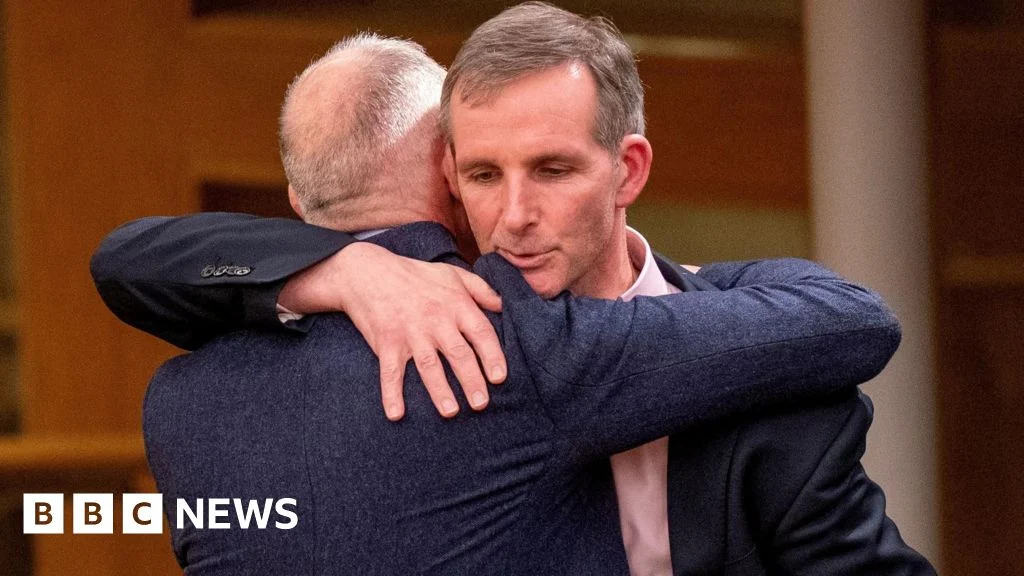
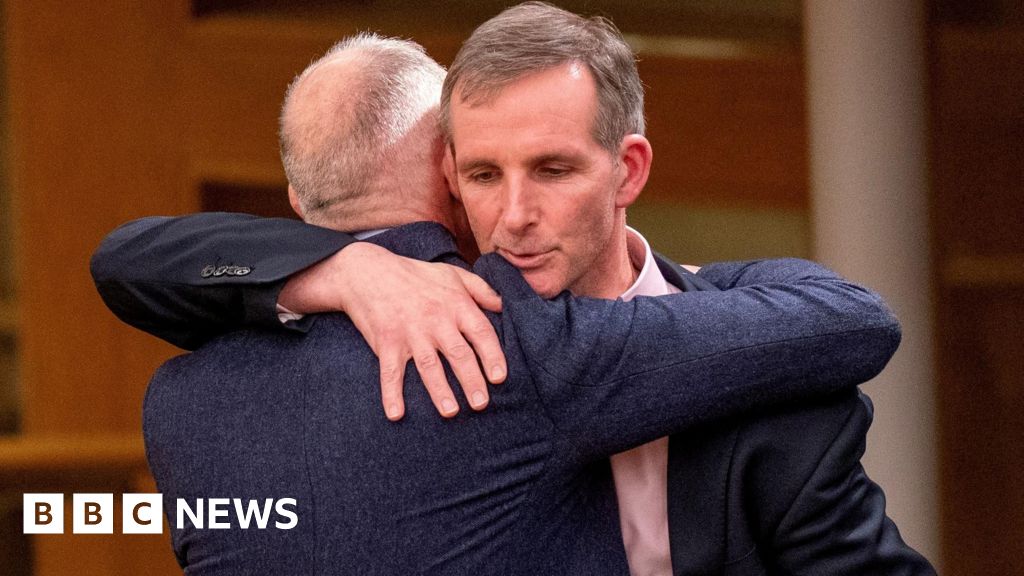
MSPs have rejected the opportunity to make Scotland the first part of the United Kingdom to legalise assisted dying, marking a significant setback for campaigners and proponents of the legislation. The deeply divisive proposals, spearheaded by Liberal Democrat Liam McArthur, aimed to permit terminally ill, mentally competent adults to seek medical assistance to end their lives. Following a fervent and emotionally charged final debate within the Scottish Parliament, the bill was ultimately defeated by a margin of 69 votes to 57.
A central tenet of the opposition’s argument revolved around profound concerns regarding the potential for coercion. Opponents repeatedly voiced fears that vulnerable individuals could be pressured into choosing an assisted death, a concern that resonated throughout the parliamentary proceedings. In response to these deeply held reservations, Liam McArthur’s bill had incorporated a robust two-declaration process. Individuals seeking assisted dying would have been required to make two formal declarations affirming their wishes, alongside rigorous checks by medical professionals to ensure they had not been coerced or unduly influenced. Despite these safeguards, the spectre of coercion proved to be a decisive factor for many parliamentarians.
The outcome in Scotland contrasts with developments in England and Wales, where a similar bill to legalise assisted dying is currently under consideration at Westminster. However, the prospects for that bill passing before the end of the current parliamentary term appear increasingly unlikely.
In a determined effort to sway undecided MSPs, Liam McArthur made several significant amendments to his bill during its passage through parliament. Notably, he conceded to limiting eligibility to individuals with a prognosis of less than six months to live, a concession that marked a departure from his earlier stance against such a restrictive timeline. Nevertheless, these strategic adjustments ultimately proved insufficient to secure the bill’s passage.
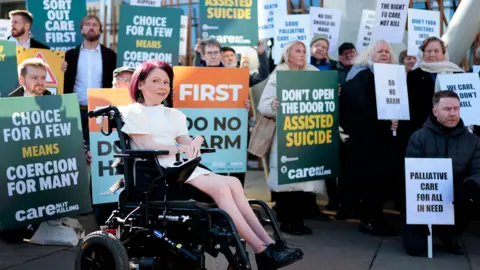
The phrase "coercion" echoed repeatedly throughout the final debate, underscoring its prominence as a primary objection for those opposing the legislation. Independent MSP Jeremy Balfour, who was born with significant limb differences, articulated the profound anxieties held by many disabled people regarding the potential implications of assisted dying legislation. He warned that the bill could unleash a "pandora’s box" of unintended consequences, asserting that "no meaningful protection" could truly guard against coercion. Balfour implored his colleagues to "consider the consequences for the most vulnerable," highlighting the deep-seated fears that the bill could disproportionately affect those already facing significant challenges.
Pam Duncan-Glancy, a vocal critic of the bill who uses a wheelchair, made a powerful plea for MSPs to "choose to make it easier to live than to die." Further concerns were raised regarding the protections afforded to medical professionals who conscientiously object to participating in assisted dying, as well as the adequacy of oversight mechanisms for doctors involved in authorising the process. Critics also argued that the primary focus should remain on enhancing and expanding palliative care services, contending that improved end-of-life care could address many of the underlying issues that drive requests for assisted dying. Ruth Maguire of the SNP echoed these sentiments, highlighting concerns about the financial implications of the proposals and asserting, "It’s not a free choice if you do not have access to good palliative care." She expressed her profound discomfort with the notion of doctors discussing assisted dying as part of treatment options, stating that her "blood runs cold thinking about sitting in a room in hospital and having a doctor raise [assisted dying] with me as we weigh up treatment options."
Despite the significant opposition, the debate also witnessed several deeply moving and powerful contributions from supporters of the bill. Liam McArthur recounted the harrowing case of a man who, after undergoing a life-altering surgery that involved the removal of his penis due to cancer, was left "begging to have his life ended." Throughout the debate, McArthur was widely commended for his constructive and measured approach. However, breaking from his usual conciliatory tone, he directly addressed his fellow MSPs, stating that it was "not good enough" to merely support the general principles of the bill at an earlier stage only to vote against it in its final form. He pointed to the growing number of countries and states globally, including Jersey and the Isle of Man, as evidence that "there is another way" and that Scotland "must do better." McArthur passionately argued, "This is the time. This is the bill. This is the change that dying Scots desperately need us to take. I implore MSPs to have the courage of your convictions."
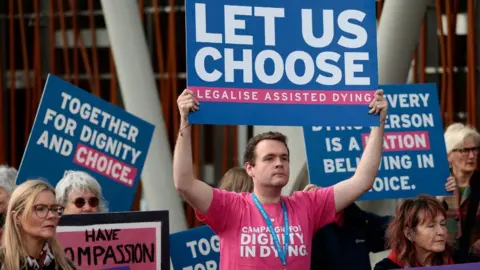
Former Green co-leader Lorna Slater, who had previously shared her experience of her father’s "beautiful" assisted death in Canada, fought back tears as she described his final moments. She implored MSPs to recognise that "We should all have the right to choose." The SNP’s George Adam spoke with profound emotion about his wife Stacey, who lives with Multiple Sclerosis and was present in the parliamentary gallery. He told the chamber, "If the worst should ever come to her, if she was ever facing that unbearable suffering at the end of life, she would want a choice." Conservative MSP Sandesh Gulhane, an NHS GP, shared the testimony of a patient who had told him, "you wouldn’t let a dog die like this," underscoring the urgent need to prevent individuals from ending their lives "alone, scared, in agonising pain." Supporters of the bill argued that the choice was not a binary one between improved palliative care and assisted dying, with Liberal Democrat leader Alex Cole-Hamilton asserting that the legislation would provide a "powerful matrix of safety."
Liam McArthur’s assisted dying bill represented the third such legislative attempt to come before the Scottish Parliament since devolution in 1999, but it was the first to successfully navigate the crucial stage one vote on its general principles. MSPs were granted a free vote on the proposals, allowing them to cast their ballots according to their conscience rather than party lines. While the Scottish government maintained a neutral stance on the issue, First Minister John Swinney had publicly declared his opposition to the bill. Speaking to reporters following the debate, Swinney expressed his relief at the outcome.
The bill had initially passed the stage one vote, endorsing its general principles, by a relatively comfortable margin of 14 votes. However, securing a majority in the final vote was always recognised as a formidable challenge. A significant number of parliamentarians who had supported the bill at stage one did so not necessarily out of full endorsement, but rather because they believed the issue warranted thorough parliamentary debate and consideration. This proved to be the case, as the bill was debated across five separate sessions, including a rare Friday sitting at Holyrood. The culmination of these discussions was a pivotal moment in the history of the Scottish Parliament, with MSPs decisively voting against assisted dying. A total of 12 MSPs who had previously backed the bill at stage one ultimately voted against it at stage three, a shift that proved decisive in its defeat.
Speaking to reporters after the vote, Liam McArthur expressed his devastation and cautioned that some MSPs might later regret their decision, emphasizing that the issue was "not going away." Ally Thompson of Dignity in Dying conveyed her profound disappointment, stating, "Tonight dying people across Scotland have been dealt a huge blow. The vote was against safety and against compassion." Conversely, Dr. Gordon Macdonald, CEO of Care Not Killing, welcomed the outcome, expressing relief and reiterating the belief that the bill posed "serious risks to the most vulnerable in society – including disabled people and those suffering from domestic abuse."
The final vote tally was as follows: For the bill: 57 votes. Against the bill: 69 votes. The following MSPs voted for the bill: George Adam; Karen Adam; Tom Arthur; Colin Beattie; Siobhian Brown; Ariane Burgess; Alexander Burnett; Stephanie Callaghan; Jackson Carlaw; Maggie Chapman; Katy Clark; Willie Coffey; Alex Cole-Hamilton; Graeme Dey; Natalie Don-Innes; James Dornan; Jackie Dunbar; Jim Fairlie; Joe FitzPatrick; Kenneth Gibson; Jenny Gilruth; Christine Grahame; Jamie Greene; Ross Greer; Sandesh Gulhane; Rachael Hamilton; Emma Harper; Patrick Harvie; Fiona Hyslop; Liam Kerr; Bill Kidd; Monica Lennon; Richard Lochhead; Douglas Lumsden; Gordon MacDonald; Gillian Mackay; Rona Mackay; Ben Macpherson; Gillian Martin; Liam McArthur; Ivan McKee; Paul McLennan; Jenni Minto; Carol Mochan; Willie Rennie; Angus Robertson; Shona Robison; Mark Ruskell; Lorna Slater; Shirley-Anne Somerville; Kaukab Stewart; Kevin Stewart; Michelle Thomson; Maree Todd; David Torrance; Evelyn Tweed; Elena Whitham.
The following MSPs voted against the bill: Clare Adamson; Alasdair Allan; Jackie Baillie; Claire Baker; Jeremy Balfour; Neil Bibby; Sarah Boyack; Miles Briggs; Keith Brown; Finlay Carson; Foysol Choudhury; Angela Constance; Bob Doris; Sharon Dowey; Pam Duncan-Glancy; Tim Eagle; Annabelle Ewing; Fergus Ewing; Russell Findlay; Kate Forbes; Murdo Fraser; Meghan Gallacher; Maurice Golden; Pam Gosal; Mairi Gougeon; Rhoda Grant; Mark Griffin; Jamie Halcro Johnston; Clare Haughey; Jamie Hepburn; Craig Hoy; Daniel Johnson; Stephen Kerr; Richard Leonard; Fulton MacGregor; Ruth Maguire; Michael Marra; John Mason; Michael Matheson; Mairi McAllan; Roz McCall; Stuart McMillan; Marie McNair; Pauline McNeill; Edward Mountain; Oliver Mundell; Audrey Nicoll; Paul O’Kane; Ash Regan; Emma Roddick; Douglas Ross; Alex Rowley; Davy Russell; Anas Sarwar; Graham Simpson; Liz Smith; Collette Stevenson; Alexander Stewart; Nicola Sturgeon; Paul Sweeney; John Swinney; Mercedes Villalba; Sue Webber; Annie Wells; Tess White; Martin Whitfield; Brian Whittle; Beatrice Wishart; Humza Yousaf.
Neil Gray was recorded as proxy voting, with his vote cast by Graeme Dey.




 Nakalama John
 atisusanti
 Ramos Leo
