
 Roy Suryo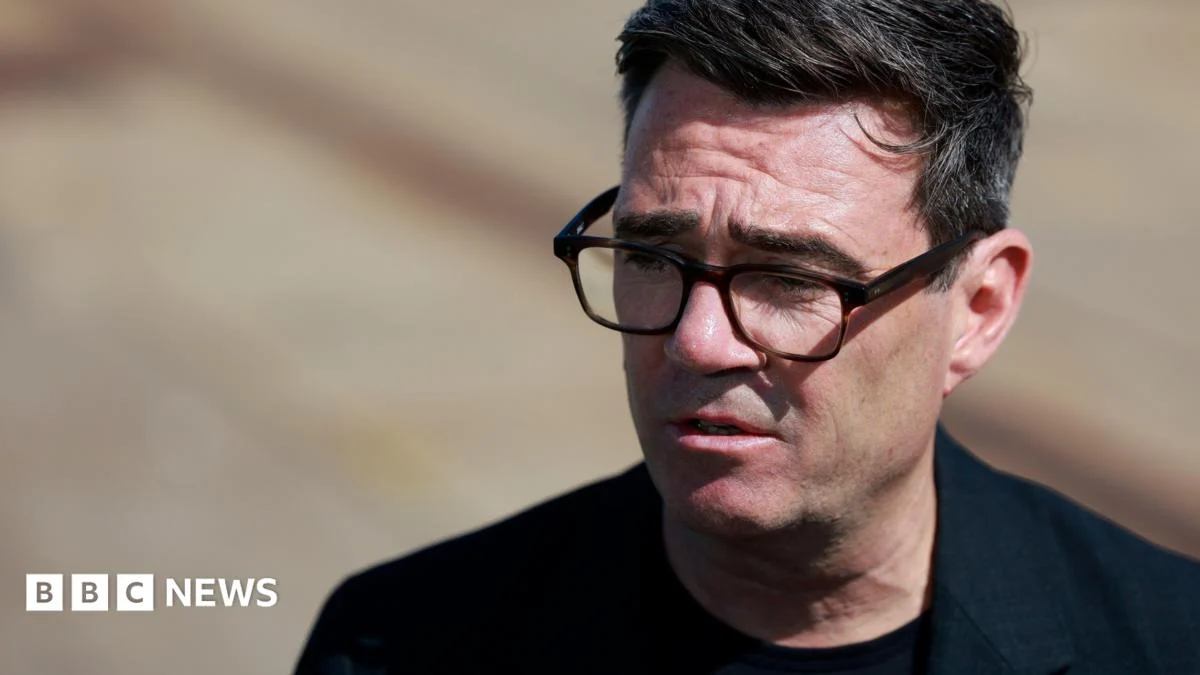
In a significant move aimed at forging cross-party consensus on the critical issue of social care reform in England, Prime Minister Andy Burnham has extended invitations to the leaders of the Conservative and Liberal Democrat parties for crucial talks. The Prime Minister is scheduled to convene with Kemi Badenoch, the leader of the Conservatives, and Sir Ed Davey, the leader of the Liberal Democrats, on Wednesday. This summit is anticipated to be the backdrop for a major speech by Burnham, where he is expected to articulate his belief that achieving common ground across the political spectrum is paramount to successfully overhauling the nation’s social care system.
While Sir Ed Davey has confirmed his attendance, opting to participate remotely due to prior family commitments in France and his role as a caregiver to his disabled son, Kemi Badenoch will be absent. The Conservative leader has delegated shadow health secretary Stuart Andrew to represent the party at the discussions. This decision has drawn criticism from within Conservative ranks, with a party source suggesting the invitation’s short notice indicates the initiative might be "only being done for show." Notably absent from Burnham’s invitations were the leaders of Reform UK and the Green Party of England and Wales, a decision that has already sparked commentary.
The urgency of social care reform has been a recurring theme for the Prime Minister. Last week, he expressed grave concerns to the BBC, warning that the National Health Service (NHS) would "collapse" if social care was not fundamentally reformed. He underscored his personal commitment, stating he would not wish to leave office without enacting "substantial change" to the existing framework. Burnham has pledged to invest "whatever political capital" he possesses into "fixing broken social care," though he has refrained from providing a specific timeline for these impending changes.
Burnham’s vision for a universal social care system in England dates back to 2009, during his tenure as health secretary under former Prime Minister Gordon Brown. At that time, he proposed a compulsory levy to finance such a system. The Brown government also explored the concept of allowing individuals to defer payment for care until after their death, a proposal that was controversially branded a "death tax" by the Conservative opposition.
While Burnham’s speech on Wednesday is not expected to unveil detailed blueprints for a new social care model, the BBC has learned that he will announce an acceleration of the Casey Commission’s work. This independent review, led by Baroness Louise Casey, is tasked with developing recommendations for the establishment of a National Care Service. The Prime Minister will be joined at the speech by Health Secretary Yvette Cooper, and Baroness Casey herself will be present to launch a public consultation, offering citizens an opportunity to voice their perspectives on social care.
In his pre-speech remarks, Burnham articulated his desire to "draw a line under people playing politics" with social care. He reiterated his call for a "different kind of politics: problem-solving, not point-scoring." He emphasized that the need for such an approach is nowhere more critical than in social care, a sector that has, for decades, been deferred by successive governments due to perceived risks, difficulties, and complexities. Burnham stressed his genuine commitment to addressing this issue, asserting that finding common ground and actively listening to others are essential for progress.
Earlier in the week, Kemi Badenoch had communicated her position to the Prime Minister, urging him to rule out tax increases or increased borrowing as funding mechanisms for social care reform. A Conservative spokesman confirmed Stuart Andrew’s attendance in Badenoch’s stead, expressing readiness to collaborate with Labour on measures to enhance social care, provided they do not necessitate additional taxation or borrowing. The spokesman highlighted the vital role of social care in safeguarding the most vulnerable and stressed the need for any proposed changes to be underpinned by a "clear, credible, and fully costed plan" that delivers value for both the public and taxpayers. He also cautioned against vague reform promises from Labour, demanding clarity on implementation and detail.
Sir Ed Davey, in his statement on X, explained his remote participation, citing his presence with family in France and his personal experience as a caregiver. He expressed hope that the discussions would mark a significant step towards rectifying the "broken care service." Sir Ed has previously indicated his willingness to contribute to finding a "real and lasting consensus on social care," while also noting the history of 22 failed reform attempts since 1997. He believes that a different approach is necessary for the 23rd effort to succeed and that cross-party talks are the sole path to a viable solution. His priorities for any reform include placing family carers at the forefront of proposals and ensuring that individuals are not compelled to relinquish their homes or life savings to cover catastrophic care costs.
Reform UK leader Nigel Farage voiced his dissatisfaction with being excluded from the discussions, accusing Burnham of "conspiring behind closed doors with the failed political establishment" and ignoring a party that has consistently led national opinion polls and represents a significant segment of the electorate. Green Party leader Zack Polanski, when questioned on Newsnight about the invitation snub, deferred to the Prime Minister’s decision but acknowledged the positive step of inviting opposition leaders. He expressed a desire to participate and encouraged the Prime Minister to extend the invitation, emphasizing that the focus should be on the "ticking time bomb" of adult social care rather than political egos.
Adult social care provides essential state support to enable individuals to live more independently, including assistance within their homes. Unlike the NHS, social care services are not universally free at the point of use. In England and Northern Ireland, individuals with savings exceeding £23,250 are generally ineligible for council assistance with care costs, with different eligibility criteria applying in Wales and Scotland.
The personal impact of the current social care system is poignantly illustrated by the experience of Richard Hardy, a resident at Broadway Lodge Residential Home in York for the past two and a half years. Richard and his wife Diane, like many others, made their choice of care home based on cost. However, with weekly fees of £1,100, they harbour concerns about the longevity of their savings. Diane shared the financial strain, stating, "I’ve done a lot of money juggling over the last few months." While Richard is content at the home, with many alternatives being more expensive, Diane expressed her deep-seated worry about potentially having to sell their family home to fund his ongoing care. "There’s always that sort of little doubt, but I have faith in the fact that you know this is meant to be," she said, reflecting a common sentiment of hope amidst uncertainty.
Faizal Mohamudbaccus, the owner of the care home, stated that they would never ask a resident to leave due to a lack of funding. However, he highlighted the urgent need for local authorities to intervene more swiftly when care home residents deplete their financial resources. "The system for an elderly person coming into a care home is broken and there’s not enough social workers, there’s not enough organisation or planning and I think a more robust system would make it easier for the family," he concluded, underscoring the systemic issues that require urgent attention.




 Nakalama John
 atisusanti
 Ramos Leo
 Nana Banana
 George Anjay