
 Roy Suryo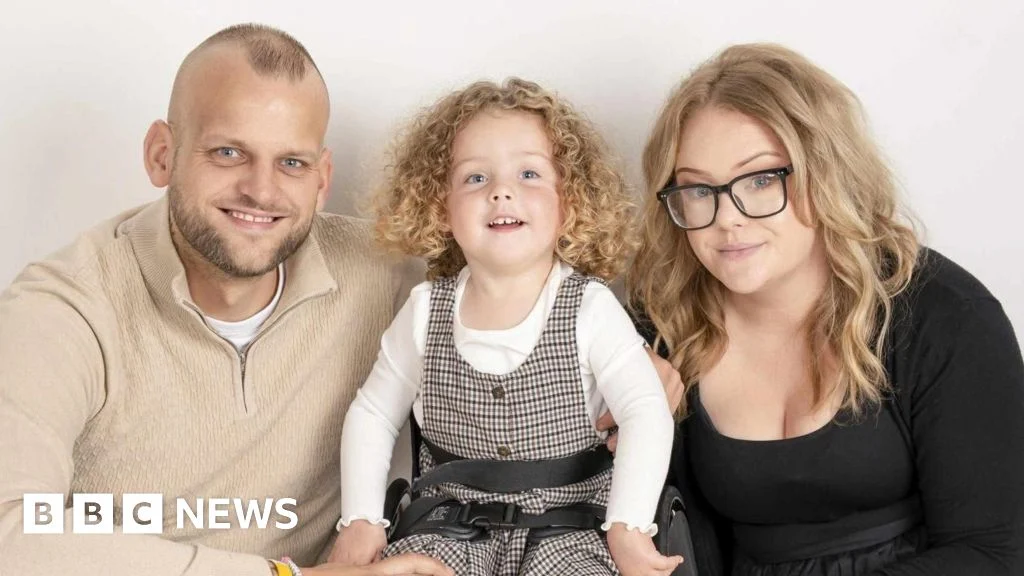
Scotland has made history by becoming the first nation in the United Kingdom to implement newborn screening for Spinal Muscular Atrophy (SMA), a devastating and progressive genetic condition. This pioneering initiative, launched as a two-year pilot, will now offer all babies born in Scotland the chance of an early diagnosis through a simple heel prick test, a crucial step in potentially altering the trajectory of this life-limiting disease.
Spinal Muscular Atrophy is a rare inherited disorder that attacks motor neurons – nerve cells in the spinal cord that control voluntary muscle movement. This leads to severe and progressive muscle weakness, impacting essential functions such as breathing, swallowing, and movement. Without timely intervention, many infants diagnosed with the most severe form of SMA, Type 1, face a grim prognosis, with life expectancy often limited to just two years. The introduction of this screening program marks a significant advancement in the fight against SMA, offering hope and a critical window for early treatment.
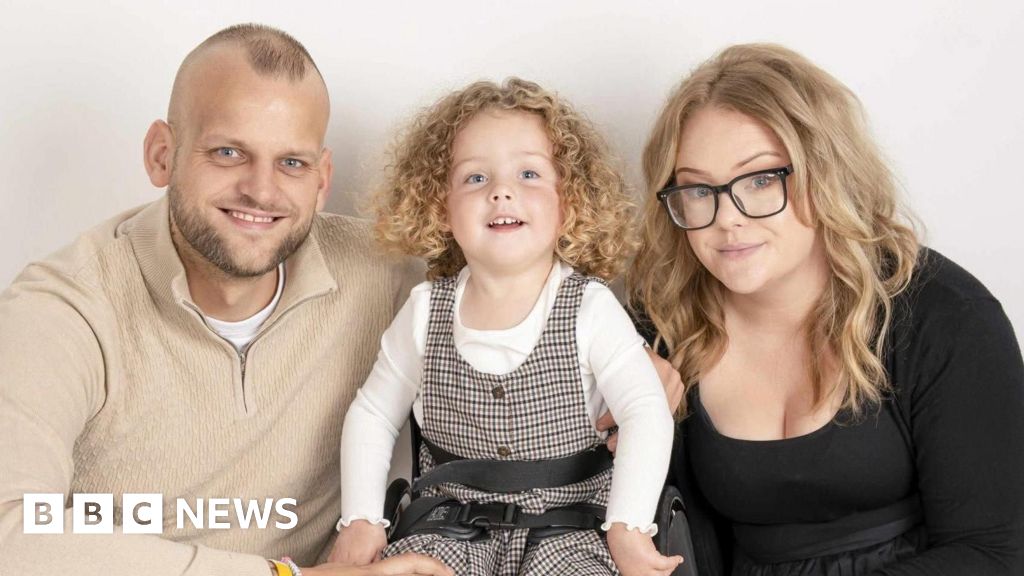
The urgency for early detection is starkly illustrated by the experience of the Pearson family. Three-year-old Grayce, from Milton, Glasgow, was diagnosed with SMA Type 2 when she was 14 months old. Her parents, Tony and Carrie, vividly recall the terrifying signs that emerged when Grayce was just six months old. "Overnight she stopped kicking her legs and wasn’t attempting to crawl. She wasn’t trying to reach out for things," Tony recounted, describing the rapid onset of her condition. Carrie shared the initial frustration of being dismissed as an over-anxious mother, a sentiment echoed by many parents of children with rare diseases. "A child just doesn’t stop being able to physically move her legs altogether," she stated, highlighting the severity of the observed decline.
The window for effective treatment is critically narrow. As motor neurons are lost, the potential for recovery diminishes, and treatment options become less impactful. Grayce’s diagnosis at 14 months meant she was too old for gene therapy, a potentially life-altering treatment that is most effective when administered to infants before the onset of significant symptoms. "Grayce’s age when she was diagnosed, she couldn’t get gene therapy, which would have been a one-off and she probably would have been making her milestones," Carrie explained, underscoring the profound difference early diagnosis could have made.
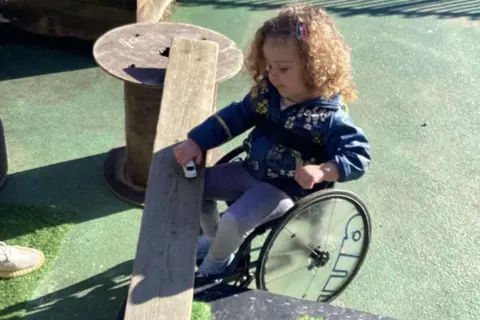
Despite the challenges, Grayce is now receiving medication that has significantly improved her symptoms, enabling her to achieve milestones her parents once feared she might never reach. "Even the fact that she’s twisting around and reaching for stuff, she couldn’t do that at all," Carrie said, a testament to the ongoing impact of treatment. Grayce is a vibrant three-year-old who enjoys nursery, music, and zipping around in her wheelchair – achievements made possible through dedicated therapy and her parents’ unwavering advocacy.
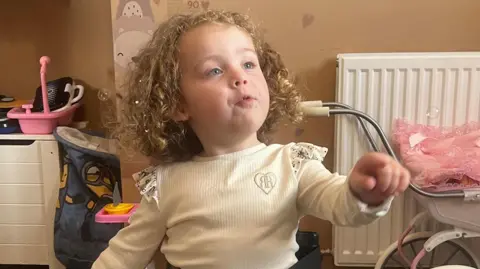
Tony emphasizes the importance of consistent physical therapy, including swimming, to help Grayce maintain and build muscle strength. "I take her every two or three days," he said. "I need to be doing it to try and fight for her." This dedication stems from their personal journey and their powerful advocacy for wider newborn screening.
The campaign led by Carrie and Tony, alongside numerous other families and charities, has been instrumental in bringing about this change. Their goal is to spare other parents the harrowing experience of a late diagnosis. "As soon as that baby is born, if the parents find out their children have got SMA they can start gene therapy and show little to no symptoms," Tony stated passionately. "For what we’ve had to go through, I just want other parents to be saved that scary moment of diagnosis."
On average, Scotland sees three to four babies born with SMA each year. The Scottish Newborn Screening Laboratory in Glasgow, which processes approximately 50,000 heel prick samples annually, has expanded its testing capabilities to include SMA alongside the 10 other rare and serious conditions it currently screens for.
Sarah Smith, Director of the Scottish Newborn Screening Laboratory and consultant clinical scientist for NHS Greater Glasgow and Clyde, highlighted the transformative potential of pre-symptomatic detection. "We’re testing babies that haven’t shown the symptoms yet," she explained. "So they appear to be perfectly, lovely, healthy babies and the parents don’t know what’s going to come in the future with these diseases. So by picking them up pre-symptomatically, we can get them onto the treatment and in a lot of cases the symptoms of those diseases will never actually present themselves." This proactive approach aims to prevent the debilitating progression of the condition before it manifests.

Health Secretary Neil Gray officially announced the rollout, stating, "Scotland is the first country in the UK to start the evaluation of SMA screening. All babies born in Scotland as of the 23 March will now receive the SMA test as part of the blood spot test that every baby in Scotland receives. This is a pilot across Scotland to help inform the UK screening committee about its efficacy and to allow them to take a further recommendation about its wider rollout." He further emphasized the government’s commitment: "SMA can have devastating implications for babies and their families, and this investment demonstrates our commitment to early detection through our screening programme. By detecting SMA before symptoms develop, screening could allow earlier treatment which could be life-changing and help secure the best possible care and support for babies and families."
The SMA UK charity chief executive, Giles Lomax, hailed the initiative as a significant milestone. "This milestone represents an important step forward for the SMA community," he commented. "With all three treatments now routinely available through NHS Scotland alongside newborn screening, the future for anyone diagnosed with SMA is very different compared to their peers who were diagnosed symptomatically. These babies will now have the opportunity to grow up without lifelong healthcare needs and the complexity and challenges of living with SMA."

The momentum for this change has been amplified by public figures, including pop star Jesy Nelson, whose twin daughters were diagnosed with SMA Type 1 last year. Nelson has become a vocal advocate, calling for universal newborn testing across the UK. She launched a petition that garnered 100,000 signatures in a single day, triggering a debate in the House of Lords. In a heartfelt video, Nelson expressed her gratitude to her supporters, stating, "You have no idea how much this means to me and the SMA community… This is the first hurdle but we bloody did it and I truly believe that together we are going to make change." Her advocacy underscores the profound impact of SMA and the urgent need for early intervention.
The introduction of SMA screening in Scotland is a landmark achievement, offering a critical lifeline to newborns and their families. It represents a proactive and compassionate approach to healthcare, prioritizing early detection and intervention to mitigate the devastating effects of this rare genetic condition, and setting a precedent for the rest of the UK.




 Nakalama John
 atisusanti
 Ramos Leo
