
 Nakalama John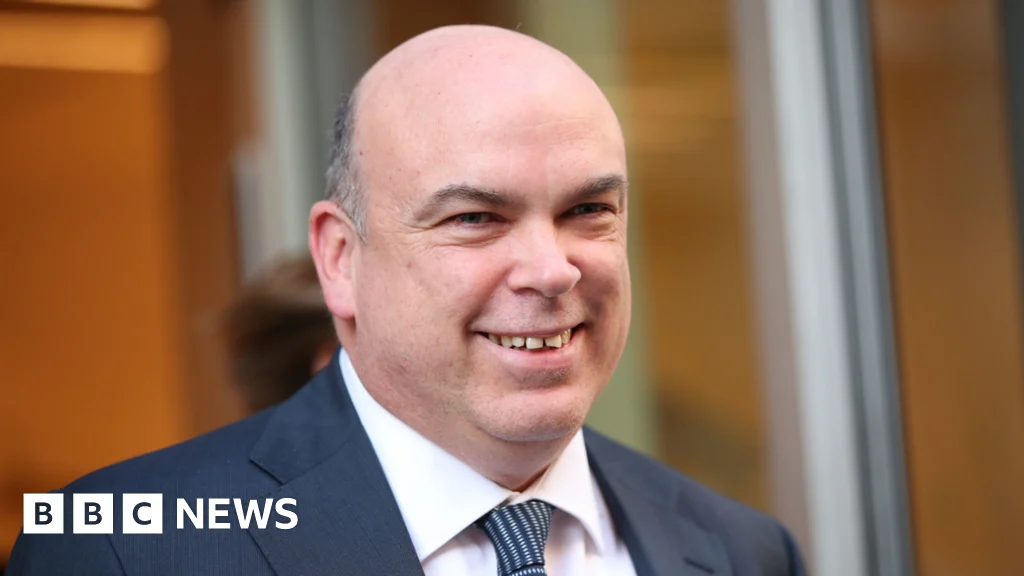
The High Court in London has delivered a conclusive ruling, mandating that the estate of the late British tech entrepreneur, Mike Lynch, must pay Hewlett-Packard (HP) an estimated $1.24 billion (£920 million) in damages. This substantial sum is the culmination of a protracted legal battle stemming from HP’s ill-fated acquisition of Lynch’s Cambridge-based software company, Autonomy, in 2011. The decision, handed down by Mr. Justice Hildyard on Tuesday, includes both damages and interest accrued since the original transaction.
The ruling marks a significant development in one of the most contentious and high-profile corporate disputes in recent memory. Hewlett-Packard, a global technology giant, initiated legal proceedings against Mr. Lynch following its disastrous $11.1 billion (£8.2 billion) purchase of Autonomy. The American firm alleged that Lynch and his co-founder, Sushovan Hussain, had deliberately inflated Autonomy’s revenues and misrepresented its financial health, engaging in what HP termed a "deliberate fraud over a sustained period of time."
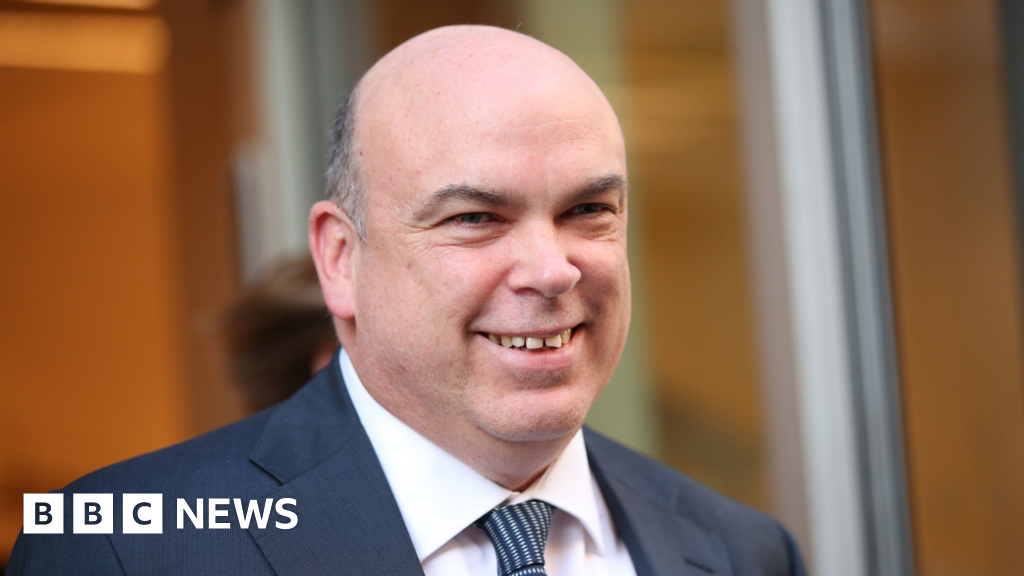
Mike Lynch, often hailed as the "UK’s Bill Gates," was a visionary figure in the British technology landscape. A graduate of the University of Cambridge, he co-founded Autonomy in 1996, building it from a specialist software research group, Cambridge Neurodynamics, into a global leader. Autonomy’s core technology focused on extracting meaningful information from "unstructured" data sources – a revolutionary concept at the time – ranging from phone calls and emails to videos and social media content. Under Lynch’s leadership, Autonomy became one of the UK’s largest and most successful technology companies, commanding a market capitalisation that drew comparisons to Silicon Valley giants. The sale to HP in 2011 was, at the time, heralded as the largest-ever takeover of a British technology business, promising a strategic alignment that HP believed would bolster its enterprise software offerings.
However, the euphoria surrounding the acquisition was short-lived. Within a year of the deal, HP was forced to announce an staggering $8.8 billion write-down of Autonomy’s value, attributing the majority of this loss to accounting irregularities and alleged fraudulent practices by Autonomy’s former management. This write-down sent shockwaves through the tech industry and led directly to HP’s decision to sue Mr. Lynch and Mr. Hussain for approximately $5 billion (£3.79 billion) in damages.
The civil fraud trial, which commenced in 2019 and spanned nine months, was widely regarded as the largest of its kind in UK legal history. During the proceedings, HP presented extensive evidence to support its claims that Autonomy’s financial statements had been manipulated, creating a misleading picture of its performance and inflating its valuation. The defence, meanwhile, countered that HP’s own mismanagement and strategic missteps post-acquisition were responsible for Autonomy’s decline, and that HP had failed to conduct adequate due diligence before the purchase.
In 2022, Mr. Justice Hildyard delivered his initial judgment, finding that HP had "substantially succeeded" in its fraud claim against Mr. Lynch and Mr. Hussain. While acknowledging the fraud, the judge also stated that HP would likely receive "substantially less" than the $5 billion it had initially claimed. His reasoning was nuanced: he determined that Autonomy had indeed not accurately portrayed its financial position, but even if it had, HP would still have proceeded with the acquisition, albeit at a significantly reduced price. This finding laid the groundwork for calculating the actual losses directly attributable to the misrepresentation.
Following this initial ruling, further hearings were held to determine the precise quantum of damages. In July of the previous year, Mr. Justice Hildyard determined that Hewlett-Packard Enterprise (HPE), the spin-off entity of HP that inherited the Autonomy assets and the lawsuit, had suffered losses amounting to around £700 million through the purchase of Autonomy. The Tuesday ruling adds interest to this figure, bringing the total to an estimated $1.24 billion (£920 million).
A key aspect of Tuesday’s decision was the judge’s refusal to grant Lynch’s estate permission to appeal either the latest ruling or earlier judgments in the case. The Lynch family spokesperson expressed profound disappointment at this refusal, stating their belief that "an application to the Court of Appeal should follow in the interests of justice." They reiterated their stance that HP’s initial $5 billion damages claim was "vastly exaggerated," with Tuesday’s judgment itself describing the exaggeration as "without foundation" and the purposes for which it was "calibrated, publicised and pursued" as objectionable, misleading shareholders, and unnecessarily extending the litigation.

The legal saga surrounding Mike Lynch was not confined to the UK civil courts. In a parallel but distinct development, Lynch was extradited to the United States in 2023 to face criminal charges related to the Autonomy acquisition, including wire fraud, conspiracy, and securities fraud. These charges were brought by the US Department of Justice, alleging a scheme to defraud HP. In a dramatic turn of events, Lynch was cleared of all fraud charges by a US jury in 2024, just weeks before his untimely death.
The Lynch family has consistently highlighted this US acquittal as crucial evidence, arguing that "where witnesses were properly cross-examined, exposed the truth." They contend that any damage to Autonomy was "the result of HP’s own actions and failures, not wrongdoing at Autonomy." This stark contrast between the US criminal acquittal and the UK civil judgment underscores the complexities and differing standards of proof in legal systems. While the US jury found insufficient evidence for criminal conviction, the UK High Court, operating under civil standards, found in favour of HP’s fraud claims.
Patrick Goodall KC, representing HPE, had strongly opposed any appeal, arguing in written submissions for a November 2025 hearing that Mr. Lynch had "not only perpetrated an enormous fraud, but lied about it at every stage," and that an appeal "aimed at escaping the consequences of that fraud" should not be allowed. Conversely, Richard Hill, the lawyer representing Lynch’s estate, contended in his written submissions that the $761 million in interest sought by the claimants was an "excessive sum… based on a flawed analysis."

Mike Lynch’s journey, from an academic in Cambridge to a celebrated tech titan and then to the centre of a global legal storm, is a narrative of ambition, innovation, and ultimately, controversy. His death in a yacht tragedy in August 2024, alongside his 18-year-old daughter Hannah, occurred shortly after his US acquittal, adding a tragic dimension to an already complex and high-stakes legal battle. The High Court’s latest ruling ensures that, even posthumously, his estate must bear significant financial responsibility for the events surrounding the Autonomy acquisition, closing a chapter on one of the most debated corporate sagas in modern tech history.




 George Anjay
 atisusanti
 Ramos Leo
 Roy Suryo
 Nana Banana