
 Ramos Leo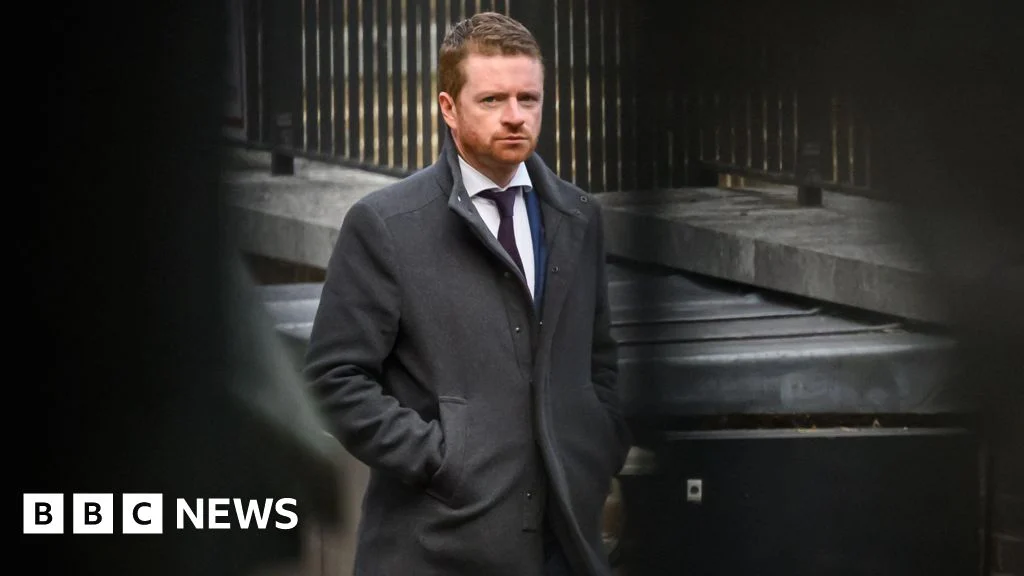
Morgan McSweeney, formerly Sir Keir Starmer’s influential chief of staff, recently resigned from his post last month amidst an escalating political row. This controversy centers on his involvement in the contentious appointment of Lord Mandelson as the UK’s ambassador to the United States in 2024. The appointment itself has been a lightning rod for criticism, primarily due to lingering questions surrounding Lord Mandelson’s vetting process and his previously documented associations with the disgraced financier and convicted paedophile, Jeffrey Epstein.
On Tuesday, the Metropolitan Police confirmed the details of McSweeney’s report, acknowledging that his phone was indeed snatched in October of the previous year. However, a critical administrative error meant that officers had logged the wrong location for the incident, leading to an assessment that no viable lines of inquiry existed, and the subsequent closure of the case. This revelation has ignited a fresh wave of public and political skepticism, especially given the potential for McSweeney’s stolen device to have contained sensitive communications pertinent to the Lord Mandelson affair.
The contents of McSweeney’s phone are of particular interest because they could potentially include crucial messages, emails, or other digital records relating to Lord Mandelson’s controversial appointment. With Parliament having recently ordered the government to release tens of thousands of documents concerning the peer’s selection, the disappearance of a key aide’s phone at such a sensitive juncture inevitably fuels suspicion. Streeting, while acknowledging the "cynicism" surrounding the situation, carefully stated that he did not "assume deceit" on McSweeney’s part, preferring to attribute the issues to "cock-up rather than conspiracy."
Last month, Members of Parliament utilized a parliamentary mechanism known as a humble address to compel the government to disclose an extensive collection of documents. This unprecedented order demanded the release of all correspondence and records pertaining to Lord Mandelson’s appointment, specifically seeking clarity on the vetting procedures undertaken and the extent of knowledge regarding his ties to Jeffrey Epstein. Such a broad directive could encompass a wide range of communications, including exchanges between ministers, senior civil servants, and government aides, making the integrity and accessibility of these records paramount. The loss of McSweeney’s phone, therefore, raises significant questions about the completeness of the information that can now be provided in response to the parliamentary demand.
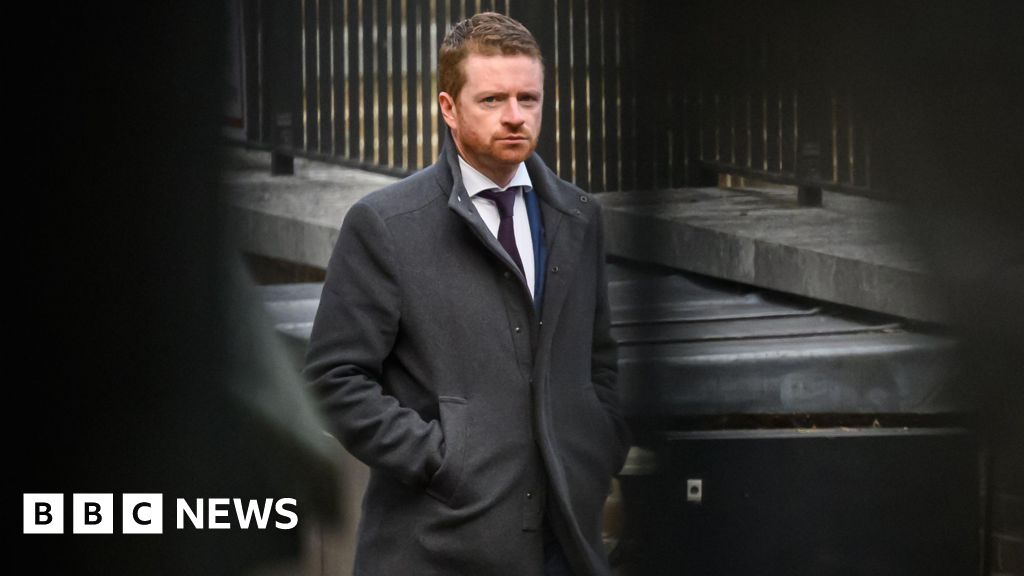
The timeline of events is critical to understanding the complexities of the situation. McSweeney’s phone was reportedly stolen in October, a month after Lord Mandelson had been removed from his ambassadorship in Washington. Crucially, this was several months before Parliament voted in February to publish the correspondence about the appointment. This timing, Streeting argued, suggests that McSweeney could not have foreseen the parliamentary demand for documents when he reported the theft. This point is central to Streeting’s "cock-up rather than conspiracy" assessment, as it undermines the notion that the phone’s disappearance was a deliberate act to obstruct the inquiry.
Speaking on ITV’s Good Morning Britain, Streeting elaborated on his perspective, emphasizing his trust in McSweeney’s account of the theft. He cited two primary reasons for his belief: firstly, that the incident was reported to the police at the time it occurred, and secondly, that the subsequent police handling of the case raises "a separate set of questions." Streeting highlighted the severity of the situation, noting that the stolen device belonged to a senior government official and would undoubtedly have contained "sensitive information." He expressed little surprise, however, that the police had seemingly done little, drawing a parallel with the common experience of many members of the public whose phone thefts go uninvestigated. "I suspect many people watching who’ve had their phone nicked will not be remotely surprised that police haven’t done anything because that’s been their experience too," Streeting remarked, "but it is serious that something that will have contained sensitive information wasn’t properly investigated."
Streeting reiterated his belief that McSweeney "couldn’t have known" in October, when the theft was reported, that the contents of his phone would become a subject of parliamentary interest in February. He underscored the "unprecedented" nature of the humble address, suggesting that no one could have anticipated such a specific and wide-ranging demand for information. Despite the initial police failure, Streeting insisted that established government protocols for managing information security following the theft of official devices should have been activated.
A government spokesperson, responding to the ongoing situation, affirmed their commitment to transparency: "We are committed to complying with the humble address in full while continuing to support the Metropolitan Police with their investigation." While the government typically refrains from commenting on specific security matters, it is understood that there are established procedures in place to mitigate the risks associated with the loss or theft of government work devices. Furthermore, it has been confirmed that the Cabinet Office does possess some of the relevant messages exchanged between McSweeney and Lord Mandelson, providing at least a partial record of their communications. Streeting emphatically added that the theft of such a device should "absolutely" have been reported to the permanent secretary of the Cabinet Office, Cat Little, underscoring the gravity of the potential information loss.
In light of the mounting pressure and media inquiries, the Metropolitan Police has announced that it is now reassessing the available evidence for the alleged phone theft. This decision comes directly after the discovery of the initial error where officers incorrectly recorded the crime scene as "Belgrave Street, E1" instead of the correct location, "Belgrave Road, Pimlico." This geographical discrepancy proved to be a critical flaw in the initial assessment, as it would have significantly impacted the search for potential CCTV footage or local witnesses.

A Met Police spokesperson provided a detailed account of the initial handling of the case: "On Monday October 20 police received a report from a man in his 40s alleging that his phone had been snatched. The incident was recorded as having taken place in Belgrave Street, E1. A review of the allegation, including a consideration of whether there was available CCTV, did not identify any realistic lines of inquiry. The investigation was subsequently closed." The spokesperson continued, explaining the reason for the reassessment: "In the course of responding to a recent media inquiry, we became aware that the address was entered incorrectly at the time of the initial call and should instead have been recorded as Belgrave Road, Pimlico. Having identified this error, the report will be amended and the assessment of whether there is available evidence revisited."
The implications of this police error and the subsequent revisiting of the case are multifaceted. For the Met Police, it raises questions about the accuracy of initial data entry, the thoroughness of preliminary investigations, and the consistency of response to reports of theft, particularly those involving sensitive government officials. For the public, it feeds into a broader narrative of police inefficiency and, for some, a suspicion of differential treatment or even potential cover-ups when political figures are involved. The "cynicism" that Streeting referred to is likely to be exacerbated by the perception that the case is only being re-examined due to media attention and high-level political involvement, rather than standard procedure.
Beyond the immediate incident, this situation highlights critical issues surrounding government data security and the mechanisms of parliamentary oversight. The humble address, a rare and potent tool, underscores Parliament’s determination to hold the executive to account, especially on matters of public integrity and foreign policy. The loss of potentially crucial communications, even if accidental, complicates this oversight and can erode public trust in government transparency. As the Met Police reopens its investigation, and the government continues its efforts to comply with the humble address, all eyes will be on the outcome, seeking clarity on both the phone theft and the enduring questions surrounding Lord Mandelson’s controversial appointment.



 Roy Suryo

 Nakalama John
 atisusanti
