
 George Anjay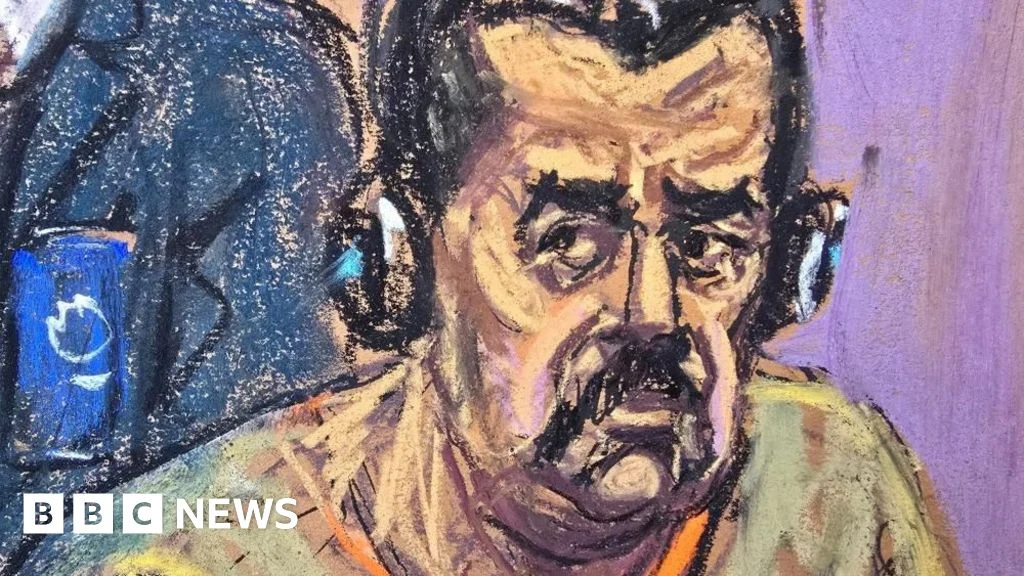
In a dramatic legal showdown in New York, the fate of former Venezuelan leader Nicolas Maduro and his wife Cilia Flores hung in the balance as their defense team clashed with prosecutors over the thorny issue of legal fees. Judge Alvin Hellerstein, presiding over the narco-terrorism case, appeared to lean towards the defendants’ right to a robust defense, even as prosecutors painted a stark picture of Maduro’s alleged plundering of Venezuela’s national wealth. The proceedings, held in a New York courtroom, underscored the complex web of international sanctions and the fundamental right to legal representation.
Maduro and Flores’s attorneys, led by Barry Pollock, petitioned the court to dismiss the charges against them, arguing that the U.S. government’s denial of access to Venezuelan state funds for their defense constituted a violation of their fundamental right to a fair trial. The crux of their argument rested on the fact that sanctions imposed by the U.S. on Venezuela had prevented the government from disbursing funds to cover the substantial legal costs associated with such a high-profile case. This, they contended, left the former president and his wife in an untenable position, effectively undermining their ability to mount a proper defense.
Prosecutors, however, fiercely contested this narrative, accusing Maduro of having "plundered" Venezuela’s immense wealth and arguing that he should not be permitted to leverage state assets for his personal legal defense. Assistant U.S. Attorney Damian Williams argued that allowing Maduro to use Venezuelan government funds would be akin to rewarding him for his alleged illicit activities and would be a disservice to the Venezuelan people. The prosecution maintained that Maduro and Flores had access to personal funds that could be used to pay for their legal representation, a claim vehemently denied by the defense.
Judge Hellerstein, a seasoned jurist, acknowledged the paramount importance of the right to defense, stating, "the right to defense is paramount." However, he signaled that he would not dismiss the case based solely on the dispute over legal fees, indicating that he would issue a ruling on the matter at a later date and set a new court appearance. This decision left both sides in a state of anticipation, awaiting the judge’s resolution of this critical procedural hurdle.
The dramatic court appearance followed the capture of Maduro and Flores by U.S. forces from their compound in Caracas on January 3rd. They were subsequently brought to New York to face a litany of charges, including narco-terrorism conspiracy, cocaine importation conspiracy, possession of machine guns and destructive devices, and conspiracy to possess such weapons. Both vehemently deny all allegations.
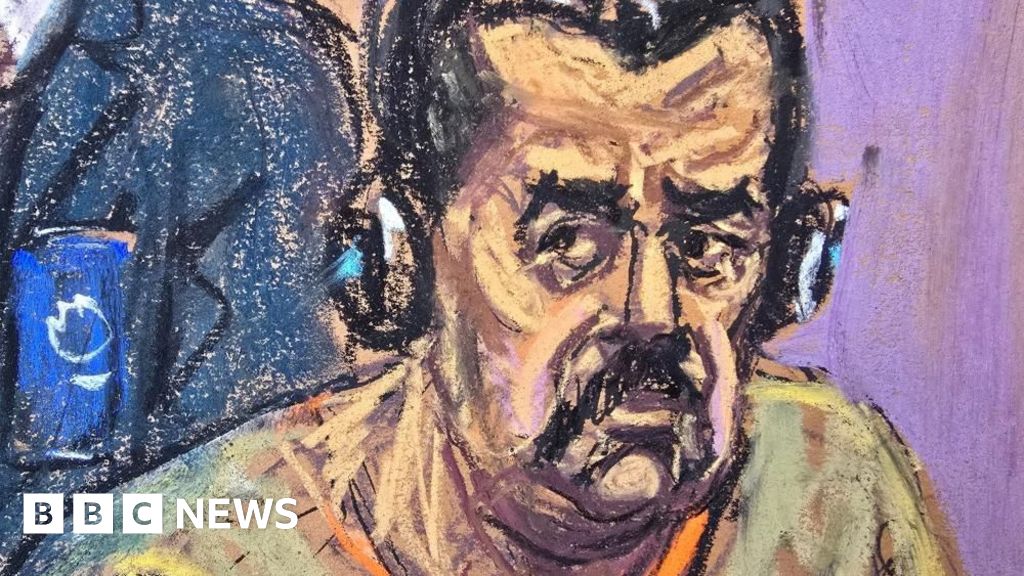
On Thursday, Maduro and Flores, clad in somber green khaki prison jumpsuits, sat quietly beside their legal team, listening intently through headphones to the proceedings translated for them. This scene contrasted sharply with their initial court appearance, where Maduro had delivered a lengthy speech proclaiming his innocence and claiming he had been kidnapped. That hearing had ended with a vociferous outburst from a spectator in the courtroom, highlighting the intense emotions surrounding the case.
The core of the legal battle revolved around a license from the U.S. Government Office of Foreign Assets Control (OFAC) that initially permitted the Venezuelan government to pay Maduro’s legal fees but was subsequently revoked. Prosecutors argued that the revocation was justified due to national security concerns and the long-standing sanctions against Maduro’s regime, which they claimed he had exploited to enrich himself and his allies at the expense of the Venezuelan populace.
In a strategic move, Judge Hellerstein appeared to lend credence to the defense’s argument that the complexity and international nature of the case against a former head of state would be an overwhelming burden for a court-appointed public defender. Such an appointment, the defense argued, could compromise the quality and thoroughness of the legal counsel provided, thereby jeopardizing their right to a fair trial.
The prosecution’s stance was clear: OFAC’s refusal to grant a license was a direct consequence of Maduro’s alleged corruption and his administration’s alleged "plundering of the wealth of Venezuelans." They painted a picture of a leader who had systematically exploited his country’s resources for personal gain.
However, Judge Hellerstein questioned this line of reasoning, pointing out that Maduro’s capture had altered the foreign policy landscape. He noted that the U.S. was now "doing business with Venezuela," implying that the diplomatic situation had evolved since Maduro’s alleged crimes. The judge’s observation alluded to the fact that a new administration, led by former Vice-President Delcy Rodríguez, had assumed power in Venezuela and had reportedly resumed diplomatic ties with the U.S.
The judge expressed his perplexity regarding the path forward, particularly as Maduro’s legal team sought to have the entire case dismissed over the issue of legal fees. "What is the relief?" he repeatedly asked both sides, seeking a clear resolution to the impasse.
The prosecution offered a potential avenue for resolution: if the judge were to indicate a predisposition to rule in favor of the defense’s motion for dismissal, they would then approach the U.S. government to reconsider the release of the funds. This suggested a willingness to find a compromise that would ensure both the integrity of the legal process and the U.S.’s foreign policy objectives.
The charges against Maduro are severe, encompassing a wide range of illicit activities that prosecutors allege he orchestrated. The U.S. government has accused him of being the ringleader of a sophisticated narco-terrorism network, implicating him in conspiracies to import vast quantities of cocaine and to arm his regime with illegal weapons.
Maduro and his wife have not yet applied for bail and remain detained at the Metropolitan Detention Center in Brooklyn, a federal facility known for housing high-profile defendants. No trial date has been set, leaving the legal battle over fees and the underlying charges to unfold in the coming months.
Meanwhile, in Caracas, residents of Venezuela’s capital are closely monitoring the developments in the New York courtroom. Despite government censorship, many are attempting to stay informed through international news outlets. Ana Patricia, a 72-year-old retired lawyer, expressed a complex mix of emotions. While acknowledging Maduro’s alleged greed and ego, she conveyed a degree of sympathy, stating, "He is a man who had everything but lost it through greed and an inflated ego. I feel sorry for him, because in the end he is a human being, but I hope he receives a life sentence. He has to pay for his crimes." Her sentiment reflects a deep-seated desire for accountability for the alleged wrongs committed against the nation.
In stark contrast, Agustina Parra, a 67-year-old retired nurse from western Caracas, voiced unwavering support for Maduro, stating, "Despite his flaws, he has not been a bad president. He knows he is innocent and he will prove it." Parra questioned the U.S. government’s accusations, suggesting they were unfounded and politically motivated. She also criticized the actions of former President Trump in Venezuela, implying that they had led to significant loss of life. Her words highlight the deep divisions within Venezuela and the polarized perceptions of Maduro’s leadership and the charges he faces.



 Nakalama John
 Roy Suryo

 atisusanti
 Ramos Leo