
 George Anjay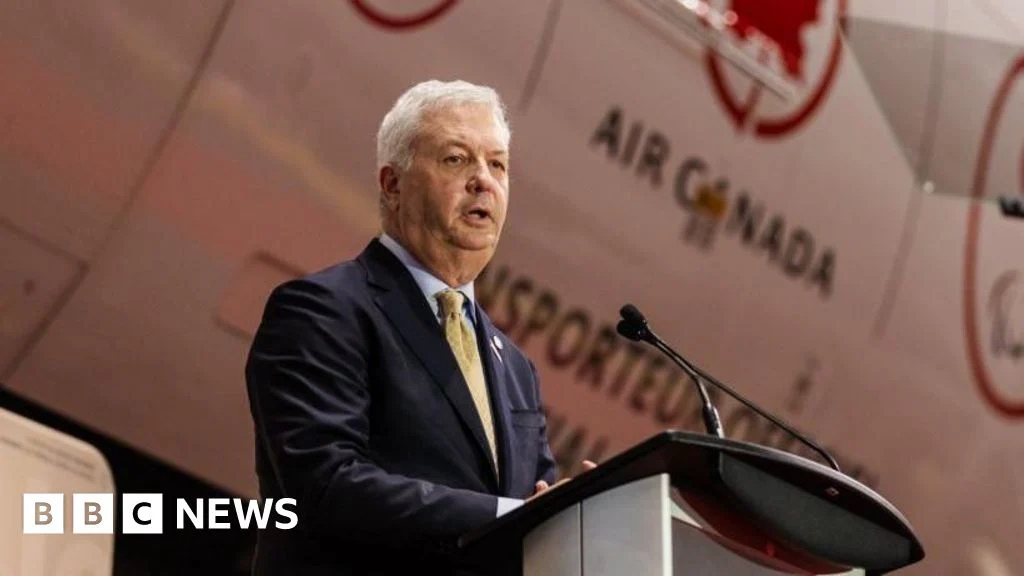
Air Canada CEO Michael Rousseau has issued a profound apology, expressing his "deep sadness" that his struggle with the French language overshadowed the tragic loss of two pilots in a devastating collision at LaGuardia Airport. The airline’s top executive admitted that his inability to articulate his condolences in fluent French has regrettably "diverted attention" from the grieving families of the deceased and the broader Air Canada staff, a sentiment he conveyed in a statement released on Thursday. Rousseau candidly acknowledged that despite years of dedicated lessons, he remains unable to express himself "adequately" in French, an official language in Canada, a fact that has ignited significant public and political backlash.
The fallout from Rousseau’s English-only condolence video has been swift and severe, with prominent figures calling for his resignation. Among the most vocal critics is Prime Minister Mark Carney, who described the CEO’s monolingual message as a display of "a lack of compassion." Adding to the pressure, Quebec’s Premier François Legault has stated unequivocally that Rousseau should step down if he is unable to fulfill his duties in French, a sentiment that resonates particularly strongly given that one of the pilots who perished, Antoine Forest, was French Canadian.
In a written statement, carefully crafted to be released in both English and French, Rousseau reiterated his apology for his "weak" French, a proficiency level he admitted persists "despite many lessons over several years." He added, "I sincerely apologize for this, but I am continuing my efforts to improve." However, his statement notably sidestepped the escalating calls for his resignation, a point that is likely to fuel further debate.
The tragic incident that precipitated this controversy occurred on Sunday night when an Air Canada plane, operated by Jazz Aviation, collided with a fire truck on the runway at New York’s LaGuardia Airport shortly after landing. The flight had originated from Montreal, Quebec. Tragically, both pilots, Antoine Forest and Mackenzie Gunther, lost their lives in the collision. The airline confirmed on Wednesday that dozens of passengers sustained injuries, with four remaining hospitalized.
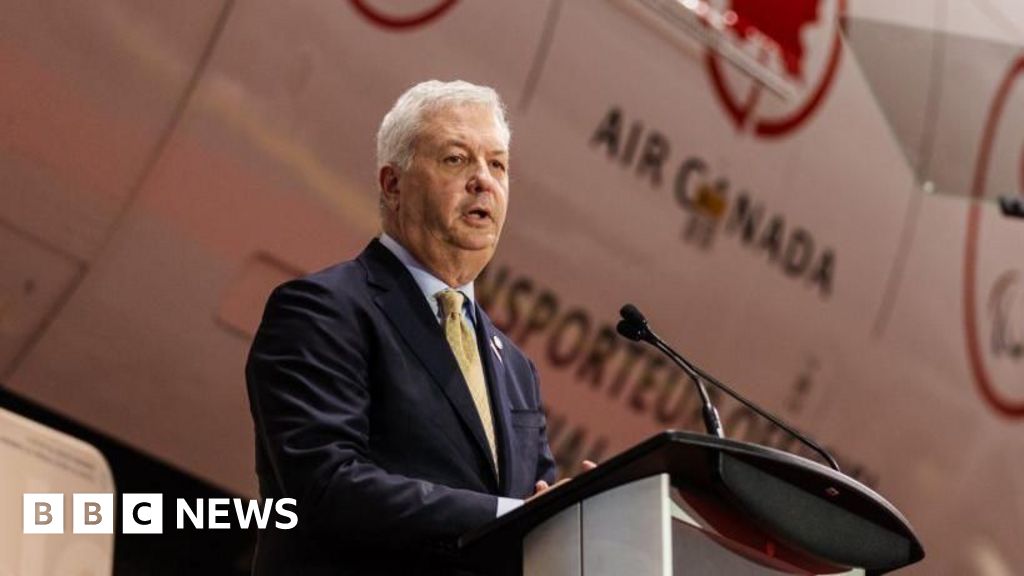
Following the accident, Rousseau promptly released a video statement via the social media platform X, where he conveyed his "deepest sorrow for everyone affected." However, the message was delivered exclusively in English, with accompanying subtitles provided in both English and French. This linguistic choice immediately drew the attention of Canada’s parliamentary Committee on Official Languages, which formally summoned Rousseau to "explain himself" before Members of Parliament regarding the rationale behind releasing his message in English only.
Michael Rousseau, a resident of Montreal, is an anglophone who has faced criticism in the past for his French language proficiency, particularly shortly after his appointment as CEO of Air Canada in 2021. At that earlier juncture, he had also offered an apology and pledged to enhance his French language skills, a commitment that now appears to have fallen short of public and political expectations.
Air Canada, while having transitioned from a federal public corporation to a private entity in 1988, remains subject to Canada’s Official Languages Act. This legislation mandates that announcements on board the airline’s flights be made in both English and French, underscoring the nation’s commitment to bilingualism. The incident has thus brought into sharp focus the airline’s adherence to these linguistic obligations, especially at its highest levels of leadership.
The investigation into the precise circumstances that led to the fatal crash on Sunday evening is ongoing. Authorities on Tuesday released details gleaned from the final three minutes of cockpit voice recordings and air traffic control communications. These recordings revealed that controllers had indeed cleared both the Air Canada plane and the fire truck to cross the runway. Significantly, the audio also captured a voice issuing a warning to the truck to stop moments before the catastrophic collision.
The accident caused significant disruption to operations at LaGuardia Airport, leading to scaled-back services. By Thursday, the damaged aircraft had been towed away, and authorities indicated their intent to reopen the runway where the collision occurred "no later than Friday morning." The recovery and investigative processes are continuing, with the focus now also encompassing the broader implications of linguistic representation within Canada’s national airline. The public outcry over Rousseau’s English-only video has underscored the deep-seated importance of language in Canadian identity and the expectations placed upon leaders of national institutions to reflect this fundamental aspect of the country’s heritage. The incident has reignited a long-standing debate about bilingualism in corporate Canada and the responsibilities of executives in a country officially committed to two languages. Rousseau’s apology, while acknowledged, has not entirely diffused the tension, and the future trajectory of his leadership and Air Canada’s linguistic policies will undoubtedly remain under close scrutiny. The tragic loss of life has been compounded by this linguistic controversy, casting a shadow over the airline’s response to the crisis and raising pertinent questions about cultural sensitivity and representation in times of national mourning. The dual nature of Canada, with its distinct linguistic communities, means that such matters are often amplified, and the Air Canada CEO’s predicament serves as a stark reminder of this reality. The coming weeks will likely see further discussions and pronouncements as the airline navigates this complex and sensitive situation, seeking to rebuild trust and demonstrate its commitment to all Canadians, regardless of their linguistic background. The ultimate resolution of this issue will likely hinge on Rousseau’s ability to demonstrate tangible progress in his French language skills and Air Canada’s willingness to proactively address concerns surrounding linguistic inclusivity.



 Nakalama John
 Roy Suryo

 atisusanti
 Ramos Leo