
 Nakalama John
The Strait of Hormuz, a narrow maritime passage connecting the Persian Gulf to the Arabian Sea and the open ocean, is arguably the world’s most critical oil chokepoint. Yet, its significance extends to an astonishing array of other commodities. Approximately 20% of the world’s total petroleum liquids and about one-third of global liquefied natural gas (LNG) pass through it daily. However, the Gulf region’s vast petrochemical industries, leveraging abundant oil and gas reserves, also produce an immense volume of derivatives essential for modern life. A sustained closure or severe disruption could trigger cascading crises across several sectors, impacting everything from the food on our tables to the smartphones in our pockets and the medicines that save lives.
Fertilisers (Food)
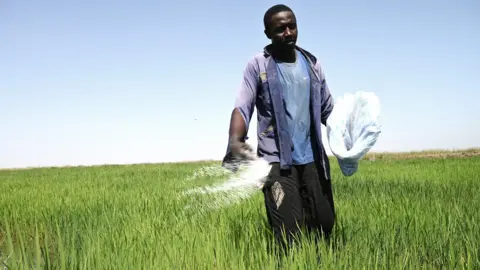
Petrochemicals, derived directly from oil and natural gas, are produced in enormous quantities across the Gulf region and are a cornerstone of its export economy. Among the most critical of these derivatives is fertiliser, an indispensable input for global agricultural production. Without adequate fertilisation, crop yields plummet, threatening food security on a massive scale.
According to analysis by the United Nations Conference on Trade and Development (UNCTAD), an alarming one-third of the world’s fertilisers—including crucial compounds like urea, potash, ammonia, and phosphates—typically transit through the Strait of Hormuz. These chemicals are the lifeblood of modern farming, replenishing soil nutrients and enabling the high yields necessary to feed a growing global population.
The timing of any disruption is particularly critical. March and April represent the northern hemisphere’s vital planting season. A shortage of fertilisers now means farmers will either apply less, leading to reduced yields, or face significantly higher costs, which will inevitably be passed on to consumers. Analysts have warned that even a relatively brief closure during this period could profoundly disrupt an entire growing season, with food security consequences that could persist long after the Strait reopens.

Research from the Kiel Institute highlights the severity of this threat. Their work suggests that a full and prolonged closure of the Strait of Hormuz could push up global wheat prices by 4.2% and fruit and vegetable prices by 5.2%. While these percentages might seem moderate in isolation, they represent a significant inflationary pressure on staple foods, particularly for vulnerable populations. The Institute estimates that the countries most severely affected by an overall increase in food prices would include Zambia (a staggering 31% increase), Sri Lanka (15%), Taiwan (12%), and Pakistan (11%). These nations often have high reliance on food imports, limited domestic agricultural capacity, or fragile economies, making them exceptionally susceptible to such price shocks. For millions, these increases could mean the difference between adequate nutrition and severe hardship.
Russia, a major global producer of various commodities including fertilisers, has hinted at its potential role in such a crisis. Kirill Dmitriev, a special envoy for Vladimir Putin, reportedly stated that Russia is "well positioned" to respond to such disruptions. This suggests a potential shift in global supply dynamics, with countries like Russia potentially leveraging their commodity power in a new geopolitical landscape, though the logistical challenges of rerouting such massive volumes remain substantial.
Helium (Microchips & Healthcare)
Helium, a noble gas with unique properties, is primarily a byproduct of natural gas production. It is an essential component in numerous high-tech and medical applications due to its extremely low boiling point and inertness. Its uses are diverse and critical, ranging from cooling superconducting magnets to providing inert atmospheres for sensitive manufacturing processes.
Crucially, helium is indispensable in the manufacture of semiconductor wafers, which are then processed into the microchips that power virtually every modern electronic device. From the smartphones in our pockets to the computers running our businesses, the complex systems in vehicles, and the vast infrastructure of data centres and artificial intelligence, all rely heavily on helium during their production. Any disruption to helium supply could thus have a profound and widespread impact on the global technology sector, leading to delays in production and increased costs for consumers.
Beyond technology, helium plays a life-saving role in healthcare. It is used to cool the powerful superconducting magnets in Magnetic Resonance Imaging (MRI) scanners, which are vital diagnostic tools in hospitals worldwide. These machines require substantial quantities of liquid helium to maintain the ultra-low temperatures necessary for their operation.

A major blow to global helium supply has already occurred. Qatar’s giant Ras Laffan plant, a significant global source of helium, has reportedly shut down production following recent Iranian missile and drone strikes. The Qatari government has issued a stark warning that repairs could take three to five years, raising profound concerns about the future of global helium supplies.
Analysts have quickly warned that the knock-on impact of this production halt, compounded by any further Hormuz blockage, could lead to a substantial increase in prices for a host of cutting-edge technologies. This includes not just smartphones and computers but also critical infrastructure like data centres and the burgeoning AI industry, which relies on high-performance chips that often use helium in their manufacturing and cooling.
Prashant Yadav, a senior fellow for global health at the Council on Foreign Relations, has further underscored the severe medical implications. He warned that prolonged helium shortages could significantly drive up the prices of MRI machines and potentially limit their availability. "MRI machines require somewhere between 1,500 to 2,000 liters helium to cool the magnets. Every time you do a scan, a little bit of that boils off or evaporates," he explained to BBC Verify. "People like to think helium’s predominant use is in data centers, semiconductors and cooling for the AI and data industry. But we can’t forget that helium is quite important for MRIs and for other medical users." This dual impact on both advanced technology and essential medical diagnostics highlights helium’s understated yet critical role in the modern world.
Petrochemical Derivatives (Medicines)
The global pharmaceutical industry, a cornerstone of public health, is deeply intertwined with the petrochemical sector. Derivatives from petrochemicals – such as methanol, ethylene, propylene, and benzene – are not merely raw materials; they are fundamental building blocks. These compounds undergo complex chemical transformations to become the active pharmaceutical ingredients (APIs) and excipients (inactive ingredients) that form the basis of nearly all modern medicines.
The Gulf nations, with their vast oil and gas reserves, are major global producers and exporters of these crucial chemical intermediates. They primarily utilize the Strait of Hormuz to export these chemicals to manufacturing hubs around the world, with approximately half of these exports destined for Asia, and significant volumes also heading to Europe and North America.
A disruption in the flow of these petrochemical derivatives through Hormuz would have severe and immediate consequences for pharmaceutical manufacturing globally. It could lead to shortages of essential drugs, including common painkillers, life-saving antibiotics, routine vaccines, and critical anti-cancer medications. Manufacturing costs would inevitably rise, potentially leading to higher drug prices and reduced accessibility. Furthermore, delays in the supply of these foundational chemicals could hamper research and development efforts, slowing the introduction of new treatments. The implications for global public health, particularly in developing countries heavily reliant on imported pharmaceuticals, could be catastrophic.
Sulphur (Metals/Batteries)
Sulphur, often overlooked, is another critical commodity whose supply through the Strait of Hormuz is essential for numerous industrial processes. While its primary use is indeed as an agricultural fertiliser, contributing to food production, its role in metallurgy is equally vital.
Sulphur is the key precursor for sulphuric acid, one of the most widely used industrial chemicals globally. Sulphuric acid is indispensable for the processing of various metals, including copper, cobalt, and nickel. These metals are not just industrial staples; they are crucial components in electric vehicles, advanced electronics, and various forms of industrial machinery. Furthermore, sulphuric acid is critical for the extraction of lithium, a fundamental element in the production of modern batteries.
All these metals – copper, cobalt, nickel, and lithium – are essential for the production of the advanced batteries that power everything from domestic appliances and consumer electronics to electric vehicles and sophisticated military hardware like drones and precision-guided munitions.
Analysts warn that if sulphur supplies remain interrupted or severely curtailed, the ripple effect will be significant. The increased cost and scarcity of these metals will directly translate into higher manufacturing costs for batteries. This, in turn, will lead to higher prices for consumers of products containing batteries, from everyday gadgets to more expensive electric vehicles. The disruption would also affect the military-industrial complex, potentially impacting the production and cost of essential defence technologies.

Beyond these primary uses, sulphur and sulphuric acid are also employed in the manufacturing of detergents, plastics, synthetic fibres, and various other industrial chemicals, illustrating its pervasive importance across the global economy. A sustained blockage of Hormuz would therefore not only impact agriculture, technology, and healthcare but also a wide array of other manufacturing sectors, underscoring the Strait’s truly foundational role in global supply chains.
The confluence of these factors paints a grim picture. A sustained disruption in the Strait of Hormuz would not merely be an energy crisis; it would be a multifaceted economic catastrophe, triggering widespread inflation, exacerbating food insecurity, disrupting critical healthcare supplies, and stalling technological advancement. The interconnectedness of global supply chains means that the vulnerability of this single chokepoint has profound and far-reaching implications for the stability and prosperity of nations worldwide, forcing a re-evaluation of supply chain resilience and geopolitical dependencies.




 George Anjay
 atisusanti
 Ramos Leo
 Roy Suryo
 Nana Banana