
 Nakalama John
The report, compiled by the Night Time Industries Association (NTIA) in collaboration with data analytics, sourced its figures from Resident Advisor event listings. Rufy Ghazi, Head of Music Research and Audiences Strategies at NTIA, explained that these listings provide a "consistent, like-for-like basis for comparing city-level activity over time," serving as a "meaningful signal of scene momentum and decentralisation away from London." Crucially, Ghazi acknowledged the report’s limitations, stating, "It doesn’t measure financial health, and the report is clear on that distinction." This admission underscores the core tension highlighted by local operators: more events do not automatically equate to more viable venues. The report’s findings, though celebrated on social media, have thus sparked a necessary conversation about the true health of Newcastle’s vibrant but fragile local scene.

One such voice is Kate Hodgkinson, co-director of Cobalt Studios, a pivotal venue nestled in Ouseburn, just east of Newcastle city centre. Cobalt began its life as artist studios around 1998, evolving into a fully fledged, multi-purpose venue in 2018. Over the years, Hodgkinson, alongside co-director Mark Collet, has meticulously cultivated Cobalt into a diverse and inclusive space, carving out a unique niche on the fringes of the city’s mainstream nightlife. She recalls the early days as a struggle for recognition, battling against what she describes as a persistent "stigma attached to Newcastle." Artists and musicians, she notes, often arrived with outdated perceptions, imagining the city still mired in its industrial past of "coal mines and shipbuilding," oblivious to its burgeoning cultural landscape.
However, a significant shift has occurred "fairly recently," as Hodgkinson observes. "It is only fairly recently that we’ve actually had agents getting in contact and we’ve become a venue that DJs of a certain status want to go and play, which is a real change for us." This newfound appeal, she believes, is largely attributable to Cobalt’s hard-earned reputation, particularly as a female-led space committed to fostering a safe and welcoming environment. "We’ve provided a home for people that have often felt that they’ve not got a comfortable or safe space to go to," she explains. This ethos has allowed the venue to become "a very expressive space," where individuals feel secure enough to be themselves, attracting a dedicated and diverse audience that has propelled its "cult success" and regular sell-out club nights.
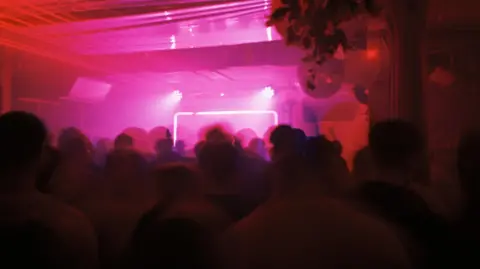
Yet, despite this growing reputation and consistent audience engagement, Cobalt Studios continues to face significant financial hurdles. As a small venue with a capacity of just 220 people, and operating as a Community Interest Company (CIC), Cobalt is inherently designed to prioritise affordability and accessibility over profit maximisation. "Even though our reputation is growing and I think we are doing good things for Newcastle as a city in terms of representing how cool the city is, our economics haven’t changed at all," Hodgkinson laments. The venue’s survival, she reveals, is largely sustained by immense personal sacrifice: "it only works because I don’t take a salary. Two of us do about 80 hours a week and we don’t get paid for that." The escalating operational costs – from rising energy bills and sound equipment maintenance to security, licensing, insurance, and artist fees – further squeeze an already tight budget, making sustainable operation a constant battle. Hodgkinson firmly believes that the reported growth in event listings does not reflect an expansion of the underlying scene, but rather a mere increase in how many events are formally registered.
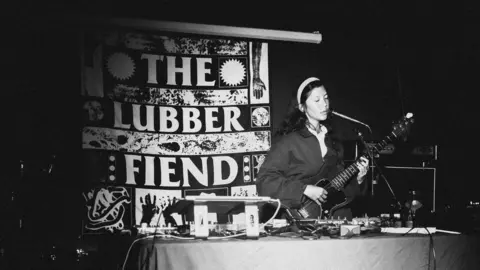
This sentiment is echoed by Sam Booth and Jon Cornbill, who co-direct The Lubber Fiend, another small, grassroots music venue that opened its doors in 2022 and quickly established itself as a hub for diverse club nights. Booth acknowledges the vibrancy of the local scene, stating, "I think there is a strong scene in Newcastle, there are lots of people doing lots of good things, but we’re all existing in quite a difficult environment." He argues that the comparison to London’s growth, while statistically impressive, creates a misleading impression of financial prosperity. "It paints a different picture when you start to say things like outpacing London, it makes us sound like we’ve got this thriving money scene," Booth explains. "But everyone’s broke, the parties are really difficult to put on, the costs of putting on parties are rising."
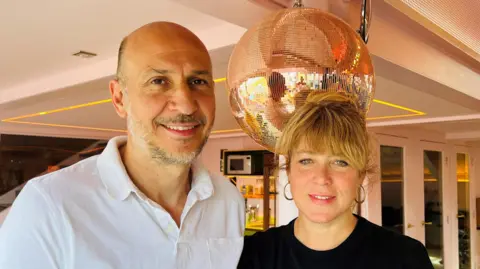
Booth believes that while Newcastle has a lot of "great stuff" happening, it lags behind other cities that have benefited from "decades of better funding," which has cultivated more robust and resilient music ecosystems. Both he and Cornbill have observed a discernible shift in audience behaviour. Many music enthusiasts are now opting to save their disposable income for larger, often out-of-town events, such as The Warehouse Project in Manchester, rather than frequently attending smaller, local club nights. This trend further exacerbates the financial strain on grassroots venues, which rely on consistent local attendance to remain viable. Despite these daunting challenges, Cornbill expresses a deep-seated commitment: "We’re doggedly determined to keep doing it anyway. And if those funding opportunities don’t come, that’s fine. It sounds like I’m being pessimistic with that, but it’s born from pure love and enthusiasm of doing it, and we’re just going to keep doing it."
Both The Lubber Fiend and Cobalt Studios advocate for more practical, targeted assistance to support underground club culture. They point to the recently introduced £1 levy on tickets for arena and stadium shows, designed to channel funds towards grassroots gig venues, as a positive step. However, they argue that a similar mechanism is urgently needed for larger electronic music events and festivals to directly benefit smaller club venues. "That would definitely help, that would be tangible help to underground club culture," Booth asserts, highlighting the need for a funding stream specifically tailored to the electronic music sector.
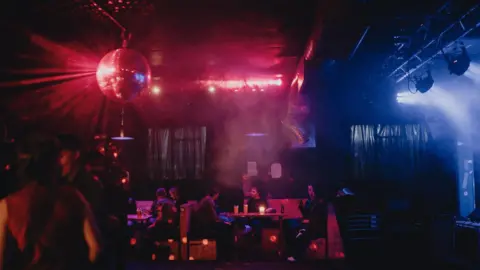
Hodgkinson, who has dedicated nearly three decades to Cobalt, frequently contemplates the venue’s longevity. "For me, the worry is probably no-one else is stupid enough to do that, or driven enough," she confesses, alluding to the immense personal cost of sustaining such a venture. She passionately calls upon Newcastle City Council to recognise "the cultural power of really good quality nightlife." When nurtured correctly, she argues, it can be "a really important regeneration driver" and a significant "tourist attraction," helping to reshape the city’s image. Hodgkinson stresses the importance of moving beyond the outdated stereotype of Newcastle as merely a destination for "gnarly stag and hen do place where people are vomiting on the streets," asserting that the city offers "so much more than that."
In response to these concerns, a Newcastle City Council spokesperson affirmed its commitment to the sector, stating it was "working with partners to create new opportunities for artists and venues across multiple music genres." The council welcomed "recent support announced by the North East Combined Authority, including grants for music venues," and highlighted its active lobbying of government on sector challenges. They also noted the "introduction of business rates relief for smaller music venues," which they believe will "provide much-needed support." The spokesperson concluded by pledging to "continue to work closely with the sector to support its sustainability and ensure Newcastle remains a leading destination for music and nightlife."
While the council’s statement outlines broader support for the music sector, the specific pleas from electronic music venues for targeted funding, particularly a levy on larger electronic events, remain a critical point of discussion. The paradox of Newcastle’s electronic music scene – a burgeoning statistical presence coupled with profound financial vulnerability at its grassroots – underscores the urgent need for a more nuanced understanding and tailored support mechanisms. Without such interventions, the passion and dedication of venues like Cobalt Studios and The Lubber Fiend, though immense, may not be enough to translate statistical growth into a truly sustainable and thriving cultural landscape.



 George Anjay
 atisusanti
 Ramos Leo
 Roy Suryo
 Nana Banana