
 Ramos Leo
London and Paris have agreed to a temporary two-month extension of their crucial small boats deal, as negotiators continue to grapple with the complexities of forging a new long-term agreement aimed at curbing illegal Channel crossings. The eleventh-hour decision, announced just hours before the previous three-year pact was set to expire at midnight, sees the UK commit an additional £16.2 million to France for continued beach patrols and law enforcement operations. This interim arrangement underscores the persistent challenges both nations face in managing the escalating migrant crisis and highlights the intense pressure on the Labour government to demonstrate tangible progress.
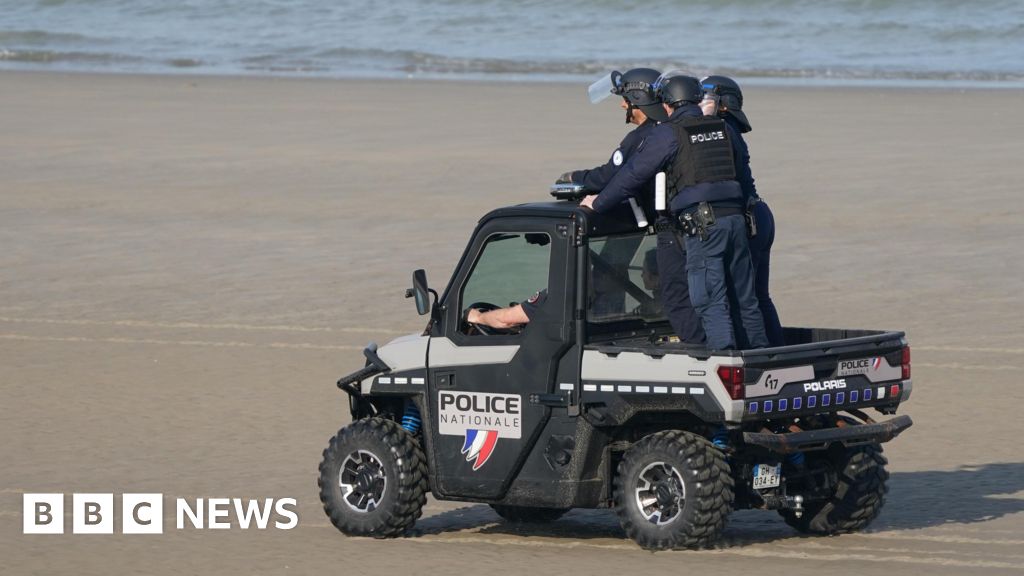
The previous agreement, a substantial £476 million package signed in 2023 under the former Conservative government, was designed to bolster French efforts to disrupt migrant smuggling gangs operating from their northern coastline. It funded hundreds of additional law enforcement officers, equipped with drones, all-terrain vehicles, and advanced surveillance technology, to patrol the extensive beaches and rugged coastlines of northern France. The stated goal was to intercept migrants before they could embark on dangerous journeys across one of the world’s busiest shipping lanes. While UK officials, including Home Secretary Shabana Mahmood, assert that these operations have successfully prevented some 42,000 attempts by illegal migrants to cross the Channel, the stark reality is that the overall number of arrivals in the UK has continued its upward trajectory, reaching a staggering 41,472 in 2025 alone. This discrepancy fuels public frustration and intensifies the political scrutiny faced by the Home Secretary.
The current extension reflects the UK’s determined push for a more robust and effective successor deal. Home Secretary Shabana Mahmood is reportedly "driving a hard bargain," demanding "more bang for our buck" from French authorities. Sources close to the negotiations indicate that Mahmood is pushing for performance-related clauses to be embedded within the new agreement. This innovative approach, first reported by The Times, would link UK funding directly to the proportion of attempted crossings successfully intercepted by French law enforcement. Such a mechanism aims to incentivise greater efficiency and accountability, moving beyond simple financial contributions to a results-based partnership. The UK’s negotiating team believes this will compel France to deploy more enforcement officers and adopt more aggressive tactics to disrupt the criminal networks profiting from human misery.
However, this demand for increased enforcement and potentially more forceful intervention has not been met without apprehension on the French side. Reports by The Guardian suggest that French authorities are expressing significant concern that some of the UK’s demands could inadvertently put the lives of asylum seekers at greater risk. France operates under its own legal and ethical frameworks, which often prioritise the safety and humanitarian treatment of individuals, even those attempting illegal crossings. The delicate balance between deterrence and human rights remains a central point of contention, complicating efforts to reach a mutually agreeable and sustainable solution. The French position often emphasises the need for a comprehensive European approach to migration, rather than bilateral agreements that might simply shift the problem elsewhere.
The political landscape in the UK adds another layer of complexity to these high-stakes negotiations. The Home Secretary is under immense pressure to deliver a significant reduction in Channel crossings, a key pledge of the Labour government. Opposition parties have seized upon the extended talks as evidence of the government’s perceived failure to control the borders.
Chris Philp, the Conservative Shadow Home Secretary, launched a scathing critique, stating that Labour was paying France for "continued failure." Philp argued vehemently that the UK "shouldn’t pay the French a penny until they agree to substantially increase their prevention rate and start intercepting at sea by force – as they promised last summer." This demand for more assertive "at sea" interceptions is a long-standing point of contention, with France historically reluctant to engage in actions that could be interpreted as endangering lives at sea or infringing on international maritime law. Philp’s reference to a "promise last summer" suggests a previous commitment from France that the Conservatives believe has not been adequately fulfilled, further fueling the narrative of French inaction.
The Liberal Democrats, through their immigration and asylum spokesperson Will Forster MP, offered a different perspective, cautioning against "blowing up our international partnerships," which he argued "is never going to fix the problems in our immigration and asylum system." Forster advocated for a more comprehensive and collaborative approach, asserting that "the only way to properly deter people from making these dangerous crossings and to break the criminal gangs’ business model for good is to agree a large-scale returns agreement with France." This stance highlights the Lib Dems’ belief in the necessity of strong diplomatic ties and burden-sharing mechanisms to address the root causes and consequences of illegal migration, rather than focusing solely on interdiction.
Further to the right of the political spectrum, both Conservative leader Kemi Badenoch and Reform leader Nigel Farage have reiterated their call for the UK to withdraw from the European Convention on Human Rights (ECHR) as a fundamental step to halt small boat crossings. Their argument is that the ECHR imposes limitations on the UK’s ability to implement robust border control measures, including the swift detention and deportation of illegal migrants.
Robert Jenrick, Reform UK’s Treasury Spokesperson, echoed this sentiment with particular vehemence. Speaking on Tuesday, Jenrick dismissed the ongoing payments to France as a "complete farce," declaring, "You can’t spend hundreds of millions of pounds begging the French to take action." He insisted that "the UK needs a sovereign deterrent" and called for the government to "detain and deport every single illegal migrant who comes into our country." This hardline stance resonates with a segment of the electorate frustrated by the perceived lack of control over national borders and aligns with Reform UK’s core platform of radical immigration reform. The concept of a "sovereign deterrent" implies unilateral action, unconstrained by international treaties or foreign partnerships, focusing solely on national interests and domestic legal frameworks.

Nigel Farage, speaking at a news conference, went further, expressing deep scepticism about the effectiveness of any renewed deal, predicting it "wouldn’t make any difference." He argued that "even if the French do stop boats from crossing, the same people come back the next time there is a calm day." Farage outlined Reform UK’s audacious proposal: a government led by his party would order the Royal Navy to tow small boats back to northern France, a policy he claimed would only be feasible if the UK exited the ECHR. This highly controversial suggestion raises significant legal, ethical, and practical questions, including the potential for dangerous confrontations at sea and the violation of international maritime law concerning rescue at sea.
The discussions also come against the backdrop of an existing "one-in-one-out" deal signed by the Labour government in August 2025. This arrangement allows the UK to return a proportion of small boat arrivals to France, while admitting an equivalent number of migrants from France who have not attempted to cross the Channel illegally. While intended as a form of burden-sharing and a disincentive for illegal crossings, its effectiveness has been limited in the face of the sheer volume of arrivals. Critics argue that such a scheme is too small in scale to make a meaningful impact on the overall numbers and that it doesn’t adequately address the underlying drivers of migration.
Kemi Badenoch, the Conservative leader, echoed the frustration with the government’s performance, stating, "The government came in with a promise to smash the gangs and that has not happened." She outlined the Conservative borders plan, which, while supporting leaving the ECHR, also paradoxically includes "working with our European partners, a removals force and returns backed up by visa sanctions." This highlights the challenge for parties on the right: how to reconcile a desire for sovereign control and ECHR withdrawal with the undeniable need for international cooperation on issues that transcend national borders. "Visa sanctions" would involve imposing restrictions on visas for citizens of countries deemed uncooperative in accepting returned migrants, a measure that could strain diplomatic relations.
As the two-month extension period begins, the pressure on Home Secretary Shabana Mahmood to deliver a "new and improved" deal is immense. The £16.2 million payment for continued patrols is a stopgap measure, buying time for negotiators to bridge the significant gaps between the UK’s demands for greater enforcement and France’s concerns for humanitarian considerations and legal obligations. The future of the UK-France partnership on Channel crossings, and indeed the broader strategy for managing illegal migration, hangs in the balance, with profound implications for both national politics and international relations. The intricate web of diplomatic relations, legal frameworks, and humanitarian concerns ensures that this remains one of the most intractable and politically charged issues facing both the UK and France.




 Roy Suryo

 Nakalama John
 atisusanti
