
 Nana Banana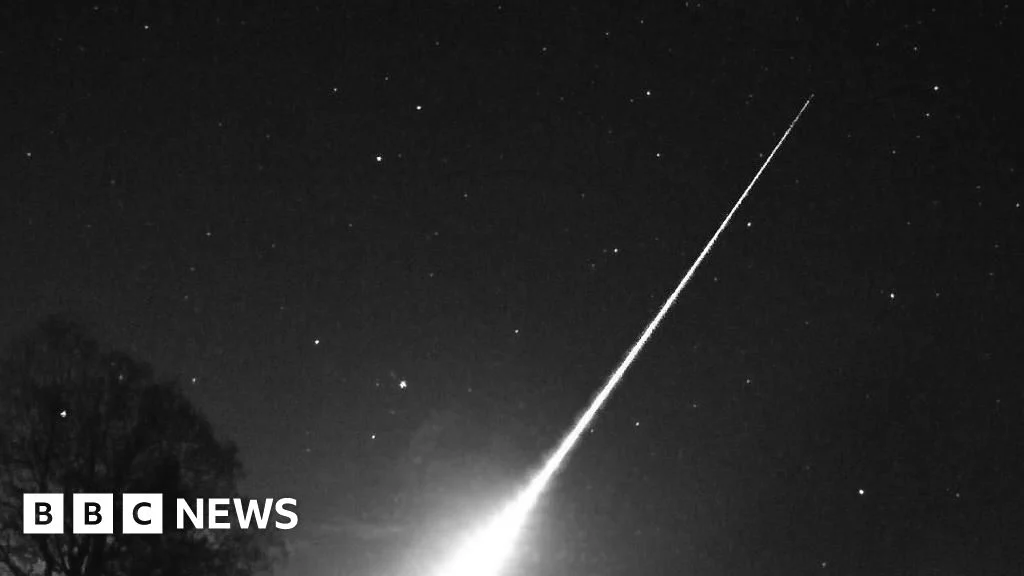
A spectacular celestial event illuminated the skies above England and Northern Europe early Monday morning, as a brilliant fireball, later confirmed by scientists to be a meteor, streaked across the pre-dawn darkness. The dazzling display, captured by numerous cameras and witnessed by countless stunned observers, sparked widespread awe and curiosity before experts from leading astronomical networks provided scientific clarity on its origin and trajectory.
The dramatic phenomenon occurred precisely at 00:24 BST on Monday, transforming the serene night into a canvas for a fleeting, incandescent spectacle. Reports flooded in from across the region, particularly from East Yorkshire and Lincolnshire, where residents described a vivid, fast-moving light cutting through the atmosphere. The event was not confined to England’s eastern coast; eyewitnesses as far afield as other parts of the UK and various northern European nations also reported sightings, underscoring the meteor’s impressive altitude and luminosity.
Footage of the meteor’s fiery descent was swiftly circulated, with compelling captures from locations such as Hornsea, a coastal town in East Yorkshire, and inland villages like Billingborough and Moulton Seas End in Lincolnshire. These videos, often recorded by doorbell cameras, dashcams, or dedicated meteor observation cameras, provided invaluable data for scientists. They showcased a bright, often greenish or bluish streak, sometimes accompanied by a visible tail of glowing debris, a testament to the intense heat generated as the space rock interacted with Earth’s atmosphere. The immediate aftermath saw social media platforms abuzz with questions, theories, and shared wonder, as many pondered the nature of the enigmatic aerial visitor.
Charlotte Bays, the distinguished secretary of the UK Fireball Alliance, was among the first experts to confirm the nature of the sighting. She clarified that the phenomenon was indeed a meteor, a piece of extraterrestrial rock burning up as it entered Earth’s protective atmospheric envelope. Bays highlighted the widespread nature of the observation, noting its visibility across a broad swathe of northern Europe, which is characteristic of objects entering the atmosphere at a high altitude and travelling at immense speeds.
However, despite the dramatic visual display, Bays tempered public excitement regarding the potential for recovering any fragments on the ground. "Based on the fireball trajectory, the event occurred over the North Sea," she explained. "So, sadly, we do not expect any recoverable meteorites." This assessment is crucial for meteorite hunters and researchers, as the vast expanse of the North Sea makes any recovery effort virtually impossible. If the meteor’s trajectory had brought it over land, even a small fragment could have provided invaluable scientific insight into the composition of objects from beyond Earth. Meteorites, as these recovered fragments are known, are rare and precious specimens, offering direct samples of asteroids, the Moon, or even Mars, providing clues to the early solar system’s formation.
Bays further elaborated on the meteor’s striking brightness, a feature that allowed it to be observed by so many. She attributed its intense luminosity to the chemical make-up of the object itself, specifically mentioning the presence of magnesium. When meteors, often referred to as "shooting stars," enter the atmosphere, they experience extreme friction and compression. This process generates immense heat, causing the outer layers of the rock to vaporize and glow. Different elements within the meteor produce distinct colours as they burn; magnesium, in particular, is known to emit a brilliant green-blue light, contributing significantly to the dazzling spectacle witnessed across the region. This vivid coloration is often a key identifier for astronomers analyzing the composition of incoming space debris.
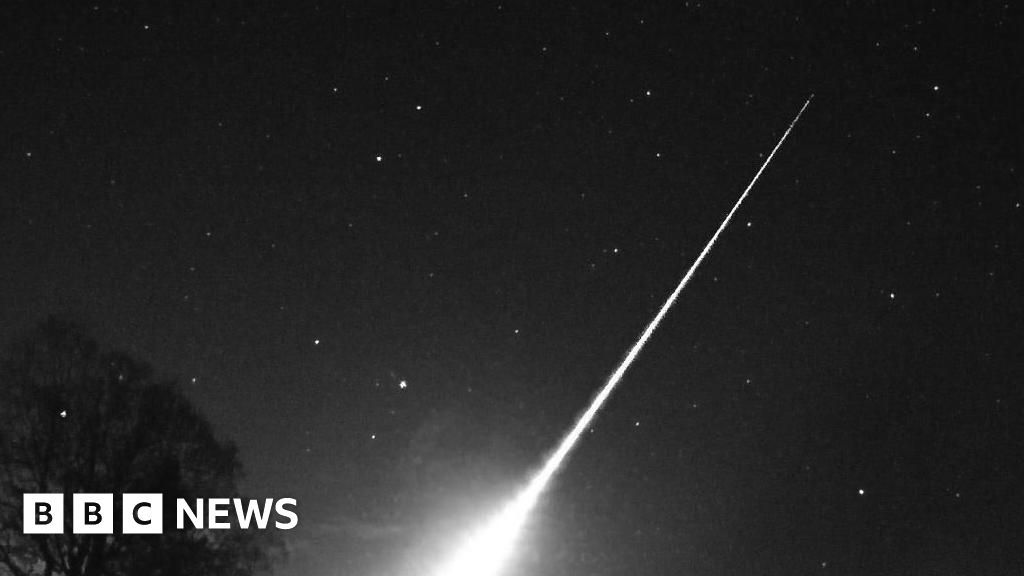
Adding further scientific detail to the analysis, John Maclean from the UK Meteor Network provided additional insights into the meteor’s characteristics and origins. The UK Meteor Network, a collaborative effort utilizing a network of automated cameras and citizen scientist observations, plays a vital role in tracking these celestial visitors. Maclean confirmed that this specific meteor was not associated with any known, recurring astronomical event, such as an annual meteor shower. Instead, he classified it as a "sporadic meteor," meaning it was an isolated piece of space debris not linked to a larger stream of material. Its origin, he suggested, was "likely stemmed from a larger asteroid," implying it was a fragment that had broken off from a more substantial parent body in the asteroid belt between Mars and Jupiter, or perhaps from an even more distant region of the solar system.
Despite its spectacular appearance, Maclean’s team’s analysis indicated that the meteor itself was relatively modest in physical size. "Although the fireball was bright," he stated, "the meteor was not big" – weighing approximately 12g (0.5oz). This revelation often surprises the public, who might assume such a brilliant light signifies a much larger object. The perception of size is greatly amplified by the incredible speed and the intense atmospheric friction, which creates a large, glowing plasma trail around even a tiny rock. The vast majority of meteors are no larger than a grain of sand, yet they can still produce visible streaks in the night sky. This particular object, while still small, was large enough and composed of elements bright enough to create a truly memorable display.
Maclean further explained the fate of such a relatively small meteor: it would almost certainly have "burnt up completely on entering the Earth’s atmosphere." Travelling at an astonishing velocity of approximately 20,000mph (32,000km/h), the intense heat generated by atmospheric entry would have caused the entire 12-gram object to ablate and vaporize high above the Earth’s surface. This complete incineration is a common fate for most incoming space debris, preventing countless small rocks from reaching the ground and posing a hazard. The process of ablation not only creates the visible light but also disperses the material as fine dust particles high in the atmosphere.
For those inspired by this celestial encounter to turn their gaze skyward more frequently, Charlotte Bays offered a timely reminder of upcoming astronomical events. Stargazers were encouraged to "keep their eyes to the skies over the coming weeks as the Lyrids meteor shower was expected to start shortly and peak on April 22." The Lyrids are an annual meteor shower, renowned for their bright, fast meteors, and are caused by Earth passing through the debris trail left by Comet C/1861 G1 Thatcher. Unlike the sporadic meteor witnessed over England, meteor showers are predictable events, offering a chance to see multiple "shooting stars" originating from a common radiant point in the sky. Bays emphasized, however, that the recent fireball was a distinct and "one-off" event, unrelated to the Lyrids, highlighting the constant, unpredictable dance of space debris entering our planetary neighbourhood.
The recent confirmed meteor event serves as a vivid reminder of the dynamic nature of our solar system and the incredible phenomena that regularly occur above us. While this particular visitor ended its journey over the unyielding waters of the North Sea, its brief, fiery passage left an indelible impression on those fortunate enough to witness it, fostering a renewed sense of wonder about the cosmos.
Reporting by Charis Scott-Holm.



 George Anjay
 Nakalama John
 atisusanti
 Ramos Leo
 Roy Suryo