
 Ramos Leo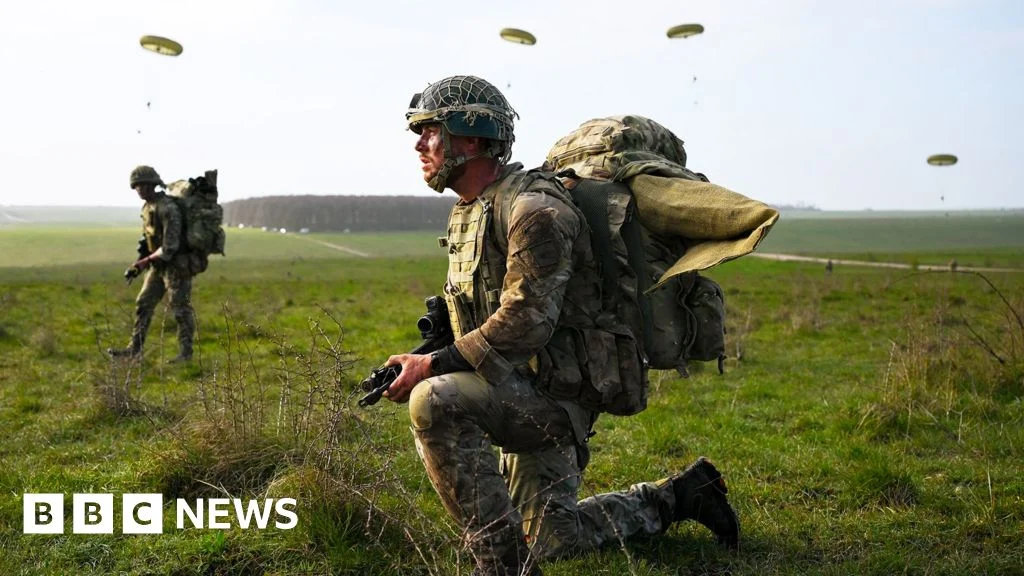
Britain’s national security and safety is "in peril," according to Lord George Robertson, a former Nato Secretary General and ex-Labour Defence Secretary, who has delivered a scathing critique of Sir Keir Starmer’s government, accusing it of "corrosive complacency" towards the nation’s defence. Speaking forcefully in Salisbury on Tuesday, Lord Robertson, a key government adviser and author of the pivotal Strategic Defence Review, did not mince words, pointing the finger at "non-military experts in the Treasury" for what he termed "vandalism" in their approach to defence spending and strategy.
Defence Minister Luke Pollard swiftly rejected these serious claims, insisting that the government was "working flat out" to finalise and publish the long-awaited Defence Investment Plan. He highlighted that "we already have extra money in our budget this year" dedicated to defence, and ministers were consistently announcing new contracts aimed at providing "our fighting forces the kit and equipment they need to deter aggression."
In a directly political intervention that resonated across Westminster, Lord Robertson issued a stark warning: "We cannot defend Britain with an ever-expanding welfare budget." His speech painted a grim picture of the UK’s readiness, declaring, "We are under-prepared. We are under-insured. We are under attack. We are not safe." He elaborated on his assessment of the political leadership, stating, "There is a corrosive complacency today in Britain’s political leadership. Lip service is paid to the risks, the threats, the bright red signals of danger – but even a promised national conversation about defence can’t be started."
The Prime Minister’s official spokesman offered a firm rebuttal, asserting, "I completely reject that, our armed forces are working around the world every minute of the day to keep us safe at home and strong abroad." A defence official provided figures, noting that defence spending last year stood at 2.3% of GDP, approximately £66 billion. The government, they underscored, has ambitious targets: to increase defence spending to 3% of GDP by the end of the next Parliament and a substantial 3.5% of GDP on core defence by 2035. This contrasts sharply with welfare spending, which is forecast to reach 10.6% of GDP, or £322.6 billion, in the 2025-2026 fiscal year. A government spokesperson further reinforced their commitment, stating that the current spending review was "backed by the largest sustained increase in defence spending since the Cold War, with a total of over £270 billion being invested across this Parliament."
The delay in publishing the Defence Investment Plan (DIP) has been a significant point of contention. This crucial document, designed to detail the financial blueprint for the priorities outlined in the Strategic Defence Review (SDR), has reportedly been held up by internal disagreements within government regarding new funding allocations and how to finance existing defence arrangements. Earlier on Tuesday, Downing Street had sought to temper Lord Robertson’s criticism, assuring that the report would be published "as soon as possible," with the Prime Minister himself having previously stated that the investment plan was "on his desk" and merely being "finalised." Lord Robertson, however, dismissed these assurances, describing the plan as "overdue" and reiterating his long-held view that the armed forces had been "hollowed-out by previous governments."
His concerns extend beyond mere budget figures, encompassing the evolving global threat landscape. He cautioned that global threats were "no longer theoretical nor they are distant from our shores." Referencing a speech delivered by Sir Keir Starmer earlier this month, where the Prime Minister warned that Russia could be ready to attack Nato by the end of the decade, Lord Robertson highlighted the urgency of the situation. He stressed that this "deadline" was a mere three years away, serving as a "bright red warning to all of us." The Strategic Defence Review itself had outlined ambitious goals, including a Nato-first defence policy and a decisive shift towards "war-fighting readiness" to establish a more lethal, "integrated force" equipped for future challenges. Specific details within the SDR included an £11 billion annual budget for front-line kit and the creation of a "new hybrid Royal Navy" capable of deploying aircraft, drones, warships, and submarines to patrol the North Atlantic "and beyond."
Lord Robertson’s implicit suggestion of reallocating funds from the welfare budget to defence resonates with some, including potentially the Chancellor, Rachel Reeves. However, past attempts by the government to implement savings in this area have faced fierce opposition from backbench Labour MPs, leading to their abandonment last year. Sir Keir’s spokesman reiterated the government’s official line, stating, "We’ve set out our spending targets on defence, the UK defence budget is already rising to record levels and we’re going further."
The former Nato chief’s intervention drew responses from across the political spectrum. Labour MP and chair of the House of Commons Defence Committee, Tan Dhesi, described Lord Robertson’s statement as "sobering." Dhesi lamented, "When it comes to defence, the government’s rhetoric promising action does not yet align with reality. It has been evident for years now that UK defence is far from where it needs to be if we are to face down the threat posed by our adversaries, most acutely, Russia. The continuing delay to the urgently needed Defence Investment Plan grows of more concern every day." Conservative leader Kemi Badenoch expressed agreement with Lord Robertson, stressing that "we need to get serious" on defence. Speaking to BBC Radio 5 Live, she proposed that the Tories would "repurpose funds from net zero projects to invest in our military." Lib Dem leader Ed Davey acknowledged a "failure of all governments for a long time" on defence spending, telling reporters that defence is "very high in our spending priorities."
Adding further weight to Lord Robertson’s concerns, General Sir Richard Barrons, another co-author of the SDR report, echoed his sentiments on the BBC’s Today programme. Sir Richard concurred that "there’s an enormous gap between where we have to be to keep the country safe in the world we now live in and where we actually are." He offered a stark warning about the future of Nato, envisioning "a European Nato doing much more and the US doing much less," adding pointedly, "The US cavalry is not coming to bail us out now." He specifically criticised the Royal Navy and Royal Air Force, deeming them "too small and too undernourished."
The heightened rhetoric around defence spending comes against a backdrop of escalating global tensions, including Russia’s ongoing invasion of Ukraine and the recent re-election of US President Donald Trump, known for his critical stance on Nato. Trump has previously threatened to withdraw US support for the alliance, famously stating that the organisation "WASN’T THERE WHEN WE NEEDED THEM." In response, the UK, along with other Nato countries, has faced intensified pressure to significantly boost its defence spending. The alliance has set a collective commitment to raise defence expenditure to at least 3.5% of each member state’s GDP on core defence by 2035, alongside an additional 1.5% on broadly defined security infrastructure investments.
The current global instability is further underscored by the recent conflict in the Middle East, which commenced on February 28 with a joint US-Israeli attack on Iran. The head of the British military, Chief of the Defence Staff Sir Richard Knighton, last month rejected accusations that the UK had been ill-prepared for this conflict, yet he conceded it was "probably the most dangerous time of the last 30 years." Questions have, however, been raised regarding the delayed deployment of a Royal Navy destroyer to the region, particularly given that the US military build-up had been ongoing for months. Despite pressure, Sir Keir Starmer has repeatedly ruled out direct UK military involvement in the conflict, refusing to join Trump’s proposed military blockade of the Strait of Hormuz. The Prime Minister told the BBC, "My decision has been very clearly that whatever the pressure – and there’s been some considerable pressure – we’re not getting dragged into the war." He justified this stance by stating, "That’s not in our national interest, because I’m not going to act unless there’s a clear, lawful basis and a clear thought-through plan." On Tuesday, Sir Keir chaired the inaugural meeting of the Middle East Response Committee, a new body established to replace the ad-hoc emergency Cobra meetings previously convened to discuss the war in Iran. This committee is tasked with addressing both the diplomatic and economic fallout from the conflict, highlighting the multifaceted nature of current national security challenges.



 George Anjay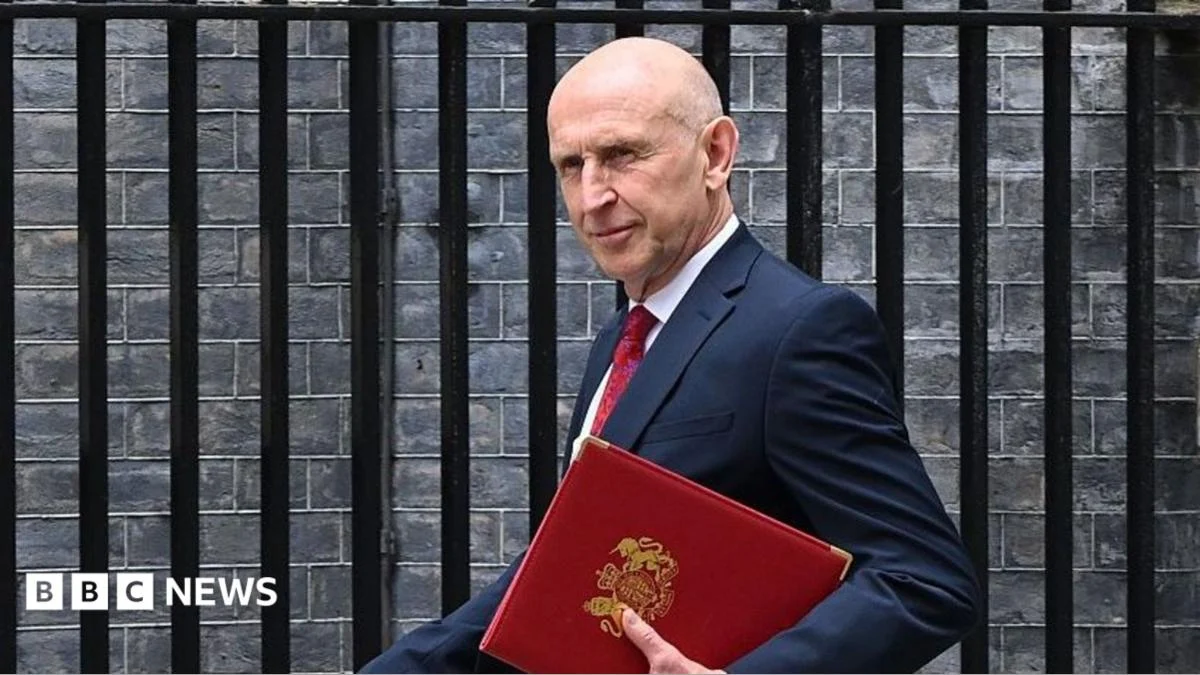
 Nakalama John
 atisusanti
 Roy Suryo
 Nana Banana