George Anjay
The silence was deafening, a chilling counterpoint to the relentless symphony of war that had engulfed Sudan for three agonizing years. For Mohamed Suleiman, a journalist and academic, this silence was more than just an absence of sound; it was a suffocating shroud, a tangible manifestation of his isolation and the world’s apparent indifference. His phone, once a conduit to colleagues, friends, and the outside world, had become a silent testament to the communication blackout that mirrored the human tragedy unfolding around him. It was only on January 13th, within the bustling telecoms office of the coastal city of Port Sudan, that the silence was shattered, not by an incoming call, but by the flood of emotions that washed over him as his phone finally sprang to life.
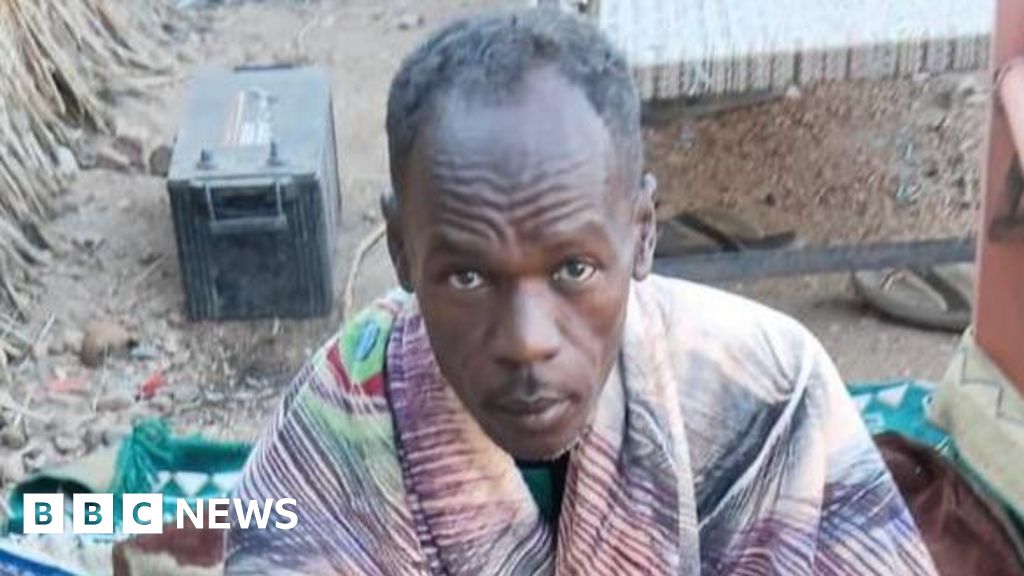
"I was flustered because people were talking on their phones (inside the office)," he recounted to the BBC, his voice thick with the lingering trauma. "Throughout the past three years, my phone was silent. After I inserted the SIM card, my tears flowed." The device, dormant for three years, buzzed to life, a digital Pandora’s Box unleashing a torrent of messages – an inventory of loss. Friends, believing him dead, had sent desperate inquiries. Colleagues, their voices now silenced forever, had shared their final moments or offered words of support that arrived too late. "A few days ago, a person called me saying he thought I had died," he recalled. "Some people had told him that I was in Port Sudan, so he called me, but he didn’t believe (it was me) until I called him back by video, then he broke down in tears."
Suleiman’s ordeal had been centered in the western city of el-Fasher, a city besieged and ultimately captured by the Rapid Support Forces (RSF) paramilitary group. Trapped for 18 months under a brutal siege, communication was not just difficult; it was practically impossible. The RSF, locked in a bitter power struggle with the Sudanese army since April 15, 2023, had systematically severed lines of communication, isolating civilians and effectively silencing any independent reporting. This communication blackout, Suleiman stated, was "a suffocating feeling because I was watching systematic killings through drone strikes and bombs or deadly killing through the tight siege." When the RSF finally stormed el-Fasher in October of the previous year, the scene was apocalyptic. "It was like the Day of Judgment on Earth," he testified, his words painted a stark picture of the horrors that followed. "We witnessed the Day of Judgment on Earth."
The fall of el-Fasher, located in the RSF’s stronghold of Darfur, was a particularly brutal chapter in a conflict that has spiraled into the world’s worst humanitarian crisis. As the war enters its fourth year, the country finds itself de facto partitioned, with millions displaced both within Sudan and across its borders. Diplomatic efforts, spearheaded by the United States and regional powers, have faltered, with external support enabling both warring factions to prolong the bloodshed. Suleiman’s narrative is a raw testament to the devastating human cost of this protracted conflict, a story of how war can strip individuals of their basic needs – food, shelter, life, and even their very identity.
In el-Fasher, civilians were caught in a deadly crossfire between the RSF and local armed groups allied with the army. The tightening siege, coupled with a UN-declared famine, created conditions of unimaginable suffering. The relentless daily trauma of death and hunger culminated in scenes of utter desperation as residents attempted to flee the encroaching RSF forces. "We saw dead children in the streets," Suleiman recounted, his voice trembling. "We saw women crying from extreme hunger and thirst, too weak to carry their children, so they left them in the road." He spoke of seeing "people we know by name and know their fathers, we cannot provide anything for them." The absence of food, water, and even basic medical aid meant that those who fell could not be helped. "You cannot do anything. So you step over them, jump over them, cry, and continue walking," he described, a chilling indictment of the human toll.
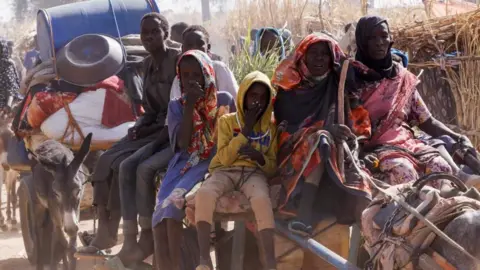
The desperate flight towards the nearest perceived safe haven, the town of Tawila, was a journey fraught with peril. The road was littered with the dead and injured – "very, very large numbers, countless numbers." Suleiman lamented that if there had been any means of communication, they could have called for help, saving many wounded from being left behind. "There are things I cannot describe because they are inhumane. I cannot talk about them. And the regrettable thing is that the audio-visual media did not convey the scene," he stated, his voice filled with a profound sense of injustice. "Until now, the world does not know what happened in el-Fasher city, nor does the state know." While the RSF leadership has acknowledged "individual violations" in el-Fasher, claiming investigations are underway and that the scale of atrocities has been exaggerated by their adversaries, both sides face accusations of war crimes, including the indiscriminate killing of civilians through air and drone strikes.
The communication breakdown in el-Fasher began early in the war due to fighting and a severe fuel shortage that crippled power supplies. This evolved into a complete blackout, exacerbated by the RSF siege in May 2024. While some managed to acquire expensive Starlink devices for satellite internet access, these were heavily restricted by both the army and the RSF. Journalists attempting to use them faced grave risks. "The Rapid Support Forces consider you affiliated with security agencies and accuse you of using it for espionage," Suleiman explained. "As for the army, they consider that when shelling begins, you are accused of being a spotter," he added, referring to the dangerous accusation of identifying targets for the enemy. This constant threat and the lack of official permits to report meant journalists had to operate in secrecy, exposing themselves to immense danger. "The accusation of being a spotter harmed many journalists and harmed the transmission of truth from el-Fasher. And the military authorities did not give you a permit to convey the truth. So, you hide, and when you try to convey the news secretly, you expose yourself to risks."
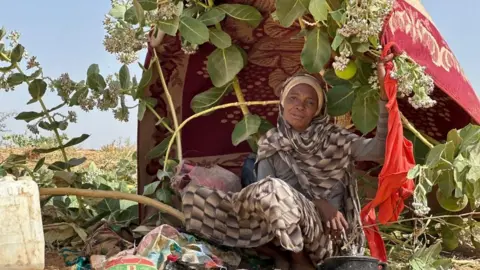
Suleiman himself narrowly escaped death when a shell landed less than two meters from him in July 2025. For nearly half an hour, he lay on the ground, his phone rendered useless, unable to call for assistance. "If I had been injured, I would have died," he stated, the near-death experience a stark reminder of his vulnerability. The constant presence of drones overhead meant that even using his phone, with its illuminating screen, could attract fire. The only recourse was to seek shelter, "under the bed and cover yourself with a blanket," or hide in trenches, sometimes for hours, in oppressive heat, enduring the shelling in silence, unable to report what was happening. He witnessed the tragic deaths of children, even those traveling in donkey carts, caught in the indiscriminate strikes. In such dire circumstances, faith became a source of solace. "We remembered God Almighty night and day. Neighbours would come to the Quran circle in the house," Suleiman said, describing gatherings for prayer and recitation of the Quran amidst the ongoing bombardment. "After Asr (afternoon) prayer, we would read a part of the Quran, while the shelling was ongoing. If the shelling came from the north, we would move south; if from the south, we would move north."
After a perilous journey spanning over two months, including a passage through Chad, Suleiman finally reached Port Sudan in January of the current year, the temporary seat of the military-backed government. "As soon as I arrived in Port Sudan, I prostrated in the airport and cried intensely because I never imagined I would reach a safe haven," he expressed, the relief palpable in his voice. Yet, his ordeal was far from over. Having lost all his identification documents, reclaiming his identity became a bureaucratic battle. He spent 22 days navigating offices, facing frustrating demands. "The last regrettable thing they said to me was to bring my mother. And to bring a number of witnesses. Thank God I have witnesses and I brought them, but what happens to the person who comes out of the war and has no one?" he questioned, highlighting the systemic failures in supporting those displaced by conflict. He called for the state to provide free identification documents to individuals emerging from war-torn regions.
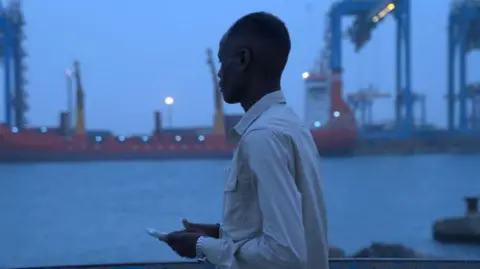
Reconnected to the world, Suleiman feels a profound disconnect between his experiences and the world’s apparent inaction. "There is no international law in the world," he stated bitterly. "There is no such thing as the United Nations. If there were human rights international organisations, no day would pass in el-Fasher with people dying, hungry and thirsty, bombed by shells and drones. There is no ceasefire, no medicine, no basic necessities of life." The international community has fallen woefully short in addressing Sudan’s immense humanitarian needs, hampered by ongoing fighting, bureaucratic hurdles, and a severe funding deficit, with only 16.2% of the UN’s $2.87 billion needs assessment for the year met so far. Efforts to broker peace have also been largely unsuccessful, with a recent peace plan from the Quad nations failing to yield progress. The US envoy, Massad Boulos, is now focused on achieving at least a humanitarian ceasefire.
The Sudan that Mohamed Suleiman now inhabits is a fractured nation, its people scattered. Yet, in recounting their stories, he finds a renewed sense of purpose. "There are events that happened that no-one is left to narrate, and the memory remains only with us… until we die, we will convey the truth to correct the situation for the next generation, so they live dignified and honoured in their homeland." His words echo the desperate hope for a future where the horrors of the present are not forgotten, but serve as a solemn lesson for generations to come.

 Nakalama John
 Ramos Leo
 Nana Banana