Ramos Leo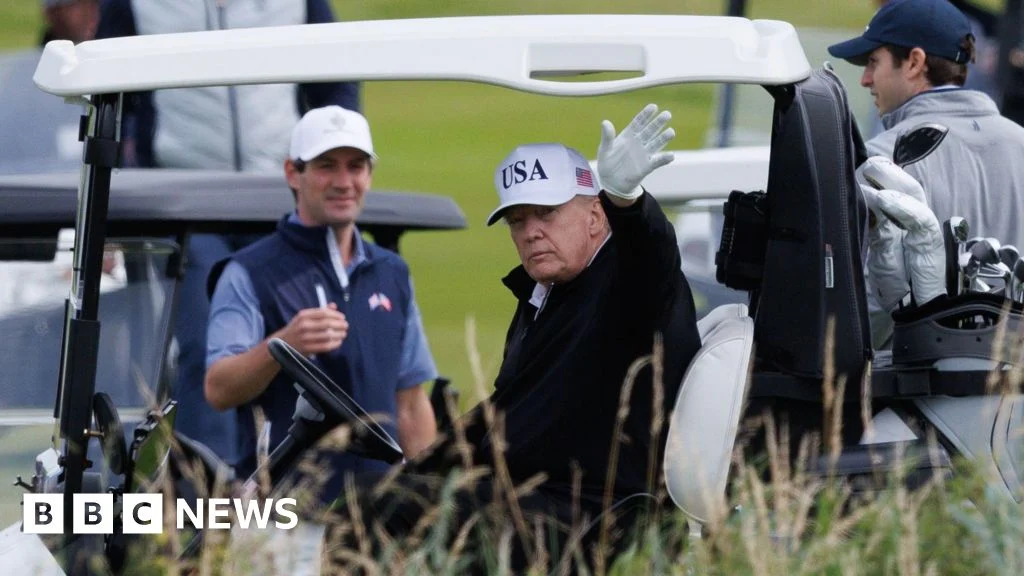
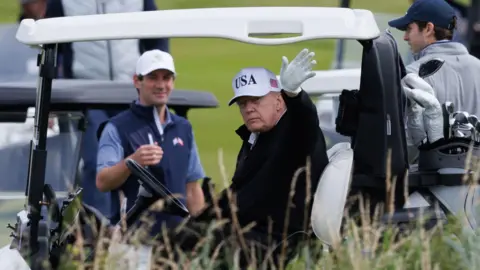
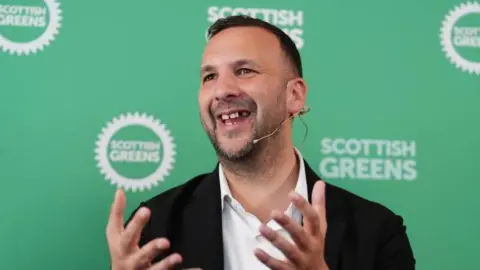
The co-leader of the Green Party of England and Wales, Zack Polanski, has issued a forceful call for Donald Trump to be stripped of his Scottish golf course assets, advocating for their transfer into "community ownership." Polanski made these incendiary remarks during a recent visit to Glasgow, where he was lending his support to his Scottish Green Party colleagues in the run-up to an election campaign, highlighting the Greens’ unified stance on issues of social justice and environmental stewardship.
Polanski did not mince words when discussing the former US President, delivering a scathing critique of his tenure and policies. He asserted that Trump had "started illegal and unpopular wars," a claim that reflects a common Green Party perspective on aggressive foreign policy and military interventions, often seen as detrimental to global stability and human rights. While Trump’s presidency did not initiate major new wars in the traditional sense, his administration’s actions, such as the assassination of Iranian General Qasem Soleimani and the withdrawal from the Iran nuclear deal, were widely seen as escalatory and drew significant international condemnation, resonating with Polanski’s sentiment.
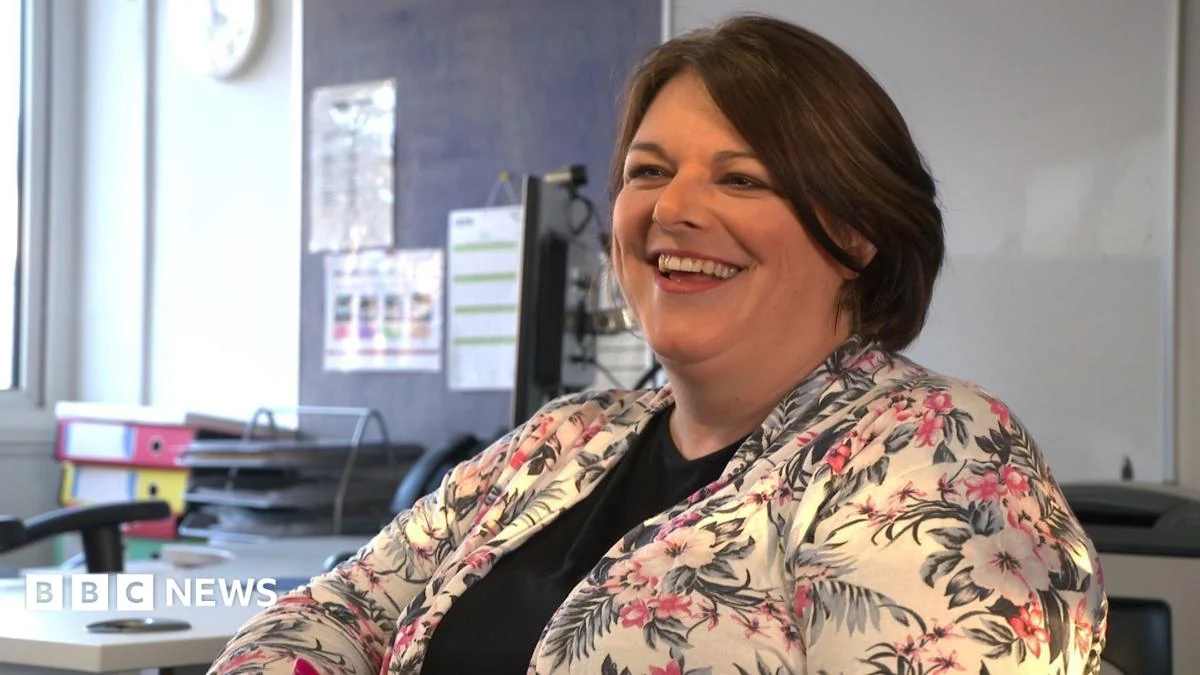
The reaction from Trump International in Scotland was swift and equally uncompromising. Sarah Malone, Executive Vice President of the Trump organisation in Scotland, dismissed Polanski’s comments as "frankly ludicrous and ignorant and made by a man who is an imbecile." This unusually blunt and personal attack from a corporate entity underscores the highly charged nature of any public criticism directed at the former President and his business empire.
Speaking passionately during a press conference in Glasgow, Polanski elaborated on his stance: "It’s not for me to tell Scotland what to do either but I’d really like to see Donald Trump kicked out of his golf courses. I don’t think you should be able to start illegal and unpopular wars and still have golf courses. I’d love to see those golf courses brought into community ownership." This statement, while framed as a personal opinion, clearly aligns with the Green Party’s broader ethos of democratic control over land and resources, and a rejection of what they perceive as unaccountable power. The concept of "community ownership" for significant landholdings is a core tenet of Green and socialist policies, aiming to empower local populations and ensure assets benefit the public good rather than private interests.
Polanski, however, was careful to clarify that his radical suggestion was a personal sentiment and not an official policy position of either the Green Party of England and Wales or the Scottish Greens. This distinction is crucial in the nuanced world of coalition politics and party manifestos, where individual opinions, even from leaders, may not always translate directly into formal policy proposals. Nevertheless, the comments served to draw a clear ideological line, positioning the Greens firmly against the values and practices associated with Donald Trump.
He further challenged the notion of a "special relationship" between the UK and the United States under a leader like Trump, stating that such an idea "does not stand up to any scrutiny." This criticism taps into a wider debate about the nature of Anglo-American relations, particularly during periods of populist leadership in the US. Many progressive politicians and commentators in the UK view Trump’s "America First" foreign policy as antithetical to shared democratic values and multilateral cooperation, making the traditional "special relationship" appear transactional or even compromised.
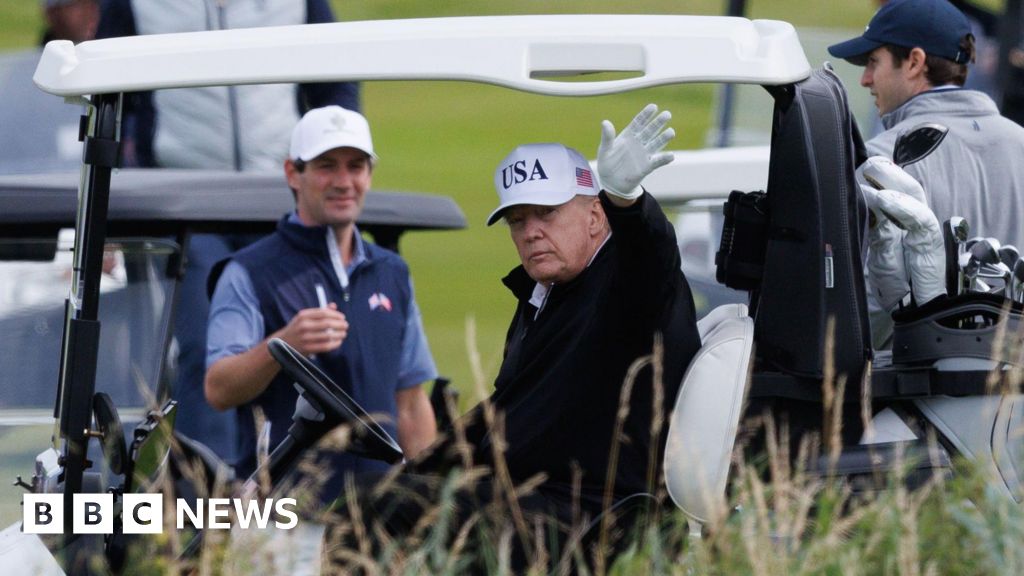
Donald Trump currently owns two prominent golf resorts in Scotland: Trump International Golf Links, situated on the Menie Estate in Aberdeenshire, and Trump Turnberry in South Ayrshire. The Aberdeenshire resort, which boasts two 18-hole championship courses, has been a source of significant controversy since its inception. The development faced fierce opposition from environmental groups due to its location on a sensitive dune system, and from local residents over land acquisition disputes, including accusations of compulsory purchase orders. Trump himself often spoke of the project as a tribute to his Scottish heritage, with his mother, Mary Anne MacLeod, having been born and raised in Lewis in the Western Isles. The Turnberry resort, a historic links course renowned globally, was acquired by Trump in 2014 and has also seen substantial investment and rebranding under his ownership. Both properties represent significant investments and hold a symbolic status for the Trump brand in his ancestral homeland.
The sharp retort from Sarah Malone of Trump International Scotland, labelling Polanski an "imbecile," quickly became a talking point. Such language is highly unusual in formal political or corporate responses, reflecting the deep polarisation and combative rhetoric that often surrounds discussions involving Donald Trump. The Green Party leader swiftly responded on social media, implying he had "thoughts" about spokespeople who work for Donald Trump, maintaining his characteristic wit in the face of the personal attack. This exchange further amplified the story, highlighting the clash of personalities and ideologies.
The political commentary surrounding Polanski’s remarks noted that this was not the first instance of Donald Trump’s name surfacing on the Scottish election campaign trail. Earlier in the same period, John Swinney, who had recently assumed the role of First Minister and leader of the Scottish National Party (SNP) in May 2024, reportedly declined a White House invitation to a banquet commemorating the 250th anniversary of the founding of the United States. This historical milestone is set to occur in 2026, and Swinney’s early refusal, if confirmed, would signal a clear political distancing from a potential future Trump administration or indeed, a broader critical stance towards certain aspects of US foreign policy, aligning with a common Scottish nationalist perspective that often prioritises international law and multilateralism over close ties to a potentially isolationist or interventionist US.
Polanski’s desire to see Trump "punished" for what he termed "illegal and unpopular wars" raises complex questions about the practicalities of implementing such a measure. While he did not elaborate on how these sanctions might apply, potential, albeit highly improbable, avenues could include calls for the Scottish government to investigate the properties’ financial dealings, revoke business licenses, or even consider compulsory purchase orders – mechanisms that would be unprecedented and face enormous legal and diplomatic hurdles. The Green Party’s position, viewed as "extreme fantasy" by other mainstream parties, underscores the ideological chasm between their radical proposals and the more pragmatic approaches of traditional political forces.
Beyond the immediate controversy, Polanski also pointed to the broader issue of instability within NATO, a concern that has gained significant traction given the current geopolitical climate. With ongoing conflicts in various parts of the world, including the Middle East, the prospect of a potential second Trump presidency has raised anxieties among European allies about the future of the transatlantic alliance and collective security. Trump’s previous rhetoric questioning NATO’s relevance and threatening to withdraw US support has created genuine apprehension. The original article’s cryptic reference to "worsening economic conditions for their citizens caused by the conflict in Iran" suggests a wider context of global instability impacting domestic life, a theme that the Green Party often links to militarism and unsustainable foreign policies.

In a poignant piece of political observation, the article speculated on future diplomatic efforts, noting that "The King will fly across the Atlantic next week to smooth relations with a man who could be characterised as a modern-day George Washington, railing against the British." This metaphorical statement hints at the immense diplomatic challenge faced by the UK in navigating relations with a potentially disruptive US leader. The comparison to George Washington, a figure who led a rebellion against British rule, subtly suggests that a future Trump presidency could represent a similar challenge to traditional alliances and diplomatic norms, requiring extraordinary efforts from the British monarchy and government to maintain stability.
Ultimately, despite the strong rhetoric and calls for radical action, the concluding thought of the original article served as a dose of political realism: Trump’s "pristine golf courses will remain untouched by any revolutionaries this side of the ocean." This acknowledges the formidable legal and economic barriers to such a dramatic divestment, suggesting that while Polanski’s comments ignited a fierce debate and highlighted significant ideological divides, the practical reality of seizing private assets from a powerful international figure remains a distant and unlikely prospect for the foreseeable future. The episode, however, vividly illustrated the ongoing political and cultural tensions surrounding Donald Trump’s presence and influence in Scotland.

 George Anjay
 Nakalama John
 atisusanti