Nakalama John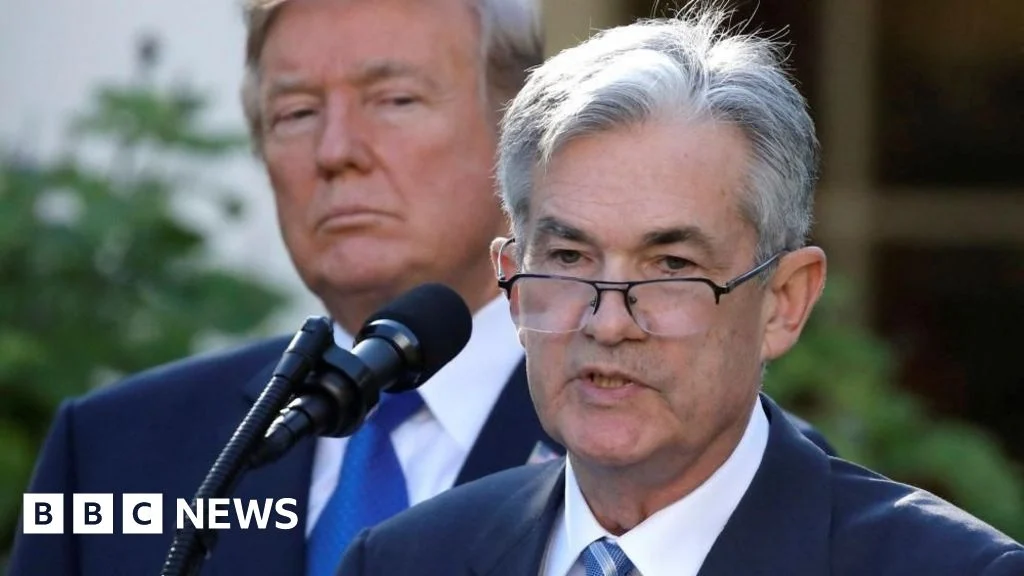
The US Justice Department has officially announced the cessation of its investigation into Federal Reserve Chairman Jerome Powell, a probe centered on allegations of excessive building costs associated with the central bank’s extensive renovation projects. This development marks a significant turning point in a protracted and highly public feud between President Donald Trump and the head of the nation’s central bank, a conflict that has frequently tested the boundaries of institutional independence. US Attorney Jeanine Pirro confirmed the decision, stating that the criminal investigation would be discontinued. Instead, the matter is being redirected to an internal review process led by the Federal Reserve’s own inspector general, a move that offers a potential political off-ramp while still maintaining an appearance of accountability.
President Trump has consistently voiced his disapproval of the Federal Reserve’s spending on its building renovations, framing it as part of his broader criticism of Powell’s leadership and the central bank’s monetary policy decisions. This particular accusation served as a new front in an already tense relationship, which saw the President repeatedly call for lower interest rates and lambast Powell’s performance. The timing of this dropped probe is particularly noteworthy, coming as Powell’s term as Fed Chair is nearing its conclusion. The US Senate is currently engaged in the process of considering President Trump’s nominee for Powell’s replacement, Kevin Warsh, a former Fed Governor. A critical factor in this political calculus was the stance of Senator Thom Tillis, a prominent Republican, who had explicitly withheld his support for Warsh’s confirmation until the Trump administration agreed to drop its investigation into Powell. This political maneuvering highlights the intricate web of influence and negotiation that often underlies high-stakes appointments and investigations in Washington.
White House spokesman Kush Desai issued a statement following the Justice Department’s announcement, asserting that "American taxpayers deserve answers about the Federal Reserve’s fiscal mismanagement, and the Office of the Inspector General’s more powerful authorities best position it to get to the bottom of the matter." The statement further emphasized the White House’s continued confidence that "the Senate will swiftly confirm Kevin Warsh as the next Federal Reserve Chairman to finally restore competence and confidence in Fed decision-making." This messaging underscores the administration’s narrative that Powell’s leadership was characterized by fiscal irresponsibility and a lack of sound judgment in monetary policy, positions strongly contested by Powell and his supporters.
In her post on the social media platform X, US Attorney Pirro clarified the conditional nature of the Justice Department’s decision, stating that she would not "hesitate to restart a criminal investigation should the facts warrant doing so." This caveat leaves open the possibility of renewed external scrutiny, depending on the findings of the internal review. The Federal Reserve, maintaining its customary institutional reserve in such matters, declined to offer any comment on the development. Similarly, the Office of the Inspector General acknowledged its active engagement in the review process, stating it was "actively working to complete our review, and look forward to making the results available to the public and Congress upon completion," but refrained from providing a specific timeline for its findings.
The origins of this contentious investigation trace back to President Trump’s return to office last year. Almost immediately upon resuming his presidency, Trump reignited his calls for the Federal Reserve to implement significant interest rate cuts. His long-held belief that lower rates stimulate economic growth and benefit borrowers, particularly in sectors like property development, has been a consistent theme throughout his political career. When these calls were not immediately heeded by the independent central bank, the President began openly floating the idea of dismissing Powell, a move that many legal experts and political observers warned could be illegal and severely undermine the Fed’s crucial independence. Amidst months of escalating attacks, President Trump resorted to public insults, branding Powell a "knucklehead" and claiming he was "doing a lousy job" in response to the Fed’s steadfast refusal to bow to political pressure.
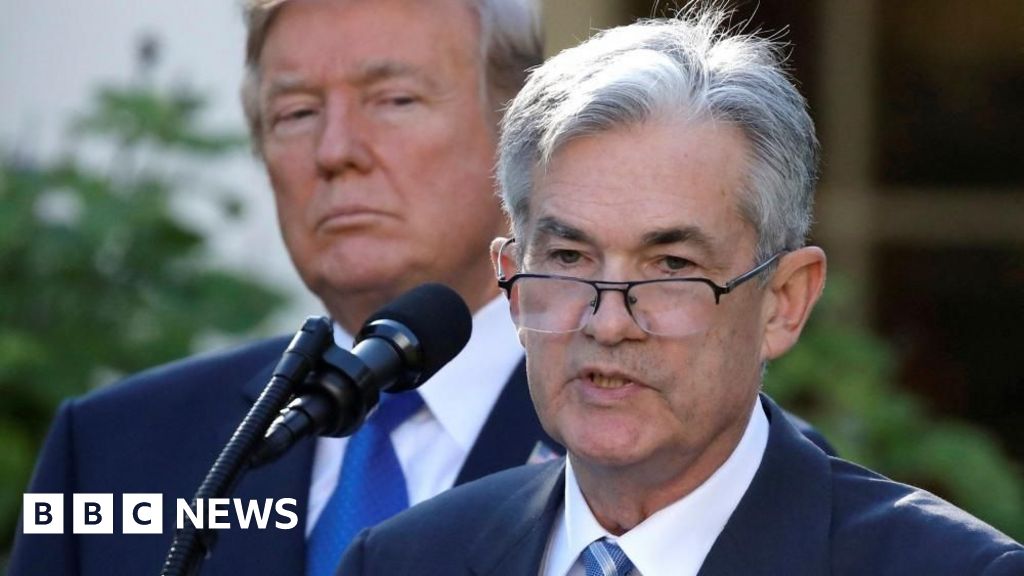
In an unprecedented move in January, Jerome Powell took the highly unusual step of publicly releasing a video statement. In it, he disclosed that the Justice Department had served the Federal Reserve with subpoenas and had even threatened him with a criminal indictment. The alleged basis for this legal action was testimony he had given to a Senate committee regarding the ongoing renovations to several Federal Reserve buildings. Powell unequivocally condemned the investigation as "unprecedented," stating his firm belief that it was initiated directly due to President Trump’s palpable anger over the Fed’s resolute refusal to cut interest rates, despite repeated and intense public pressure from the executive branch. While President Trump initially claimed he did not "know anything" about the investigation, the public perception was often one of political retaliation.
Powell’s video marked a pivotal moment, representing the first time he had publicly and robustly pushed back against a sitting US president, highlighting the severe threat he perceived to the independence of the US central bank. He framed the conflict in stark terms: "This is about whether the Fed will be able to continue to set interest rates based on evidence and economic conditions, or whether instead monetary policy will be directed by political pressure or intimidation." This declaration underscored the foundational principle that the Federal Reserve, as an independent body, must be shielded from political influence to effectively manage the economy and maintain price stability.
The core function of the Federal Reserve involves setting interest rates, a powerful tool with far-reaching economic consequences. Lower interest rates generally make borrowing cheaper, encouraging spending and investment, which can stimulate economic growth. Conversely, higher interest rates tend to dampen spending activity, helping to curb inflation and keep prices stable. President Trump, whose professional background as a property developer instilled a preference for low interest rates to facilitate borrowing and expansion, has consistently advocated for an accommodative monetary policy. He famously objected when the Fed raised rates during his first term and has consistently argued that keeping rates too high could inflict unnecessary damage on the economy.
The specific Federal Reserve buildings at the center of the alleged cost overruns are the Eccles Building and the structure at 1951 Constitution Avenue. These buildings, iconic architectural representations of the central bank, were constructed in the 1930s. The "overhaul and modernization" projects in question represent the first comprehensive works undertaken since their original construction. The scope of these renovations is substantial, reportedly including critical infrastructure upgrades and the removal of hazardous materials such as asbestos and lead contamination, necessary for ensuring the safety and longevity of these historical federal properties. The costs associated with such complex, large-scale renovations of historic buildings are inherently high, but it was the alleged "overruns" that caught the attention of the administration.
Jerome Powell was initially nominated by President Trump himself for the role of Fed chair in 2017 during his first presidential term. Despite this initial endorsement, their relationship deteriorated significantly, particularly as the Fed pursued a path of monetary tightening that diverged from Trump’s policy preferences. Powell’s current term is officially set to expire on May 15th. However, in keeping with precedent and to ensure a smooth transition, he has publicly stated his intention to remain in his post until his successor, Kevin Warsh, is formally confirmed by the Senate. The dropping of the Justice Department probe, while seemingly resolving a political standoff, leaves open questions about the long-term implications for central bank independence and the dynamic between the executive branch and critical independent institutions. The internal investigation by the Fed’s Inspector General will now be closely watched for its findings, which could either validate the administration’s concerns or underscore the politicized nature of the initial federal probe.


 George Anjay
 atisusanti
 Ramos Leo