Nakalama John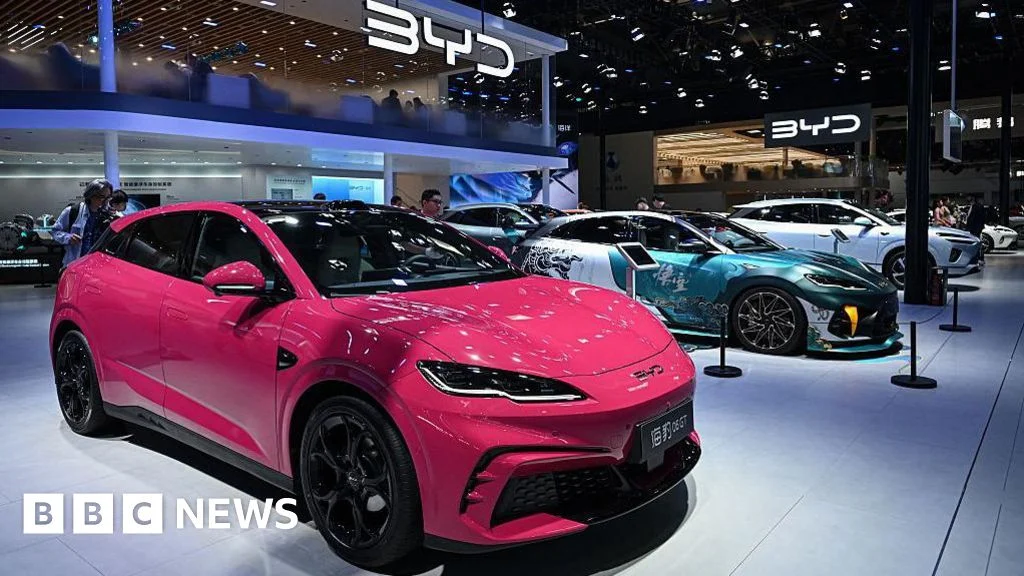
China has firmly established itself as the world’s leading producer of electric vehicles, boasting a robust supply chain and a rapidly maturing domestic market. Despite this dominance, Chinese EV makers, including industry giant BYD, face considerable barriers to entry into the United States, one of the world’s most lucrative and significant car markets. These manufacturers are largely shut out due to a complex web of tariffs, regulatory scrutiny, and escalating trade tensions. However, far from being deterred, these companies are successfully redirecting their focus and reaping substantial benefits from increased interest and burgeoning order books across dealerships throughout Asia, Europe, and other emerging markets.
At the epicenter of this strategic redirection is BYD, a company whose name stands for "Build Your Dreams." Last year, BYD made headlines by surpassing Tesla to become the world’s largest seller of electric vehicles, a testament to its aggressive expansion and comprehensive product portfolio. This achievement underscores a pivotal shift in the global EV hierarchy, highlighting China’s technological prowess and manufacturing scale. BYD is now embarking on an ambitious overseas expansion, signaling its intent to become a truly global automotive powerhouse.
Speaking at the prestigious Beijing Auto Show, a global platform for automotive innovation, BYD executive vice president Stella Li articulated the company’s confident stance: "We survive and are successful without the US market today." This statement encapsulates BYD’s pragmatic approach to global growth, acknowledging the existing trade barriers while simultaneously emphasizing its formidable strength in other regions. Instead of expending resources on navigating the complex political and economic hurdles of the US market, BYD is strategically prioritizing markets where its products are welcomed and in high demand.
The company’s primary challenge, according to Li, is not market access but rather the monumental task of meeting the surging demand in these alternative regions. Markets such as Brazil, the United Kingdom, and the broader European continent are proving particularly receptive to BYD’s offerings. Consumers in these areas are increasingly sensitive to fluctuating energy costs, and the economic benefits of EVs are becoming undeniable. "Consumers feel the daily savings when oil prices increase. EVs help them save money every day," Li explained, underscoring the compelling financial incentive driving adoption. This burgeoning interest has led to an unexpected predicament for BYD: "Actually, we are now suffering [insufficient] capacity. Our demand is much higher than what we can supply," Li revealed, indicating the sheer scale of their international success.
A significant element of BYD’s competitive edge lies in its relentless pursuit of technological innovation. The company is heavily investing in advanced battery and charging solutions, recognizing these as critical factors in accelerating EV adoption. BYD is particularly enthusiastic about its new "flash charging" technology, which Li confidently describes as a "game-changer." This breakthrough addresses one of the most significant barriers to widespread EV adoption: range anxiety and slow charging speeds. Flash charging promises to add hundreds of kilometers of range in mere minutes, a development that could fundamentally alter perceptions of electric vehicles. Li believes this innovation will persuade previously reluctant customers to embrace EVs, thereby allowing BYD to compete more widely and effectively across various market segments.
The Beijing Auto Show itself serves as a powerful symbol of China’s ascendance in the automotive world. Now recognized as the largest industry event globally, this year’s show featured an astounding display of more than 1,400 vehicles from hundreds of Chinese and international companies. Critically, Chinese carmakers occupied center stage, showcasing their latest innovations, design philosophies, and technological advancements with an undeniable swagger. The sheer scale and vibrancy of the show underscore the dynamism and intense competition within the Chinese automotive sector.
BYD’s ambitious global push is unfolding against an increasingly complex geopolitical backdrop. Beyond the US, Chinese EV makers face varying degrees of tariffs and regulatory scrutiny in other key global markets, particularly in Europe. These measures often stem from concerns over alleged government subsidies providing an unfair advantage, as well as broader issues of data protection and national security. Despite these headwinds, Li highlighted that BYD is successfully building greater brand recognition and trust in markets like the UK, demonstrating that quality, innovation, and value can overcome some political obstacles.
A notable evolution in the strategy of Chinese firms is their shift from merely undercutting rivals on price to fiercely competing on technology. While initially gaining market share through affordability, companies like BYD are now at the forefront of innovation, particularly in critical areas such as battery technology, advanced charging infrastructure, and sophisticated software integration. BYD’s competitive advantage is further amplified by its unique "ecosystem" approach. "We are not just a car company. We produce one-third of global smartphone components, we are a leading player in battery storage, solar panels, buses, and trucks. So BYD is an ecosystem," Li explained. This extensive vertical integration provides BYD with unparalleled control over its supply chain, allows for significant cost efficiencies, and fosters a holistic approach to technological development that few competitors can match.
The Beijing Auto Show also offered a glimpse into the broader innovation landscape of Chinese automotive companies. Firms like XPeng unveiled groundbreaking developments, showcasing a new six-seater electric SUV. Chief executive He Xiaopeng announced plans for humanoid robots to follow later this year, with an even more ambitious vision to begin manufacturing flying cars by 2027. These futuristic announcements highlight the rapid pace of R&D and the audacious spirit driving Chinese innovation, pushing the boundaries of what is considered possible in personal mobility.
In stark contrast to the ascendancy of Chinese brands, traditional foreign carmakers such as Volkswagen, Toyota, and Ford, which once commanded significant market share in China, are now struggling to maintain pace. Their slower innovation cycles and difficulties in adapting to the rapid evolution of consumer preferences for smart features and integrated digital experiences in China have put them at a disadvantage. Consequently, many established international players are choosing strategic collaboration with local firms to stay relevant. BMW, for instance, has partnered with leading battery maker CATL, while Audi is leveraging Huawei’s advanced driving assistance systems. Volkswagen, recognizing the need for local expertise, is co-developing EVs with XPeng. These partnerships underscore the indispensable role Chinese technology and market insights now play in the global automotive industry.
Domestically, competition within China’s EV market is nothing short of brutal. Dozens of manufacturers are locked in aggressive price wars, characterized by rapid product cycles and intense marketing efforts. This hyper-competitive environment has inevitably squeezed profit margins, even for market leaders like BYD. The domestic market has presented ongoing challenges, with BYD’s sales within China experiencing a decline for seven consecutive months. This contrasts sharply with its robust international performance, particularly in Europe, where sales surged by an impressive 156% in the first three months of this year.
Looking ahead, Stella Li acknowledged the inevitability of market consolidation given the current competitive pressures. "History suggests not all will survive," she remarked, drawing parallels with past industry cycles, such as the rise of Japanese car manufacturers in the 1990s and South Korean brands more recently. This forecast suggests a future where only the most innovative, efficient, and adaptable companies will endure, further solidifying the global presence of those who navigate these turbulent waters successfully. BYD, with its robust ecosystem, technological leadership, and strategic global focus, appears well-positioned to be among the survivors, continuing to build its dreams on an international scale, independent of the US market.



 George Anjay
 Ramos Leo
 atisusanti
 Roy Suryo