atisusanti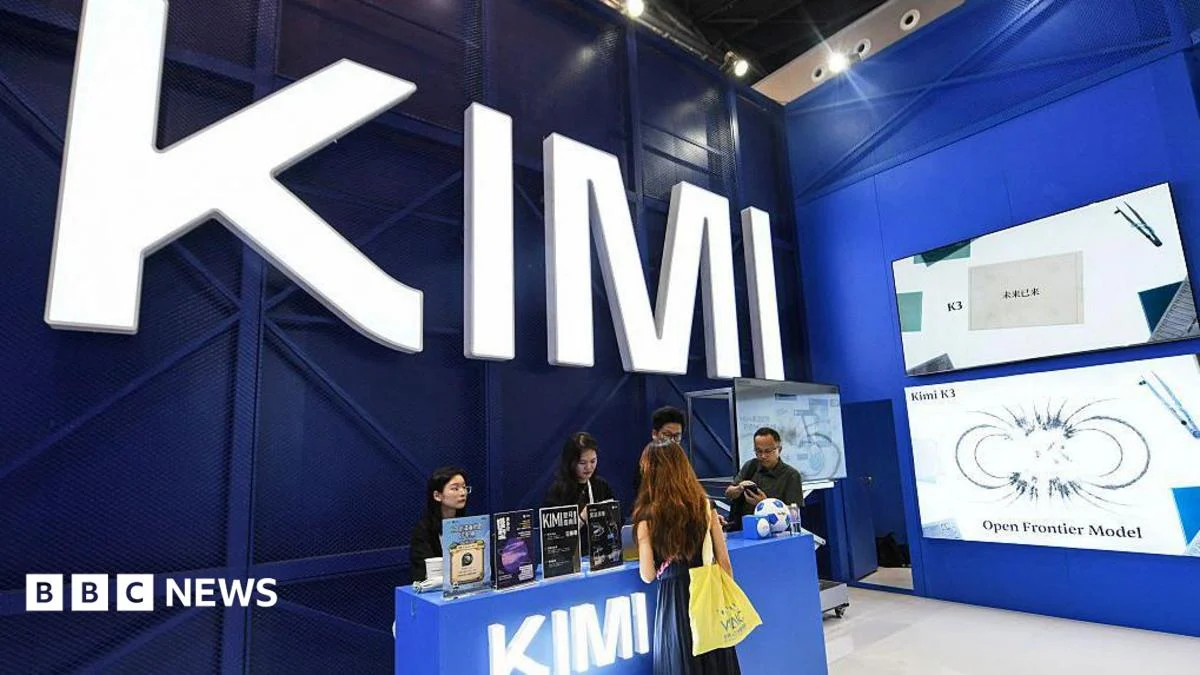
Chinese AI start-up Moonshot has unveiled a monumental new artificial intelligence model, Kimi K3, boasting an staggering 2.8 trillion parameters, a figure that serves as a potent indicator of its sheer scale and processing prowess. This ambitious launch positions Moonshot AI as a formidable contender against established American tech giants like OpenAI and Anthropic, potentially reshaping the global AI landscape. While the full spectrum of Kimi K3’s capabilities, encompassing advanced coding, intricate knowledge work, and sophisticated reasoning, will be meticulously detailed upon its release as an open-source model on July 27th, the initial announcement has sent ripples of anticipation and strategic reevaluation throughout the technology sector.
This sudden and significant leap in Chinese AI development challenges long-held Western assumptions that developers in China are lagging behind their American counterparts. The impending release of Kimi K3 will mark a historic moment, establishing it as the world’s inaugural open-source model within the ambitious three-trillion-parameter class, readily accessible for free download, execution, and customization by a global community of developers. This open-source approach stands in stark contrast to the proprietary nature of many leading Western AI systems.
The timing of Kimi K3’s unveiling is particularly sensitive, occurring mere weeks after the U.S. government’s abrupt directive for American developer Anthropic to temporarily withdraw its flagship Fable and Mythos models due to significant cybersecurity concerns. Although these restrictions have since been lifted, the initial move underscored the U.S. government’s evolving perspective on advanced AI software, now categorizing frontier models as critical national infrastructure and vital national security assets subject to stringent export controls. The rapid emergence of Kimi K3, however, suggests that Chinese firms are adeptly navigating these regulatory hurdles and forging ahead with independent advancements, even amidst U.S. restrictions on hardware sales.
Moonshot AI, a company bolstered by substantial backing from domestic technology titans Alibaba and Tencent, has swiftly ascended to a prominent position within China’s burgeoning generative AI ecosystem. In a statement, the company articulated that K3 represents Moonshot AI’s "most capable flagship model to date," highlighting its sophisticated architecture and potential for groundbreaking applications.
A key differentiator for Kimi K3, as emphasized by Moonshot AI, is its open-source nature. This fundamental characteristic allows for unparalleled flexibility, empowering global users to modify and adapt the system for highly specialized tasks, including advanced reasoning and complex software development. This stands in contrast to the more controlled, proprietary ecosystems offered by competitors like OpenAI and Anthropic. Moonshot AI further noted that Kimi K3 is uniquely engineered to operate with "minimal human supervision," a crucial advancement for sustaining demanding tasks such as complex engineering projects and intricate coding endeavors.
Early third-party evaluations from reputable entities like Artificial Analysis and Arena.ai have already placed Kimi K3 on par with leading U.S. models, including OpenAI’s GPT series and Anthropic’s Claude. These independent benchmarks, which are crucial for assessing AI performance objectively, have provided compelling evidence of Kimi K3’s capabilities. In specific assessments, Kimi K3 notably secured the top position in web interface engineering, and in blind human-preference tests, it demonstrated a superior performance compared to Anthropic’s Fable system. This suggests that not only does Kimi K3 possess immense computational power, but it also excels in user-facing applications and complex problem-solving scenarios.
While the sheer magnitude of Kimi K3 necessitates substantial computing resources for local deployment, its open-source accessibility possesses the potential to profoundly disrupt the established commercial models that have long defined Silicon Valley’s AI market. The very act of making such a powerful model freely available democratizes access to cutting-edge AI, fostering innovation and potentially accelerating the development of new AI-driven applications across a multitude of industries. This move could empower smaller businesses, academic institutions, and individual developers who may not have the financial resources to license proprietary AI models.
The announcement of Kimi K3’s capabilities and its impending open-source release has already had a tangible impact on the stock market. Shares of Moonshot’s domestic competitors, Zhipu and MiniMax, experienced a significant decline, tumbling by approximately 27% and 16% respectively in Hong Kong. This market reaction underscores the perceived competitive threat posed by Kimi K3 and signals a potential recalibration of investor sentiment within the Chinese AI sector. The development also highlights the intensifying global race for AI dominance, where innovation, accessibility, and strategic partnerships will likely be key determinants of success.
The implications of Kimi K3 extend beyond mere technical prowess. The open-source nature of such a large-scale model could democratize AI development, fostering a more collaborative and rapid evolution of the technology. This contrasts with the more guarded, proprietary approaches favored by some Western AI companies, which can create barriers to entry for smaller players and researchers. By making Kimi K3 available to the global community, Moonshot AI is not only showcasing its technical achievements but also strategically positioning itself to influence the future direction of AI research and development. The ability for developers worldwide to inspect, modify, and build upon Kimi K3 could lead to unforeseen innovations and applications that might not emerge within more closed development environments.
Furthermore, Kimi K3’s emphasis on operating with "minimal human supervision" for tasks like engineering and coding suggests a significant advancement in AI autonomy. This could have profound implications for the future of work, potentially automating complex technical processes and freeing up human expertise for more strategic and creative endeavors. The model’s proficiency in these areas, as indicated by preliminary benchmarks, points towards a future where AI plays an increasingly integral role in the design, development, and maintenance of complex systems.
The competitive landscape of artificial intelligence is dynamic and rapidly evolving. The emergence of Kimi K3 from China’s Moonshot AI signifies a pivotal moment, demonstrating that the nation’s AI capabilities are not only advancing at an accelerated pace but are also beginning to rival and, in some specific areas, surpass those of established Western leaders. The open-source strategy employed by Moonshot AI for Kimi K3 is particularly noteworthy, as it has the potential to democratize access to advanced AI, foster global collaboration, and reshape the economic models that currently govern the AI industry. As Kimi K3 becomes available to the wider developer community, its true impact on the global AI ecosystem will undoubtedly unfold in the coming months and years, potentially ushering in a new era of AI innovation and competition. The world will be watching closely to see how this powerful new model shapes the future of artificial intelligence.




 George Anjay
 Nakalama John
 Ramos Leo