
 Nakalama John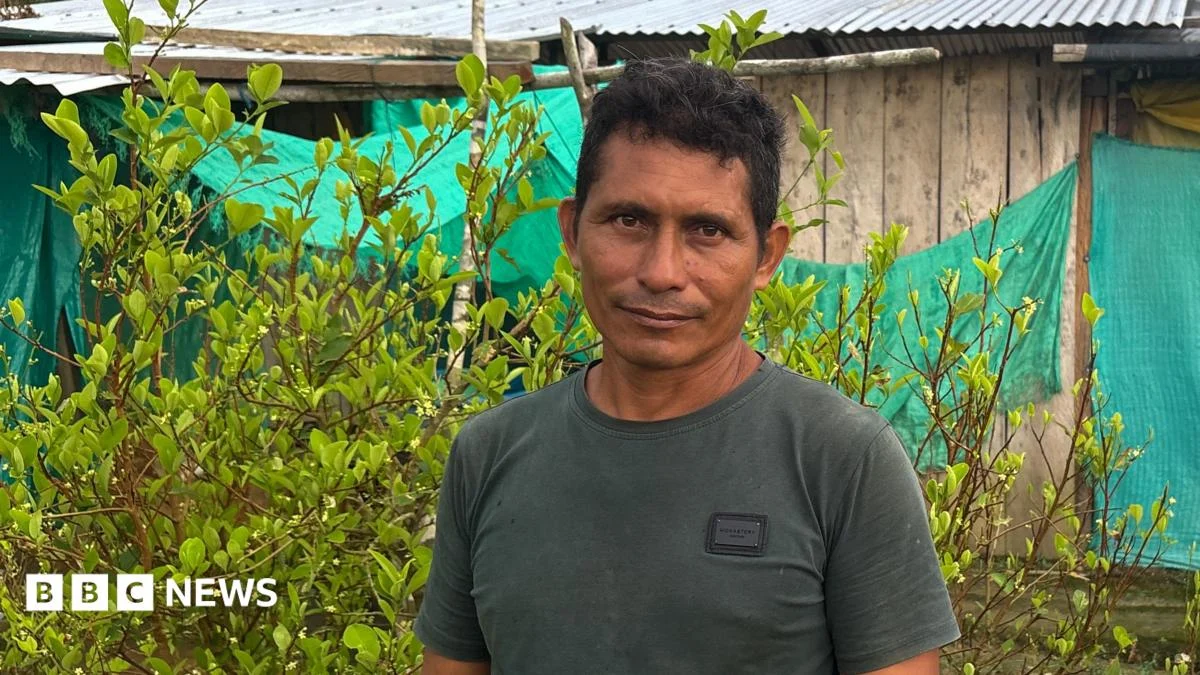
Perea was one among thousands of Colombian farmers who had eagerly joined a government-sponsored crop substitution program. These initiatives were designed to offer a lifeline, providing an economic pathway for farmers to transition away from coca cultivation and embrace legitimate livelihoods. However, the path to legality proved treacherous. A significant portion of the promised government assistance, crucial for this transition, never materialized. Compounding these issues, the persistent lack of developed roads and the devastating regularity of floods made it nearly impossible for Perea to transport and sell his legal produce effectively. Faced with insurmountable odds and a profound sense of abandonment, his initial optimism curdled into disillusionment. By 2024, with his family’s survival at stake, he was forced to make the agonizing decision to replant coca.
"It’s a tragedy," Perea laments, his voice heavy with despair. "But when you have children and no work, what choice do you have? If no help ever arrives, you go back to growing it." His words encapsulate the desperate plight of countless farmers trapped in a cycle they wish to escape but cannot, due to systemic failures and a stark lack of viable alternatives.
The coca leaf itself holds a complex history and identity in Colombia. Traditionally revered by indigenous communities, it has been an ancestral crop for centuries, used in sacred rituals, teas, and traditional medicines. Yet, its contemporary reality is far removed from these ancient practices. Today, the vast majority of coca is processed into cocaine, fueling a global illicit drug trade. Colombia, tragically, stands as the epicenter of this supply, with an estimated 70% of the world’s illegal cocaine originating from its soil.
The economic allure of coca is undeniable, a harsh truth that underpins its enduring presence in rural communities. "Coca has some major advantages over other crops," explains Lucas Marín Llanes, a Colombian researcher specializing in the coca economy and substitution strategies. He highlights several key factors: "Harvests are quick – farmers can get three or four a year – it’s easier to transport, and farmers know what price they’ll get." These characteristics stand in stark contrast to legal crops, which often require longer growing seasons, are perishable, and face volatile market prices and significant logistical hurdles for transport from remote regions. Research conducted by Marín and his colleagues further illustrates coca’s deep integration into local economies, showing that its cultivation can boost municipal GDP by as much as 10% in some areas between 2014 and 2019, creating a powerful economic incentive that legal alternatives struggle to match.
It was against this backdrop that substitution programs were conceived: ambitious initiatives designed to empower Colombian coca farmers to shed their reliance on the illicit crop and cultivate sustainable, legal livelihoods. Yet, despite these efforts, the statistics paint a grim picture. Today, coca planting in Colombia has reached record levels, with cultivation spanning more than 250,000 hectares. Many Colombians who once placed their hope in substitution programs now voice feelings of betrayal and abandonment, their dreams of a legal future dashed.
Elena Hernández’s journey mirrors the broader narrative of hope and disillusionment. She moved to the coca-growing region of Guaviare during the boom years of the 1990s, drawn by the promise of better wages. "There was more money back then – you could see it everywhere," she recalls, reflecting on a time when the illicit economy brought a semblance of prosperity. "I managed to save and buy a small house." However, this prosperity came at a steep price. The burgeoning coca industry brought with it a torrent of violence and insecurity. Armed groups fiercely battled for control over lucrative trafficking routes, while the government responded with aggressive eradication efforts, including manual clearing, aerial fumigation, and arrests. These heavy-handed tactics often destroyed families’ incomes without effectively stemming cultivation, merely shifting it to new areas.
Recognizing the failures of punitive measures, the then-Colombian government introduced a nationwide substitution program in 2017. Hernández, like many others, was eager to participate. She joined approximately 100,000 families who were promised substantial financial support in exchange for abandoning coca. Each participating household was slated to receive 36 million Colombian pesos (equivalent to about $11,000 or £8,000 at the time), disbursed over a two-year period. "The way it was presented to us, it seemed very promising for the development of our territory," Hernández recounts, highlighting the initial optimism surrounding the initiative.
This ambitious program, officially known as the National Comprehensive Programme for the Substitution of Illicit Crops (PNIS), was a direct outcome of the historic 2016 peace deal between the Colombian government and the Revolutionary Armed Forces of Colombia (FARC), the nation’s largest guerrilla group. Beyond financial aid, farmers were also promised crucial technical support, including guidance from agronomists and advice on sustainable soil management practices. While limited substitution programs had existed prior, PNIS represented the most comprehensive and far-reaching attempt to date. Initially, it showed genuine promise. In parts of southern Meta and Guaviare, the landscape began to transform as coca fields were replaced by rows of vibrant lemon trees, productive banana crops, and small livestock farms. Many farmers, including Hernández, diligently kept their commitment to stay away from coca.
Yet, despite these localized successes, many participants do not consider PNIS a triumph. "The government wasn’t very committed to us farmers. We were treated badly," Hernández explains, detailing the systemic problems that emerged early in the program’s implementation. Payments were frequently delayed, often by months, plunging families back into financial precarity. Technical support, vital for successful crop transitions, often failed to materialize or was inconsistent. The weak presence of state institutions in remote rural areas and a pervasive lack of coordination between various government agencies meant that critical support frequently did not reach the communities that needed it most.
The momentum behind PNIS further waned as political priorities shifted. When Iván Duque assumed the Colombian presidency in 2018, his administration refocused the government’s anti-drug strategy, prioritizing eradication and security measures over the more community-centric approach of substitution. By the time current President Gustavo Petro took office in 2022, PNIS was significantly behind schedule, struggling to regain traction and effectively reach its intended beneficiaries.
However, not all experiences within the program were negative. For Doralba Bejarano, a farmer from Puerto Rico in southern Meta, the situation did improve as stalled support eventually began to arrive. "Before the programme we were terrified," she vividly recalls. "We had to hide the coca paste because the police, the military, would put us in jail." Coca paste, a more concentrated form of coca, allows growers to earn significantly more than selling raw leaves, but also carries greater legal risk. Now, Bejarano expresses a profound sense of peace: "I go wherever I want. I have no reason to hide." She notes that many in her community are now consistently receiving government support to promote and sell their non-coca crops and other foodstuffs, illustrating that with sustained commitment, such programs can indeed bring about positive change.
The challenges confronting coca substitution efforts are not solely internal to Colombia; they are also driven by powerful forces beyond its borders. The continuing and immense appetite for cocaine in the United States and Europe, coupled with the emergence of newer markets elsewhere, creates an unyielding global demand. "Right now there is expanding demand, and so there will be supply to meet that," states Michael Weintraub, co-director of the Centre for the Study of Security and Drugs at the University of the Andes in Bogotá. He concludes with a sobering prediction: "That means Colombia will grow coca for the foreseeable future."
Weintraub also underscores the "fragile" security context prevalent in many parts of Colombia, which severely hampers the effective operation of substitution programs in numerous rural areas. Although the 2016 peace deal led to the demobilization of large segments of FARC, other armed groups – including dissident FARC factions, the ELN (National Liberation Army), and various criminal gangs – have swiftly moved in to fill the power vacuum. These groups often exert de facto control over trafficking routes and local economies, making it exceedingly difficult for the state to establish a lasting presence or for farmers to safely transition to legal crops without facing threats or coercion. The current government’s "Total Peace" policy, which seeks to engage in peace negotiations with all armed and criminal groups, aims to address this pervasive insecurity. However, analysts caution that progress has been limited, and the challenges remain formidable.
In response to the lessons learned from PNIS and the persistent challenges, the government last year began rolling out RenHacemos – a new substitution program designed to build upon its predecessor while directly addressing its shortcomings. In pilot areas, the program continues to offer financial support to farmers. Crucially, however, RenHacemos adopts a broader strategy, focusing on diversifying local economies far beyond mere crop replacement. This wider assistance encompasses vital infrastructure improvements such as road development, enhanced access to university education, critical digital connectivity, and better housing – all aimed at creating holistic community development.
"Coca is a business," asserts Gloria Miranda, director of the government agency responsible for illicit crop substitution in Colombia, articulating the program’s comprehensive philosophy. "It’s a criminal enterprise, but it functions like any other business. RenHacemos aims to replace not only the coca plant, but the entire economy surrounding it – from processing and agro-industry to transport and logistics." This ambitious approach acknowledges the deeply embedded nature of the coca economy and seeks to dismantle and replace its entire value chain with legal alternatives.
Yet, for many analysts, significant questions linger regarding whether such comprehensive approaches can truly deliver lasting change in a country grappling with decades of entrenched conflict and illicit economies. Lucas Marín Llanes points to the continuing growth of coca cultivation as stark evidence that repeated interventions, however well-intentioned, have thus far failed to yield sustainable results.
Back in Meta, Perea remains profoundly skeptical that government support to move away from coca will reach him and his neighbors anytime soon. "The state has completely abandoned us," he says, his voice resigned, as he stands amidst the coca plants that now once again surround his weathered wooden shack. "We live day to day, sometimes even running out of food." For now, he affirms, he will continue to grow coca – not because he chooses a life of crime, but because, he insists, it is his only viable option for survival. "We are not the drug traffickers – if I was, I wouldn’t be living like I do." His words are a poignant reminder of the complex human tragedy at the heart of Colombia’s coca dilemma, a cycle of desperation perpetuated by a confluence of economic hardship, state neglect, global demand, and persistent insecurity.



 Roy Suryo

 atisusanti
 Ramos Leo
