Nakalama John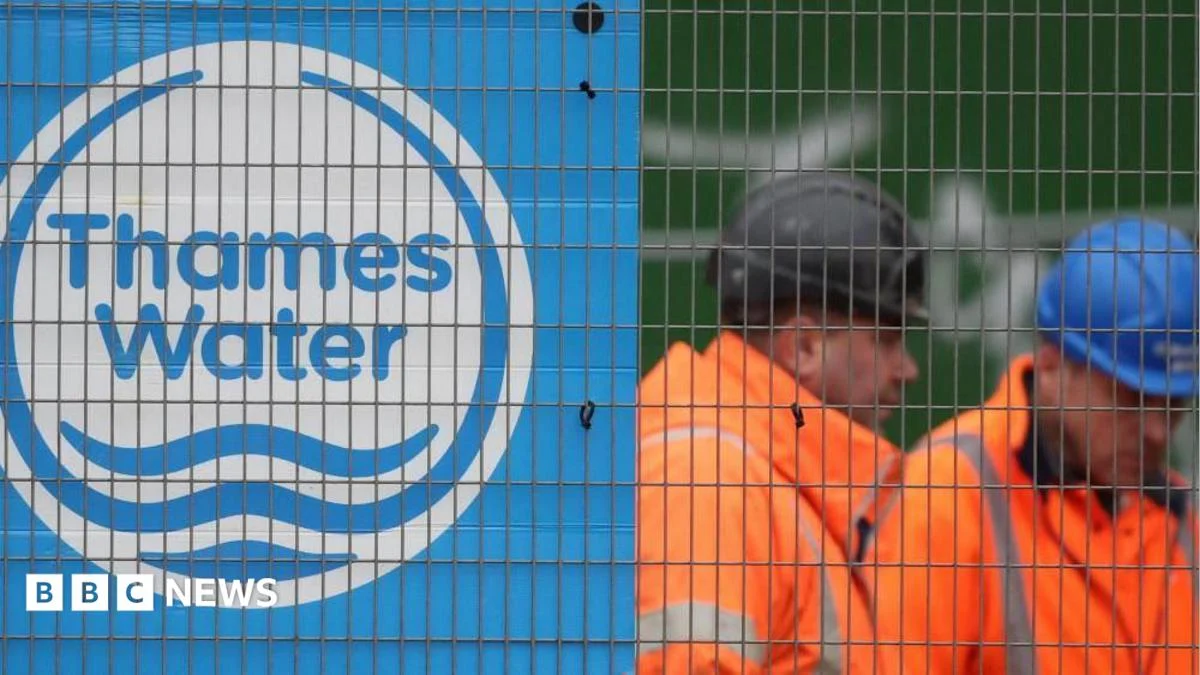
Thames Water currently grapples with an immense debt pile, estimated at approximately £20 billion. This staggering figure has positioned the company on the brink for several years, with fears of collapse first emerging three years ago. The severity of its financial distress was underscored by a recent warning from the firm on Thursday, indicating it possesses sufficient cash reserves only until the end of this year. This revelation highlights the urgent need for a resolution to its deep-seated financial woes.
In an effort to avert a crisis, the company’s lenders had put forward a proposal aimed at stabilising its finances. This deal included a commitment to write off nearly half of the outstanding debt – specifically £9.4 billion – and inject a substantial £3.35 billion in new cash into the company. However, this financial lifeline came with a controversial condition: a demand for leniency from future pollution fines. This stipulation proved to be a major sticking point, leading to the government’s rejection of the proposal as "weak" and detrimental to both consumers and the environment. Critics argued that such leniency would allow the company to continue its environmental failings without adequate accountability, effectively forcing customers to subsidise poor performance.
Sources close to the creditors, speaking to the BBC, have made it clear that in the event of a full nationalisation, they intend to pursue payment in full of the outstanding debts. This strategy draws on precedents from previous instances of nationalisation, where the government was compelled to compensate creditors for their assets. Should this legal challenge succeed, it could saddle the incoming government with a multi-billion-pound bill, placing an enormous financial burden on taxpayers at a time of already strained public finances. The scale of this potential liability adds another layer of complexity and risk to the government’s options for Thames Water.
Despite the looming threat of legal action and the political posturing, creditors insisted on Sunday that they remain actively engaged with officials and regulators. Their stated objective is to reach an amicable agreement that could still rescue the beleaguered company from its precarious position. This ongoing dialogue suggests that while legal preparations are underway, a negotiated settlement remains a possibility, albeit one fraught with significant hurdles.
The Department for Environment, Food and Rural Affairs (Defra) has reiterated the government’s preparedness for "any eventuality" regarding Thames Water. A spokesperson for the department underscored the long-standing failures of the company, stating, "Thames Water customers have been let down for far too long, with 15 years of under-performance, increasing serious pollution, and customers left to pick up the bill." This statement reflects a deep-seated frustration within government over the company’s operational and environmental record. The Secretary of State, in a letter to Ofwat, the water regulator, has also conveyed her initial view that the lenders’ proposal for Thames Water is insufficient, failing to adequately serve the interests of consumers or the environment. This firm stance indicates the government’s unwillingness to accept a deal that it perceives as a bad outcome for the public.
Emma Reynolds, a prominent figure in the debate, echoed these sentiments in June, explicitly stating her opposition to a scenario where Thames Water customers would be forced to "pick up the bill for the company’s failures." At that time, she affirmed the government’s readiness for "all eventualities," including the prospect of temporary nationalisation. This pre-emptive acknowledgement highlights the gravity of the situation and the range of options being considered by authorities.
The political landscape surrounding Thames Water is further complicated by the impending change in leadership. When questioned on Sky News on Sunday about whether a Burnham government would nationalise Thames Water, Labour’s deputy leader, Lucy Powell, responded with a cautious "Let’s see." Her reply indicated that while nationalisation is certainly on the table, the precise course of action is still under review. Powell elaborated, "This has been an ongoing issue and concern in government. The government has powers to bring a distressed water company under special measures, and let’s see if the government needs to, wants to use those powers."
Powell did not shy away from a broader critique of water privatisation in the UK, asserting that "the privatisation of water hasn’t worked." She argued, "It’s not created competition. What you’ve seen is bills going up and up and up over years and years and years. Investment not being made… and then now these companies are in real distress." This critique encapsulates a prevalent sentiment among some political factions and a significant portion of the public, who feel that the privatised model has prioritised profit over public service and infrastructure investment, leading to the current crisis. The legacy of underinvestment, mounting debt, and persistent environmental pollution now presents a formidable challenge to the incoming administration.
Beyond outright nationalisation, there exists a "halfway house" solution known as a "special administration regime" (SAR). A SAR involves placing the distressed company under temporary public control, typically with the aim of stabilising its operations and finances before finding a new private sector buyer. In this scenario, existing lenders have indicated their willingness to participate as bidders for Thames Water, suggesting they might still see value in continuing their involvement, albeit under different terms. However, comments from incoming Prime Minister Andy Burnham regarding increased "public control" over key utilities make it difficult to envision a government with much political appetite for simply finding a new set of private sector owners. Given that Thames Water serves a vast customer base of 16 million people across London and the Thames Valley, the political implications of its ownership and management are profound. This context suggests that a temporary nationalisation under a SAR could very well evolve into a permanent state of public ownership, driven by political ideology and public demand for accountability.
Under either a SAR or full nationalisation, the ongoing financial problems of Thames Water are likely to translate into a substantial burden for taxpayers. The company’s management has projected a cash shortfall of £2 billion by the end of next year, a figure that would inevitably need to be covered by public funds if the company is brought under government control. This prospect underscores the significant financial risks associated with intervention, regardless of the chosen mechanism.
Despite the profound uncertainties surrounding its ownership and future structure, one assurance remains for customers: their taps and loos will continue to function. The fundamental service provision is expected to be maintained, irrespective of the corporate or political machinations unfolding behind the scenes. However, the future of Thames Water stands as a critical and early policy test for the new administration. It encapsulates a broader debate about the role of the state in essential services, the balance between private enterprise and public good, and the enduring challenges of regulating utilities in the face of immense financial pressures and environmental responsibilities. The outcome of this high-stakes standoff will not only determine the fate of one of the UK’s most vital companies but also set a precedent for the future of privatised infrastructure across the nation.


 George Anjay
 Ramos Leo
 atisusanti
 Roy Suryo