
 George Anjay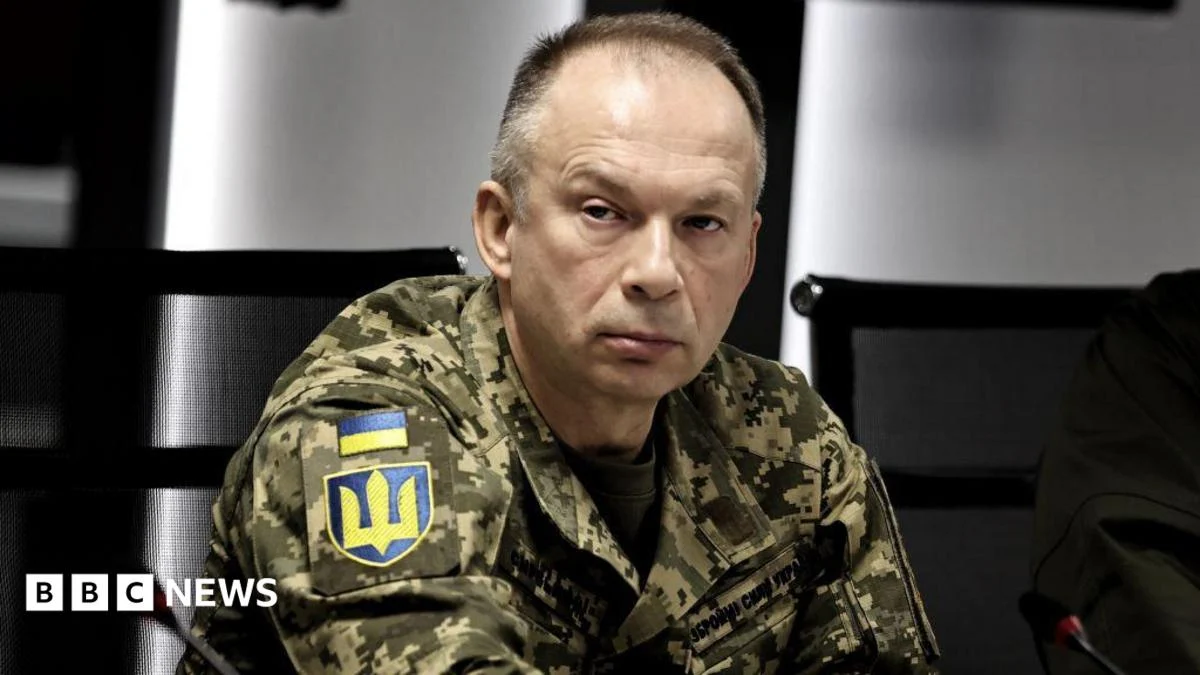
Ukrainian President Volodymyr Zelensky has initiated a seismic shift in Ukraine’s military leadership, abruptly sacking the country’s army commander-in-chief, Oleksandr Syrskyi, in a move that follows days of mounting public pressure and street protests. This dramatic upheaval comes on the heels of the recent, and equally controversial, removal of popular Defence Minister Mykhailo Fedorov, a decision that ignited a wave of public discontent and demonstrations across Ukraine. The initial whispers of a brewing conflict between Fedorov and Syrskyi, contributing to the former’s departure, have now been starkly confirmed by these latest personnel changes, signaling a deeper internal discord within Ukraine’s war effort.
Mykhailo Fedorov, a dynamic figure at just 35 years old, has garnered widespread acclaim for his transformative impact on the Ministry of Defence. His tenure was marked by a palpable energy, a radical reimagining of the armed forces, and a robust, unwavering campaign against corruption that resonated deeply with the Ukrainian populace. In stark contrast, Oleksandr Syrskyi, a 60-year-old general, has often been perceived by many within Ukraine as a product of a more rigid, Soviet-era military doctrine. His leadership style was frequently characterized by a reluctance to embrace the radical and innovative changes deemed necessary to confront the modern realities of the ongoing conflict. His replacement, Mykhailo Drapatyi, is a general widely respected for his extensive combat experience and his reputation as a battle-hardened leader, a choice that appears designed to inject a fresh, more aggressive operational tempo into the Ukrainian military.
In a video address posted late Tuesday, President Zelensky publicly acknowledged Syrskyi’s contributions, expressing gratitude for his military campaigns, particularly highlighting his pivotal role in the successful defense of the capital, Kyiv, during the initial, critical days of Russia’s full-scale invasion in February 2022. However, the message also carried an undercurrent of decisive change. Zelensky also revealed that he had met with Fedorov earlier in the day, extending an offer of a "worthy position in power," though the President remained tight-lipped regarding whether this offer had been accepted by the former Defence Minister. Fedorov was, in fact, succeeded at the Ministry of Defence by Yevhenii Khmara, a former high-ranking official within Ukraine’s Security Service (SBU), a move that further underscores the sweeping nature of these leadership changes. "All decisions will be formalised tomorrow," Zelensky stated in his social media post, signaling that further official pronouncements were imminent.
Meanwhile, Mykhailo Fedorov, in a clear display of support for the new military direction, extended his congratulations to Mykhailo Drapatyi on his new role. Fedorov described Drapatyi’s appointment as a "new hope in the fight of free people for freedom and justice," unequivocally framing it as "the voice of change that could not be ignored." This statement strongly suggests that Fedorov saw his own removal and Drapatyi’s appointment as a direct response to the public outcry and a mandate for a more progressive and responsive military leadership. Fedorov also revealed that he had personally contacted Syrskyi to express his gratitude for the defense of the Kyiv region and other "historic battles," a gesture of professional courtesy amidst the significant leadership transition. However, Fedorov candidly added, "But we need to move even faster and write new chapters correcting all previous mistakes," a sentiment that encapsulates the perceived need for accelerated progress and a more effective approach to the ongoing conflict.
Fedorov’s tenure as Defence Minister, though brief since his appointment in January, was distinguished by his innovative use of data analysis to meticulously assess and enhance performance on the front lines. A former Minister of Digital Transformation, Fedorov had been an active participant from the very inception of the full-scale invasion, spearheading the creation of a volunteer "IT Army of Ukraine" to launch potent cyber-attacks against Russia. Subsequently, he masterminded the highly successful "Army of Drones" fundraising campaign, a groundbreaking initiative that integrated elements of "gamification" into the war effort. This innovative system rewarded Ukrainian military units with credits for successfully targeting and destroying Russian assets, injecting a novel strategic dimension into battlefield operations.
General Oleksandr Syrskyi, thus far, has maintained a public silence regarding these dramatic developments. His perspective on the unfolding situation was obliquely offered in an op-ed published on the Militarny website on Monday, where he described his relationship with Fedorov as purely "a working one." In a striking passage, he extended a personal apology, stating, "If I offended anyone, Mykhailo Albertovych [Fedorov], I’m sorry." This statement, issued prior to his dismissal, may have been an attempt to de-escalate tensions or a prescient acknowledgment of the strained dynamics within the leadership.
Regarding the protests that have rippled through several Ukrainian cities, Syrskyi offered a measured defense of the complexities involved in military decision-making. He argued that the issues of military contracts, procurement, and mobilization, which had become focal points for protesters and were often distilled into simplistic slogans, were far more intricate than they appeared to the public. "Decisions on which people’s lives depend are not made with slogans," he asserted. Syrskyi concluded his commentary by emphasizing the crucial distinction between public perception and operational reality: "Real work, not the public drama surrounding it, wins the war." This statement, made in the context of his own impending dismissal, underscores the stark contrast between the perceived demands of public opinion and the operational realities faced by military leadership, highlighting the immense pressure and scrutiny under which Ukraine’s war effort is currently operating. The President’s decisive actions signal a clear intent to reshape Ukraine’s military command structure in pursuit of a more agile, responsive, and ultimately, successful prosecution of the war.



 Roy Suryo

 Nakalama John
 atisusanti
 Ramos Leo
