George Anjay
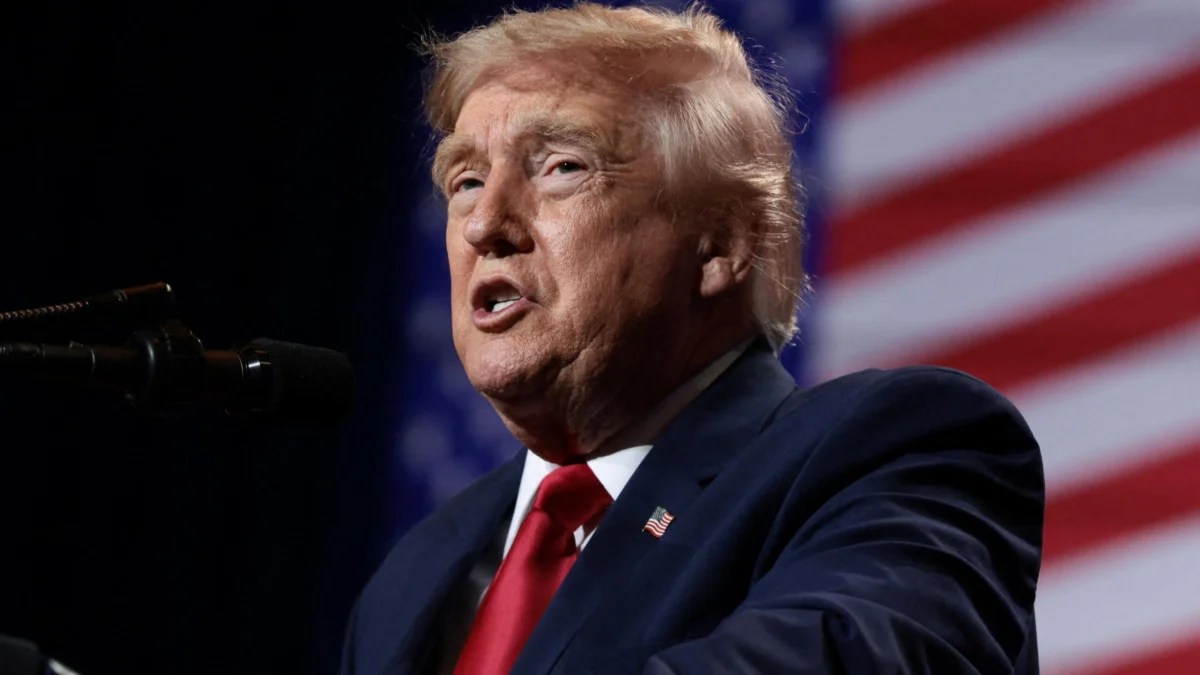
President Donald Trump has ordered signs to be placed outside the Smithsonian National Museum of American History, to caution visitors about exhibits his administration views as "inaccurate." This directive, aimed at what the White House termed "restoring trust," mandates the Department of the Interior to issue these disclaimers and to guide visitors toward what the administration considers "accurate information regarding America’s history." The move underscores a persistent theme of the Trump administration: a deep-seated skepticism, and often outright accusation, that the Smithsonian Institution, the world’s largest research and museum complex, along with numerous academic and educational bodies, harbors an inherent anti-American bias. The Smithsonian, a venerable institution responsible for preserving and showcasing the nation’s heritage, did not immediately respond to requests for comment from the BBC regarding this latest executive action.
The executive order, officially titled "Restoring Trust in the Smithsonian Institution," was issued on Friday and specifically criticizes the museum’s leadership for what it perceives as a failure to adequately celebrate America’s founders and the nation’s upcoming 250th anniversary of independence, which falls on July 4th. According to the order, the museum’s leadership team is accused of viewing American history not as a testament to national achievements, but as a "prime tool" to advance progressive agendas focused on social justice and the "radical transformation of our society." This characterization paints a stark picture of the administration’s view of the Smithsonian’s mission, framing it as an instrument of political activism rather than historical preservation and education.
A comprehensive White House statement accompanying the executive order elaborated on these criticisms, accusing the museum of veering "toward extreme political activism, rooted in Marxism, to divide, dispirit, and discourage Americans." This language, particularly the invocation of "Marxism," suggests a broader ideological battleground on which the administration perceives the Smithsonian to be engaged. The statement implies that the museum’s curatorial and educational choices are not simply academic differences of interpretation but deliberate attempts to undermine national unity and pride.
The executive order has been met with swift condemnation from Democrats who hold oversight roles concerning the Smithsonian. Congresswoman Melanie Stansbury, the ranking member of the House Administration Committee, articulated a strong opposition to the order on X, formerly Twitter. She described the executive order as a "clear political overreach, driven by an ideological agenda to rewrite American history." Stansbury emphatically stated, "Our Smithsonian institutions do not belong to the President, but to the American people and so does our nation’s history." This sentiment highlights a fundamental disagreement over the ownership and interpretation of national heritage, positioning the Smithsonian as a public trust rather than a presidential prerogative.
This latest executive action comes on the heels of intense scrutiny for the Smithsonian. Just days prior to the order, Smithsonian director Anthea Hartig faced rigorous questioning from Republican lawmakers in two separate congressional hearings. During these hearings, the museum was broadly accused of being "infected by a woke ideology that seeped into public displays, educational materials and planning documents." The term "woke ideology" has become a frequent refrain from conservative critics seeking to label and discredit what they perceive as progressive influences in cultural and educational institutions.
Further bolstering the administration’s stance, earlier in the month, the White House Domestic Policy Council released a highly critical report. This report claimed, with significant force, that the Smithsonian "erases our heritage." The implication is that by focusing on certain narratives or interpretations of history, the museum is actively omitting or downplaying aspects deemed essential to a patriotic understanding of America’s past.
President Trump himself has made reshaping American culture a central tenet of his political platform. He has repeatedly stated his belief that the nation’s cultural landscape has been "contaminated" by what he characterizes as "woke" left-wing ideology. This sentiment has translated into tangible policy actions. He has signed several executive orders specifically designed to eliminate diversity, equity, and inclusion (DEI) programs from the federal government. These orders have often sparked significant legal challenges, with opponents arguing they are discriminatory and counterproductive.
This is not the first time President Trump has directed his administration’s focus toward the Smithsonian. In March of the same year, he issued a separate order targeting the institution, directing it to "eliminate improper, divisive, or anti-American ideology." This earlier order suggests a pattern of executive intervention into the Smithsonian’s operations and content, indicating a sustained effort to influence its direction and public presentation of history.
The Smithsonian Institution occupies a unique position within the American landscape. While largely funded by the federal government, it operates with a degree of autonomy. Its numerous museums attract an estimated 15 to 30 million visitors annually, offering free entry to a vast array of exhibits. With 21 museums spread across Washington D.C., Virginia, and New York, the Smithsonian encompasses iconic institutions such as the National Museum of American History, the National Portrait Gallery, the American Art Museum, and the renowned National Zoo, among more than a dozen others. The sheer scope and cultural impact of the Smithsonian make it a significant target for any administration seeking to influence the national narrative and public perception of American history and identity. The current executive order represents a direct attempt to exert that influence, potentially setting a precedent for future presidential engagements with national cultural institutions.



 Roy Suryo
 Nakalama John
 atisusanti
 Ramos Leo