
 George Anjay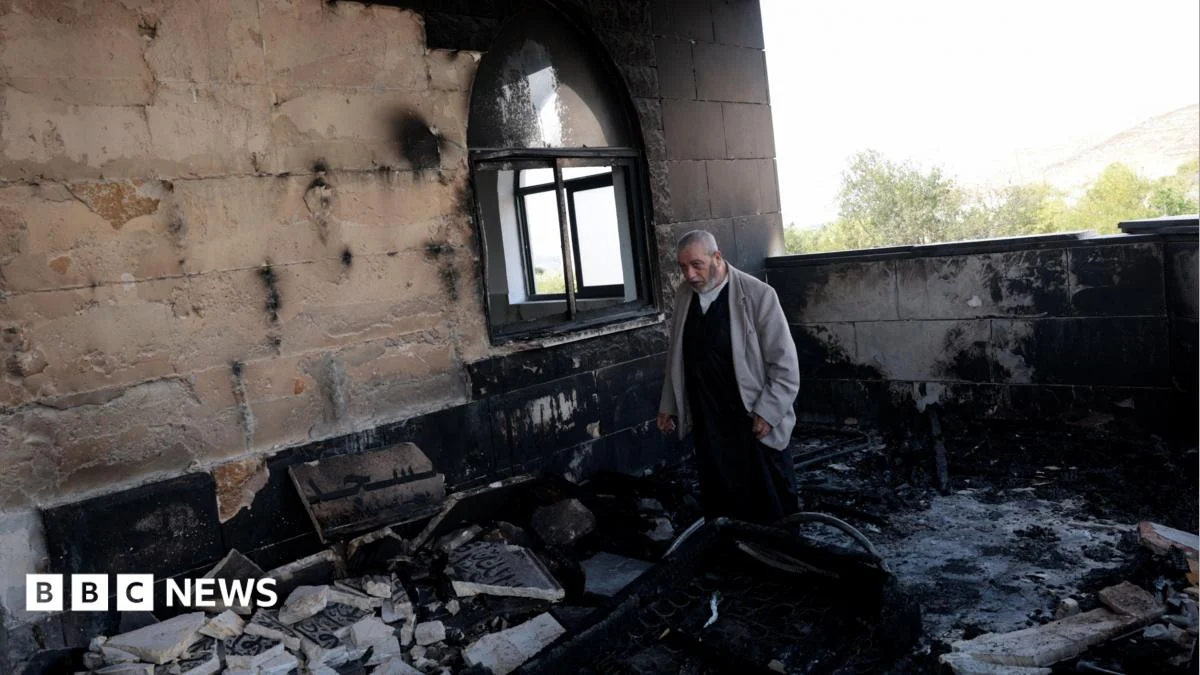
Israeli settlers have set fire to two mosques, as well as cars and agricultural land in the occupied West Bank, Palestinian officials say, as tensions in the territory continue to flare. The latest attacks come two days after a clash between settlers and Palestinians near the village of Tal, which left four Palestinians and two Israelis dead. Both sides accused the other of provoking the violence. The confrontation has further inflamed the situation in the West West Bank, which has seen ever growing violence by extremist settlers against Palestinians, encouraged by far-right elements in the current Israeli government.
Palestinian reports indicate that two villages in the occupied West Bank came under attack from settlers overnight, with cars vandalized, property stolen, and hate graffiti spray-painted on walls. The mayor of Qusra stated that settlers set fire to a mosque that was under construction. Abdul Azim Wadi, the mayor, reported that settlers spray-painted graffiti on the mosque’s walls, including the word "revenge." The Israeli military confirmed that troops were dispatched to Qusra and that police would investigate and collect evidence. Palestinian officials also reported that in a separate incident, settlers set fire to another mosque in the village of Kour and defaced its walls with slogans.
Since the deadly clash on Friday in Tal, Palestinians have reported multiple settler attacks on villages across the West Bank. The Israel Defense Forces (IDF) carried out raids over the weekend, arresting more than 130 individuals in what they described as a "counter-terrorism" operation. Israeli Prime Minister Benjamin Netanyahu responded to the incident in Tal by vowing to take "powerful action," including the potential demolition of the homes of two Palestinians allegedly involved in the confrontation.
Kaied Ahmad Turabi, a resident of Miami visiting his parents and sister in the village, was filmed fighting with settlers on a neighbor’s porch during the attack. Speaking to the BBC shortly after being discharged from the hospital, he bore visible injuries, including a large black eye, several cuts and bruises, and a head wound that required 12 stitches. "I worked all my life with Jewish people, but these people… they all had covered faces, all of them had a lot of stuff – sticks, and things in their pockets. They came ready," Turabi recounted, highlighting the premeditated nature of the assault.
Hours later, residents and journalists observed settlers on the outskirts of the village again. Dozens of young men streamed up the road, responding to a call to barricade and defend the village. Israeli soldiers were present to separate the groups, as the settlers slowly retreated. For the Palestinians, the response involved the repeated use of tear gas to push them back down the road. Some young men, chanting "Palestine, Palestine," ran through the gas clouds, attempting to bury the canisters with soil or kick them away, as soldiers steadily advanced.
Israel’s military stated on Sunday that it was working to prevent "incidents of nationalist crime," their terminology for attacks by extremist Israeli settlers. However, while Israeli leaders publicly condemn extremist violence, their government has overseen a rapid expansion of wildcat settlement outposts, which human rights groups argue are fueling attacks on Palestinians. In response to the deaths of Israelis in Tal on Friday, Prime Minister Netanyahu announced his intention to expedite the establishment and legalization of farm outposts in the West Bank. New Israeli outposts have already appeared in the area since the incident, with one near Sarra visibly located from the main road.
There has been a significant surge in settler attacks in the West Bank in recent months, drawing international condemnation but showing little to no sign of abatement. The situation had already deteriorated before the Hamas-led attacks on Israel on October 7, 2023. However, since the subsequent war waged by Israel against Hamas in Gaza erupted, settler violence in the West Bank has escalated dramatically.
The United Nations reports that 1,114 Palestinians have been killed in the West Bank since the start of the Gaza war, with the vast majority of these fatalities attributed to the IDF. At least 35 of these deaths involved attacks by settlers. The UN also states that 41 Israelis, including civilians and security personnel, have been killed in Palestinian attacks or during Israeli military operations in the West Bank during the same period.
Since occupying the West Bank and East Jerusalem during the 1967 Middle East war – territories that Palestinians envision as part of a future state along with Gaza – Israel has established hundreds of settlements, housing approximately 700,000 Jews. An estimated 3.3 million Palestinians live alongside these settlements, which are considered illegal under international law. The current escalation of violence is occurring against this backdrop of prolonged occupation and the expansion of Israeli settlements. The events in Qusra and Kour, where mosques were desecrated and burned, represent a grave intensification of settler aggression, impacting not only property but also places of worship, a deeply symbolic act in Palestinian society. The graffiti demanding "revenge" underscores the retaliatory nature of these attacks, often triggered by Palestinian resistance or Israeli security operations.
The Palestinian perception is that these acts are not isolated incidents but part of a broader strategy by extremist settlers, emboldened by the current political climate in Israel. The involvement of far-right elements within the Israeli government has been cited as a key factor in the perceived impunity enjoyed by some settlers. This sentiment is echoed by international human rights organizations that have consistently highlighted the link between settlement expansion and increased violence against Palestinians. The establishment of new outposts, often on privately owned Palestinian land, serves as a physical manifestation of this expansion and a constant source of friction.
The IDF’s response, while including arrests and counter-terrorism operations, is viewed by some Palestinians as insufficient to deter settler violence. The emphasis on "counter-terrorism" is seen by some as a justification for broader security measures that can also impact the Palestinian population. The public condemnation of extremist violence by Israeli leaders is often contrasted with their policies that facilitate settlement growth, creating a perceived disconnect between rhetoric and action.
The testimonies of individuals like Kaied Ahmad Turabi provide a ground-level perspective on the fear and trauma experienced by Palestinians. His description of the settlers arriving "ready" with weapons suggests a level of organization and intent that goes beyond spontaneous outbursts. The confrontation he was involved in, and the subsequent defense of the village, highlights the cycle of violence and the constant state of alert for many Palestinian communities in the West Bank. The use of tear gas by Israeli soldiers, while a standard crowd control measure, further exacerbates the tension and can lead to further casualties.
The ongoing increase in settler attacks, even after the October 7th attacks and the subsequent war in Gaza, suggests a complex interplay of factors. These include the broader geopolitical context, the internal political dynamics within Israel, and the long-standing grievances of the Palestinian population. The international community’s calls for de-escalation and adherence to international law have, thus far, yielded limited tangible results in curbing the violence. The destruction of property, including mosques and agricultural land, represents a direct assault on the livelihoods and heritage of Palestinian communities, further deepening the divide and fueling a sense of despair and anger. The future of the West Bank remains deeply uncertain, with the escalating cycle of violence posing a significant threat to any prospects for peace and stability.



 Roy Suryo

 Nakalama John
 atisusanti
 Ramos Leo
