George Anjay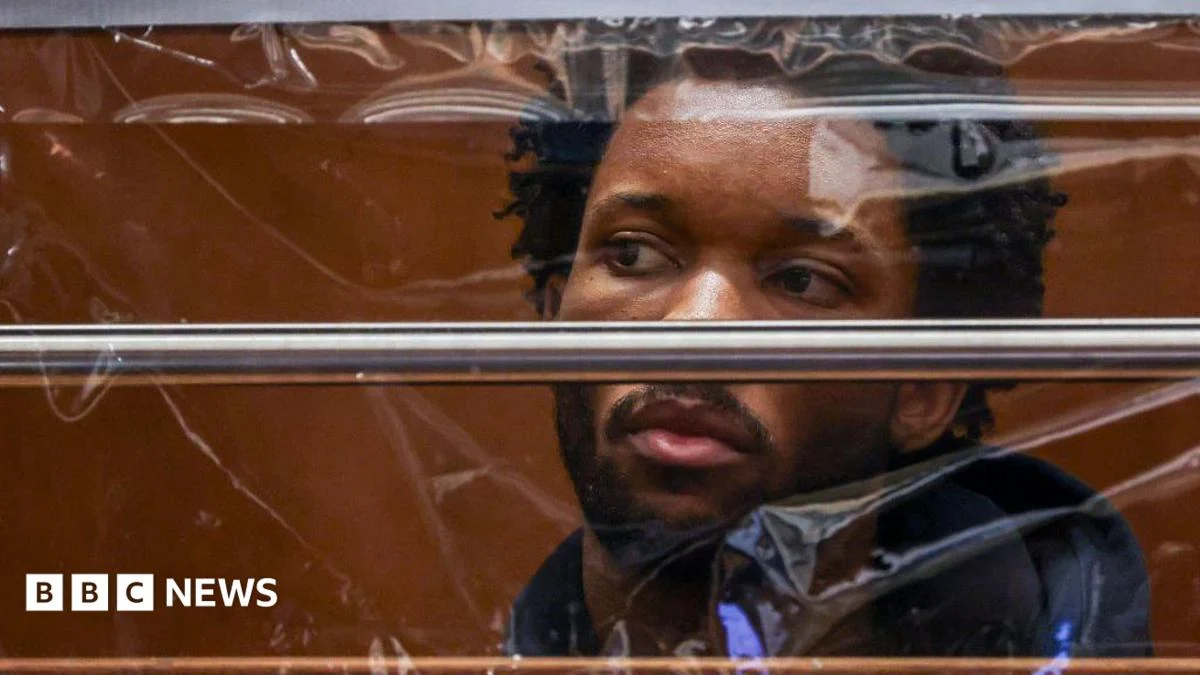
A judge has ruled that US musician D4vd, whose legal name is David Anthony Burke, will face a murder trial in the death of 14-year-old Celeste Rivas Hernandez. The dramatic pronouncement concluded a five-day preliminary hearing held in a Los Angeles courthouse, a process that laid bare the harrowing details of the alleged crime before a grieving family and a captivated public. Prosecutors meticulously presented their case, calling a dozen witnesses to the stand and introducing a range of photographic evidence, each exhibit a somber testament to the young girl’s tragic demise. Celeste’s family, their faces etched with a profound and unwavering sorrow, sat stoically in the courtroom, bearing witness to the legal proceedings that sought to bring justice for their lost daughter.
David Anthony Burke, known to a growing legion of fans for his distinctive blend of indie pop and lo-fi hip-hop, now finds himself at the center of a grim legal battle. The 21-year-old artist, who has enjoyed a meteoric rise in the music industry with hits like "Romantic Homicide" and "Here With Me," faces the gravest of accusations: murder and sexual abuse. His plea of not guilty to these charges stands in stark contrast to the evidence presented by the prosecution, which paints a disturbing picture of the events leading up to Celeste’s death.
The preliminary hearing, a critical juncture in the criminal justice system, serves to determine if there is sufficient evidence to warrant a full trial. For nearly a week, the courtroom buzzed with tension as prosecutors meticulously pieced together a timeline of events and presented their arguments. Witnesses, ranging from law enforcement officials to individuals who may have had direct knowledge of Burke and Celeste, were called to testify. Their testimonies, often punctuated by the solemnity of the courtroom, aimed to establish a connection between Burke and the victim, and to shed light on the circumstances surrounding her death.
A central piece of evidence presented by the prosecution was the discovery of Celeste Rivas Hernandez’s remains. These were found last September, a discovery that sent shockwaves through the community and intensified the investigation. Crucially, her remains were located within a Tesla registered to David Anthony Burke’s address. This detail, the prosecution argued, placed Burke directly at the scene of the crime or at least in possession of the vehicle where Celeste’s body was found. The forensic analysis of the vehicle and the condition of Celeste’s remains, though not fully detailed in public court documents at this stage, were undoubtedly critical to the prosecution’s narrative.
The prosecution’s strategy involved presenting evidence that suggested a premeditated act or, at the very least, a direct involvement in Celeste’s death. This included the testimonies of individuals who might have seen Burke and Celeste together, or who could speak to the nature of their relationship. The nature of the sexual abuse allegations, a deeply sensitive and disturbing aspect of the case, was also addressed, with prosecutors aiming to demonstrate that such acts occurred, either before or in conjunction with her death.
The defense, in contrast, has sought to create doubt in the minds of the judge and, by extension, a future jury. While specific defense strategies are often kept under wraps until trial, it can be inferred that they would have challenged the prosecution’s evidence, questioned the reliability of witnesses, and potentially offered alternative explanations for the presence of Celeste’s remains in Burke’s vehicle. The defense’s role is to ensure that the prosecution proves its case beyond a reasonable doubt, a high bar in the legal system.
The sheer age of both the accused and the victim adds a layer of profound tragedy to this case. Burke, a young artist on the cusp of superstardom, now faces the potential for a lengthy prison sentence, his burgeoning career hanging precariously in the balance. Celeste, a mere teenager, had her future stolen, her life extinguished before it had truly begun. The stark contrast between Burke’s public persona as a celebrated musician and the alleged depravity of the crimes he is accused of committing has captivated and disturbed many.
The five-day preliminary hearing provided a glimpse into the grim realities that can lie beneath the surface of public life. The courthouse, a place of often somber proceedings, became the stage for a deeply personal and devastating tragedy to unfold. The presence of Celeste’s family throughout this ordeal underscores the human cost of such alleged crimes. Their quiet strength and unwavering presence in the courtroom served as a poignant reminder of the individual behind the headlines, the life that was so tragically cut short.
The judge’s decision to move forward with a trial signifies that the prosecution has presented enough evidence to convince the court that a crime has been committed and that there is probable cause to believe that David Anthony Burke committed it. This does not equate to a conviction; it simply means that the case will proceed to the next stage of the legal process, where a jury will ultimately decide Burke’s guilt or innocence.
As the case moves towards a full trial, the media attention surrounding David Anthony Burke, the artist known as D4vd, is expected to intensify. The public will be keen to learn more about the intricate details of the investigation, the testimonies of witnesses, and the defense’s counterarguments. The stark juxtaposition of Burke’s musical success and the horrific allegations against him is a narrative that will undoubtedly continue to unfold in the public consciousness.
The legal journey ahead for David Anthony Burke is likely to be long and arduous. The prosecution will aim to present a compelling case, backed by forensic evidence and witness testimonies, to secure a conviction. The defense will work to dismantle the prosecution’s arguments and to establish reasonable doubt. For the family of Celeste Rivas Hernandez, this ruling represents a step, albeit a painful one, towards achieving justice for their daughter. The outcome of the trial will have profound implications, not only for the accused and the victim’s family but also for the wider conversation surrounding youth, fame, and the dark undercurrents that can sometimes exist beneath the veneer of public success. The courtroom in Los Angeles has become the site of a deeply unsettling saga, one that continues to demand attention and introspection.




 Roy Suryo
 Nakalama John
 atisusanti
 Ramos Leo