Nakalama John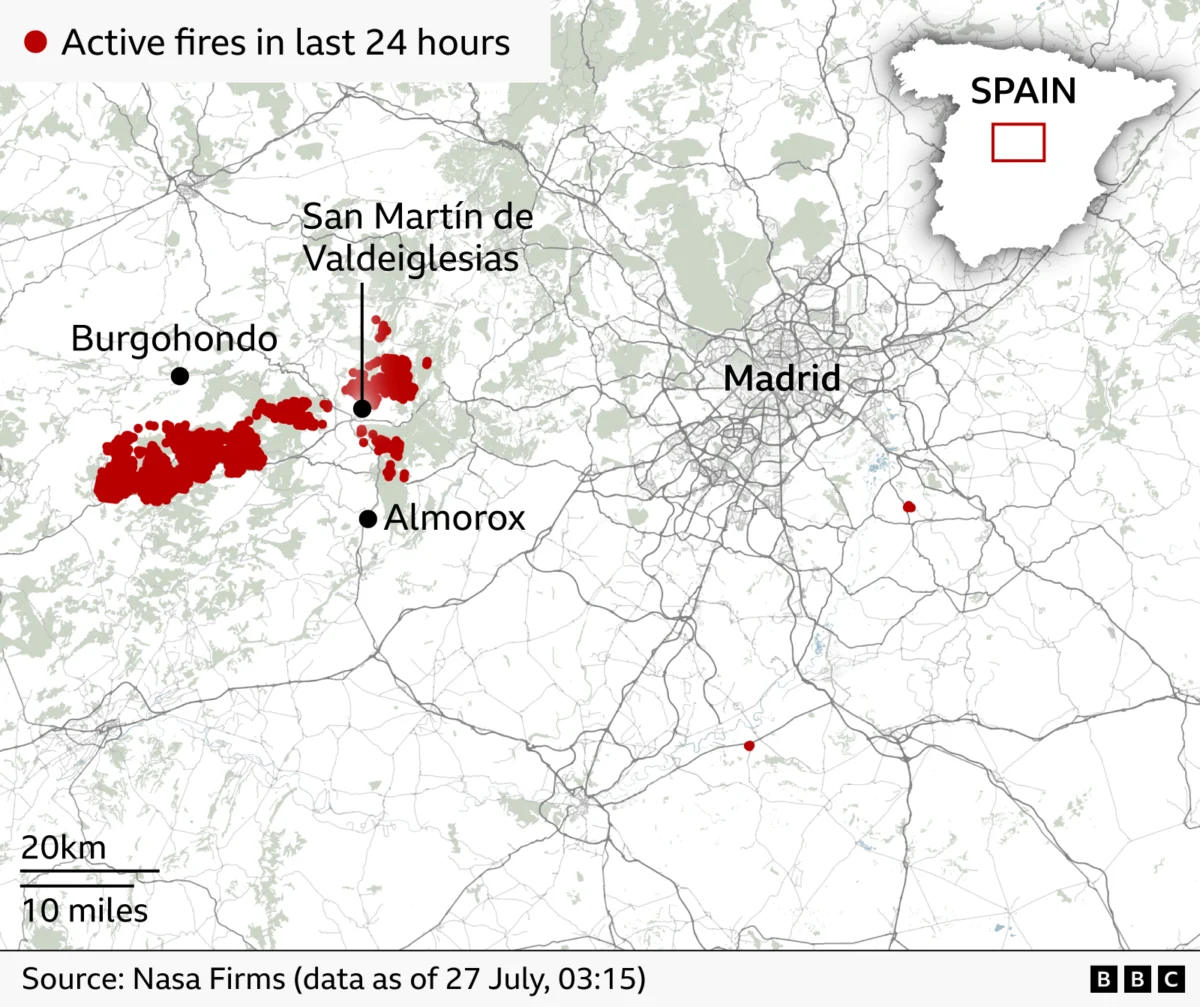
Should I travel to France or Spain right now?
While the UK government, similar to many other international bodies, has not issued a blanket warning against all travel to France or Spain, it strongly advises caution, particularly regarding specific regions. Travelers must understand that official advice can change rapidly in response to dynamic events like wildfires. In France, authorities have indicated that access to areas affected by fires may be restricted, and roads could close with little to no notice. Further evacuations remain a distinct possibility, highlighting the unpredictable nature of these blazes. The UK government further issues a general warning about the inherently high risk of wildfires across France during the summer season, which typically spans from April to October, a period often characterized by hot, dry conditions.
For individuals currently in or planning to travel to an affected region in either France or Spain, the paramount recommendation is to meticulously follow instructions and updates from local authorities and emergency services. This includes monitoring local news, official government websites, and social media channels for real-time information. Emergency services can be reached by dialing 112 in both France and Spain. Beyond the direct threat of fire, travelers should be mindful of potential secondary impacts such as smoke inhalation, which can pose health risks, especially for vulnerable individuals, and the strain on local infrastructure and services.
The dynamic nature of government advice also has significant implications for travel insurance. Anna-Marie Duthie, a travel insurance expert at financial rating firm Defaqto, notes that if official travel warnings are issued after a trip has been booked, travelers "may be covered for cancellation or curtailment." She adds that "you may also be covered for additional travel and accommodation costs should your trip be disrupted due to a catastrophic event, if your insurer offers this cover or you’ve paid to include it." However, it is imperative for all travelers to scrutinize their specific insurance policy documents to ascertain the extent of their coverage, as policies vary widely. Many standard policies do not cover "disinclination to travel" if no official warning is in place.
Where are the wildfires burning?
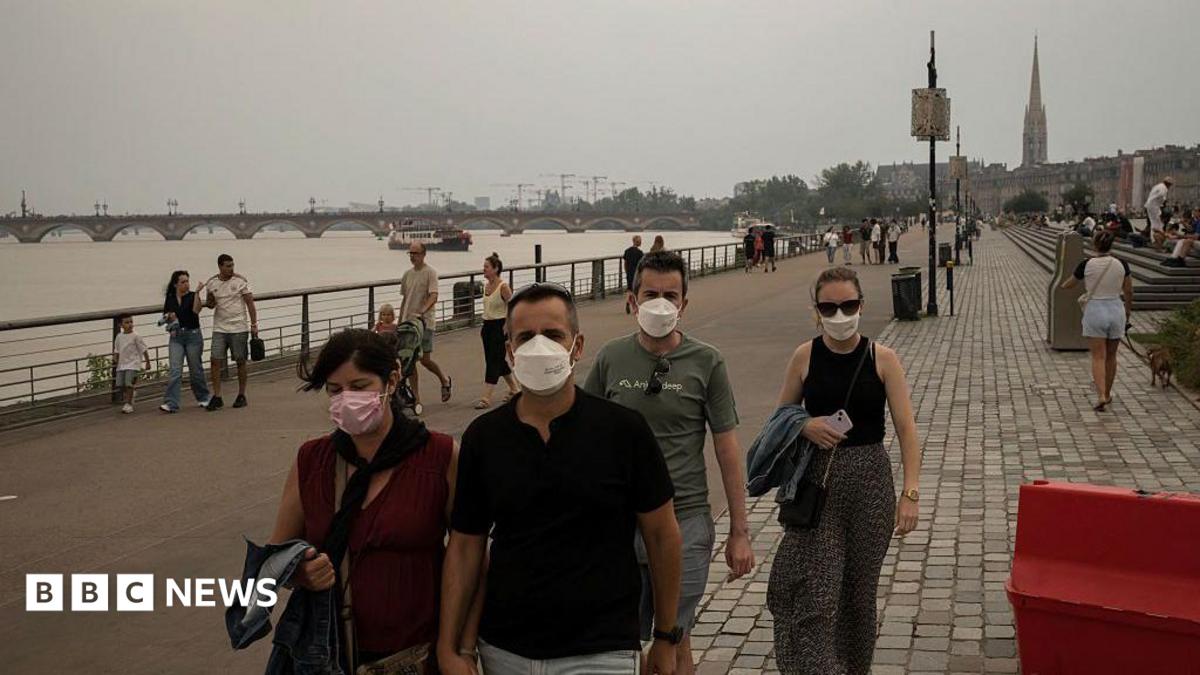
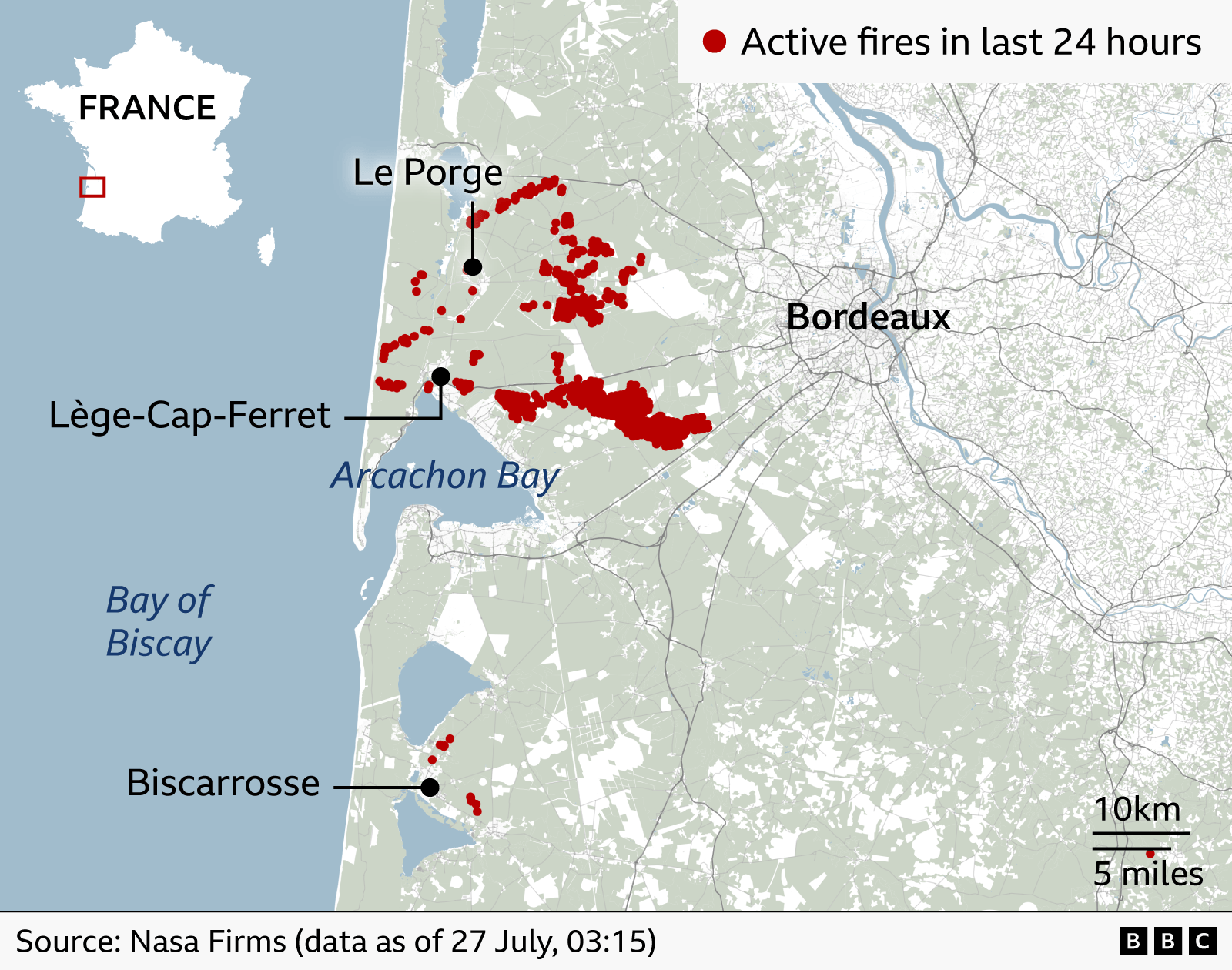
The geographical scope of the wildfires is significant and extends across various regions in both France and Spain. In France, the UK government specifically highlights parts of Gironde and Landes in the southwest as being severely affected. An official French wildfire map indicates that Gironde and Pyrénées-Orientales are currently at the highest fire alert level, signifying extreme risk. Meanwhile, departments such as Aude and Var are under the second-highest alert. As of recent reports, more than 20 fires were actively burning across the country, including on the Mediterranean island of Corsica, a popular tourist destination. These areas are not just remote forests; many are near or adjacent to popular holiday spots, meaning that even if the fire itself is not directly impacting a resort, smoke, road closures, and evacuation orders can severely disrupt travel plans and overall holiday experience. The image displaying a map of southwest France with red dots near Bordeaux vividly illustrates the widespread nature of these fires in a key wine-producing and tourist region.
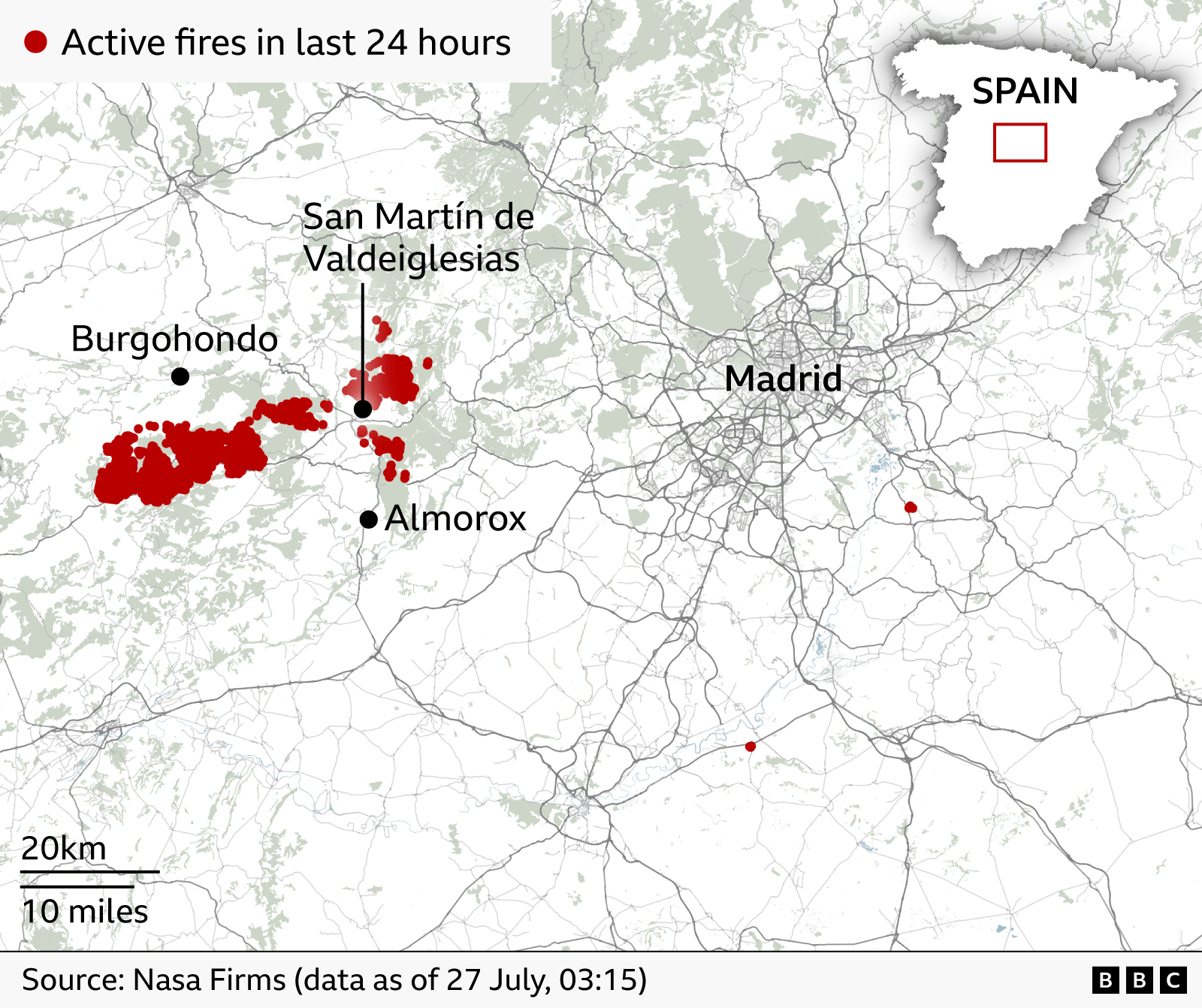
Across the border in Spain, the situation is equally dire, with authorities declaring a national emergency due to wildfires in parts of Madrid and Ávila. While these are the most critically declared zones, the UK government has also reported ongoing wildfires in other inland areas of Spain. Spain, much like France, experiences a prolonged wildfire season, with regions like Andalusia, Catalonia, and the Canary Islands historically prone to such events. The image showing a map of Spain with active fires near Madrid underscores the threat to central and western parts of the country. The underlying causes of these widespread blazes are often linked to prolonged periods of intense heatwaves, low humidity, and drought conditions, which transform vast areas of vegetation into highly combustible fuel. These conditions are becoming increasingly common and severe, exacerbating the challenge for emergency services and posing a persistent threat to residents and tourists alike.
Does travel insurance cover wildfires?
The question of whether travel insurance covers wildfires is complex, and the answer unequivocally depends on the specific terms and conditions of an individual’s policy. Chris Bose, director of general insurance policy at the Association of British Insurers (ABI), advises, "If your travel plans are disrupted by a wildfire and your policy includes trip disruption cover then travel insurance may cover some of the resulting costs." However, a critical piece of data from Defaqto’s analysis reveals that only about half of travel insurance policies actually include "catastrophe" cover. This means that a significant portion of travelers might find themselves without financial protection in the event of wildfire-related disruptions.
"Catastrophe cover" typically refers to events like natural disasters, including wildfires, floods, earthquakes, or volcanic eruptions, that are beyond human control and cause widespread disruption. Without this specific clause, standard policies might not provide compensation for cancellations, delays, or additional expenses incurred due directly to wildfires, especially if the insurer deems the event not severe enough to trigger specific cover or if no official "do not travel" advice has been issued.
To truly understand your coverage, direct communication with your insurer is paramount. Before making any decisions or incurring costs, contact your insurance provider, clearly explain your situation, and ask specific questions about what your policy covers in relation to wildfires. Document all communications, including dates, times, and names of representatives. It’s also worth noting that while a European Health Insurance Card (EHIC) or Global Health Insurance Card (GHIC) can provide access to state-provided healthcare during a medical emergency in Europe, it is not a substitute for comprehensive travel insurance, which covers a much broader range of eventualities, including medical repatriation, lost luggage, and trip disruptions.
What should I do if my airline or accommodation cancels my booking?
If your travel plans are directly impacted by cancellations from your airline or accommodation provider due to wildfires, the first course of action, as recommended by Chris Bose, is to seek refunds or alternative arrangements directly from the service provider. For flights, particularly those within or departing from the EU, passenger rights under EU Regulation 261/2004 often apply. This regulation mandates that airlines offer passengers the choice between a full refund, re-routing at the earliest opportunity, or re-routing at a later date convenient to the passenger, even if the cancellation is due to "extraordinary circumstances" like wildfires, though compensation might not be payable in such cases.
Anna-Marie Duthie clarifies that if an airline cancels your flight due to wildfires, "they should offer you the chance to rebook, or provide a full refund." The situation becomes more straightforward if you have booked a package holiday, which typically includes flights, accommodation, and transfers under a single booking. In such instances, if the package is cancelled, the tour operator is usually obliged to offer a full refund covering "all elements" of the trip or an alternative holiday. This is often covered by regulations like the Package Travel and Linked Travel Arrangements Regulations in the UK, offering robust consumer protection.
However, the scenario differs significantly for independent bookings. Duthie advises that "if you’ve booked everything separately, you’ll need to deal with each provider independently." While your airline might refund your flight, your accommodation provider might not offer a refund if their property is unaffected by the fires, even if you cannot reach it. In such cases, your travel insurance, if it includes appropriate trip disruption or cancellation cover, might be your only recourse for recovering non-refundable accommodation costs. It is essential to keep detailed records of all bookings, payments, and communications with providers.
Should I just cancel my trip now?
The decision to cancel a trip, especially if your departure date is not imminent, requires careful consideration of your insurance policy and the terms of your bookings. Rory Boland, editor of Which? Travel, strongly advises against premature cancellation, particularly for those not due to travel in the immediate week or two. His rationale is clear: "Travellers who cancel now will likely forfeit their right to a refund or rebooking." This is primarily because if the UK government (or your respective national government) has not issued a specific warning against travel to your destination, your decision to cancel would likely be classified as "disinclination to travel."
Boland further explains that "as a rule, insurance firms won’t make allowances for ‘disinclination to travel’." This means that if you cancel your trip out of concern but no official advice restricts travel, your insurance policy is unlikely to cover your losses. Instead, he suggests that "holidaymakers should wait until closer to the departure date to see if the holiday can go ahead or what flexible booking options are offered from the tour operator or airline." Travel companies typically prioritize customers with imminent departure dates, so waiting allows for a clearer picture of the situation and potential offers from providers. Cancelling early not only risks financial loss but also adds unnecessary stress, especially if the situation improves before your travel date.
How will climate change affect travel insurance in the future?
The increasing frequency and intensity of wildfires, alongside other extreme weather events, are stark reminders of the accelerating impact of climate change. According to the World Health Organization, the amount of land burned by wildfires across Europe increased by a staggering 57% since summer 2022, a trend directly linked to climate change intensifying these events. This poses significant long-term questions for the travel industry and, crucially, for travel insurance.
Anna-Marie Duthie notes that insurance firms are already "adapting to potential new and increasing risks involved in travel as a result" of climate change. In the near term, significant changes to existing policy wordings might not be immediate. Current clauses often refer to "severe" or "extreme" weather, but the definitions for these terms can vary, and few providers currently specify criteria such as maximum temperatures for triggering coverage.
However, the longer-term outlook suggests a more profound shift. Duthie warns that "longer term there is a chance that we may end up seeing less insurable destinations and increased premiums." As risks become more predictable and severe, insurers may be forced to adjust their models, potentially leading to higher costs for travelers and, in some extreme cases, making certain destinations prohibitively expensive or even impossible to insure against specific climate-related perils. This future scenario underscores the growing importance of travelers not only comparing policy prices but also thoroughly understanding the specific environmental risk coverages offered. It also highlights the broader need for global efforts to mitigate climate change to preserve both our planet and the future of safe and accessible travel.


 Roy Suryo

 atisusanti
 Ramos Leo