
 Nakalama John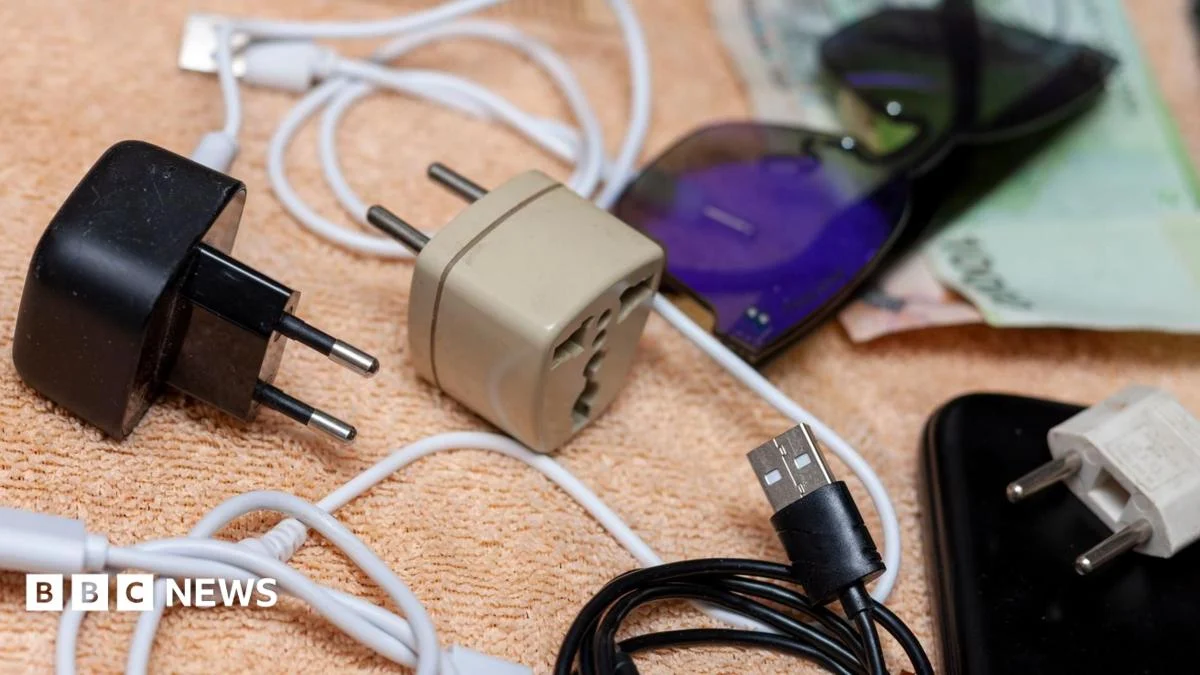
ESF’s findings were stark, indicating that in numerous cases, these defective devices could expose individuals to the immediate and severe threat of electric shock or, in the worst-case scenario, electrocution. In response to ESF’s exposé, all four implicated platforms – AliExpress, Amazon, eBay, and TikTok – have stated they have removed the specific products flagged by the safety group from their listings. Each platform reiterated its commitment to product safety, asserting it as a paramount priority. However, Giuseppe Capanna, a product safety engineer with ESF, delivered a critical message to holidaymakers: "Those heading abroad this summer to think before they buy." He emphasized the deceptive nature of cheap deals, warning, "What looks like a bargain could come at a much higher cost." Capanna strongly advised consumers to purchase travel adaptors exclusively from trusted retailers to ensure they can "travel with confidence."
The investigation by ESF meticulously tested six standard travel adaptors and eight universal adaptors, all of which were initially suspected of harbouring potential safety concerns. For any travel adaptor to be legally sold within the UK, it must adhere to stringent safety criteria. Critically, adaptors must be designed so that no live parts are accessible to the user, and in the case of universal adaptors, only one set of plug pins should be able to extend or be exposed at any given time. The ESF’s tests, however, revealed alarming failures against these fundamental requirements.
Thing 1: Universal Adaptor Hazards – Exposed Live Parts and Structural Weakness
One of the most concerning revelations from the ESF investigation pertains to universal travel adaptors. These multi-country devices are designed to accommodate various socket types globally, but their complex mechanisms often hide critical safety flaws. The charity found that in six out of the eight universal adaptors tested, multiple sets of plug pins could be exposed simultaneously. This design defect is a significant hazard because it creates a direct pathway for users to inadvertently come into contact with live electrical components, drastically increasing the risk of electric shock, especially when handling the adaptor or inserting it into a socket.
Beyond the issue of multiple exposed pins, none of the eight universal adaptors met the required dimensions or mechanical strength standards. During testing, several pins snapped off under relatively minimal force. This structural fragility is not merely an inconvenience; it presents another severe risk. Should a pin break off and remain lodged in a wall socket, any attempt by a user to remove it – perhaps with fingers or a metal object – would put them in immediate danger of a severe electric shock or electrocution, as the broken pin could be live. These structural integrity failures underscore a profound lack of quality control and adherence to basic engineering safety principles.
Thing 2: Basic Adaptor Dangers – Fire Risks and Missing Safety Features
The six basic travel adaptors tested by ESF, while seemingly simpler in design, also presented their own array of critical safety concerns, primarily related to fire hazards. A key finding was the absence of crucial safety shutters. These shutters are internal mechanisms within the pin holes of an adaptor designed to block access to the live internal parts of a plug until a correctly sized and shaped plug is fully inserted. Their absence means that foreign objects, such as children’s fingers or metal items, could easily be inserted, leading to direct contact with live electricity and posing a severe shock risk.
Furthermore, several basic adaptors were found to be missing essential fuses. Fuses are vital safety components designed to protect electrical circuits from overcurrent. In the event of an electrical fault or overload, a fuse will blow, breaking the circuit and preventing overheating, potential fires, and damage to connected devices. A missing fuse leaves the adaptor and any connected appliance vulnerable to surges, significantly increasing the risk of fire. Oversized pin holes were another common defect. Loose-fitting pins can lead to poor electrical contact, generating excessive heat at the socket and adaptor interface, which can also ignite fires.
These specific deficiencies are not new to regulatory bodies. The Office for Product Safety and Standards (OPSS) has repeatedly highlighted such concerns when issuing alerts and recalls for travel adaptors. For instance, the OPSS recently ordered the recall of one universal travel adaptor (model 931e-2601-0268) precisely because it lacked essential safety shutters. In another instance, the import of a "Decqle Universal Travel Adapter" (2602-0096) was rejected due to its serious risk of fire, attributed to its failure to meet UK plug dimension requirements. Such governmental actions underscore the pervasive nature of these safety failings within the market.
Thing 3: The Accountability Gap – Online Marketplaces and Regulatory Reform
The scale of the problem is further illuminated by online reviews seen by ESF, which suggest that the dangerous devices they tested may have been purchased and used by a vast number of consumers. One review on Amazon Marketplace vividly described a device "fell apart in their hands," with the user claiming they "could have been electrocuted" if the incident had occurred during active use. An Amazon spokesperson responded by affirming, "We require all products offered in our store to comply with applicable laws, regulations and our own policies." They confirmed the removal of identified products and stated, "If we discover a product was undetected by our automated checks, we address the issue immediately and refine our controls."
Similarly concerning was a review of a universal travel adaptor on AliExpress, where a user reported that the device "exploded while in use." An AliExpress spokesperson informed the BBC that the flagged products had been removed and that the company was actively contacting affected customers to initiate a recall process. They also committed to a "wider review of universal travel adapter listings where all plug pins are shown extended at the same time," promising to restrict listings with this "unsafe characteristic" until sellers make necessary corrections. eBay and TikTok also issued statements, with eBay highlighting its use of "technology, AI-supported monitoring and specialist teams to help maintain a safe and trusted marketplace," claiming to prevent "millions of potentially unsafe items from being listed every year." TikTok stated it "robustly" enforces its policies, asserting that "99.5% of the violative products we remove taken down before they are listed."
Despite these assurances, ESF remains unconvinced, believing that the government must implement more robust measures to hold online sellers accountable. Capanna starkly declared, "Shopping in the UK is currently far too dangerous." He criticized the platforms’ claims of prioritizing customer safety, arguing, "yet our investigations show that, in reality, they perpetually fail to prevent dangerous goods being made freely available to the public." ESF is advocating for a crucial legislative change: making online marketplaces legally responsible for the safety of products sold on their platforms. This, they argue, is a critical step towards adequately protecting consumers from dangerous electrical goods.
This issue extends beyond travel adaptors. Consumer group Which? recently highlighted similar dangers with phone chargers sold online, which posed comparable risks to users. Sue Davies, head of consumer protection at Which?, condemned the ongoing situation: "Badly designed electricals can have life-altering – even fatal – consequences." She added, "It’s appalling that online marketplaces continue to fail to prevent dangerous products from reaching consumers, despite countless warnings."
Consumer Guidance: What to Watch Out For When Buying Travel Adaptors
Given the pervasive nature of these dangerous products, consumers must exercise extreme caution. Here are actionable steps and things to watch out for to mitigate the risk:
- Buy from Trusted Retailers: This is perhaps the most crucial advice. Avoid unknown third-party sellers on online marketplaces. Instead, opt for reputable high-street electrical stores, well-established electronics retailers, or the official websites of known brands. These channels typically have more stringent quality control and clearer accountability.
- Look for Proper Safety Markings and Clear Information:
- CE Mark: This mark indicates that the product complies with European safety, health, and environmental protection requirements. For products sold in Great Britain, look for the new UKCA mark as well. While these marks are sometimes faked, their absence is a definite red flag.
- Manufacturer Information: The product and its packaging should clearly display the manufacturer’s name, address, and contact details. Generic or absent information is a sign of a potentially non-compliant product.
- Instructions: Adequate safety instructions and warnings should be provided in clear English.
- Conduct a Physical Inspection: Before purchasing or using an adaptor, examine it carefully:
- Sturdy Construction: The adaptor should feel solid and well-made. Pins should not wobble or feel flimsy. For universal adaptors, ensure pins retract smoothly and securely.
- Single Pin Exposure (Universal Adaptors): Crucially, test if only one set of pins can be exposed at a time. If you can push out or expose multiple pin configurations simultaneously, it is unsafe.
- Safety Shutters (Basic Adaptors): Look into the pin holes of the adaptor. You should see small, internal shutters that close off the live parts. If you can see directly into the internal wiring or if the holes appear completely open, the adaptor lacks this critical safety feature.
- Fuse Presence: For UK-style plugs and adaptors, there should be a visible fuse, often accessible via a small cap that can be unscrewed or removed. If there’s no fuse, it’s a significant fire risk.
- Correct Pin Dimensions: The pins should fit snugly into a socket without excessive force and without being loose. Oversized or undersized pins can lead to overheating or poor connection.
- Price: Be wary of prices that seem "too good to be true." Quality and safety come at a cost.
If you already own an adaptor that exhibits any of these defects or raises safety concerns, stop using it immediately. Return it to the seller if possible, report the issue to the platform where you purchased it, and consider filing a report with the Office for Product Safety and Standards (OPSS) to help prevent others from falling victim to dangerous products. Until online marketplaces are held legally accountable for the goods sold on their sites, consumer vigilance remains the primary line of defence against potentially deadly electrical products.




 Roy Suryo

 atisusanti
 Ramos Leo
