
 Nakalama John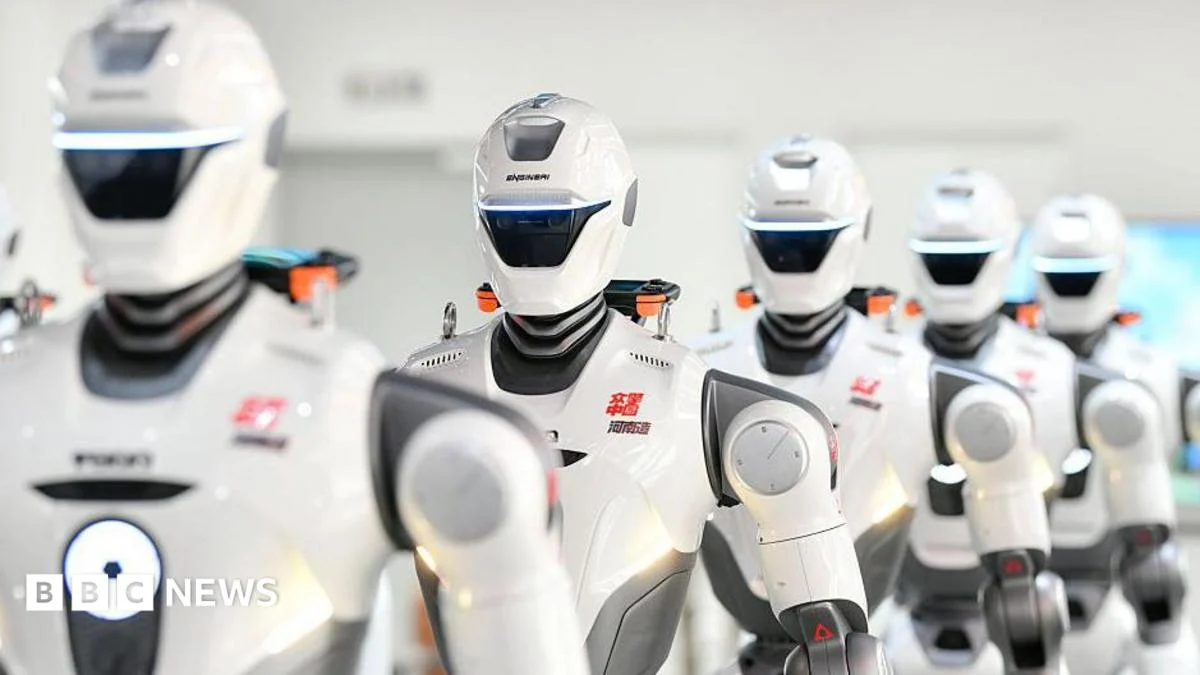
The Federal Communications Commission (FCC), the independent government agency responsible for regulating interstate and international communications by radio, television, wire, satellite, and cable in all 50 states, the District of Columbia, and U.S. territories, spearheaded this initiative. In addition to advanced robotic devices, the FCC also extended the ban to imports of certain power inverters. These critical devices are widely utilized in vital infrastructure, including data centers—the digital backbone of modern economies—and solar energy installations, which are increasingly crucial for national energy security and sustainability. The FCC articulated that these inverters, if compromised, could also pose substantial risks to the integrity and resilience of the U.S. economy.
This action by the FCC marks a further tightening of restrictions on Chinese technology, building upon a series of measures implemented by the Trump administration aimed at safeguarding American interests against perceived threats from Beijing. The "unacceptable risks" cited by the FCC are not merely theoretical; they encompass concerns ranging from espionage and data theft to potential sabotage of critical infrastructure. The agency’s stance reflects a broader governmental pivot towards securing America’s critical supply chains, a strategic imperative that gained significant traction during this period of heightened geopolitical tension.
The Chinese embassy in Washington swiftly condemned the U.S. decision, asserting that Beijing has long opposed what it characterizes as the U.S.’s "politicizing" of trade issues. The embassy’s statement denounced the sanctions as being based on "groundless pretexts," indicating a deep-seated disagreement over the factual basis and motivations behind the ban. This diplomatic pushback highlighted the deepening chasm between the two global powers on matters of technology, trade, and national security.
FCC chairman Brendan Carr publicly articulated the agency’s commitment, stating that the FCC was actively doing its part "to secure America’s critical supply chains." This statement underscored the strategic importance of the FCC’s role beyond traditional communications regulation, positioning it as a key player in the nation’s broader national security apparatus. The newly banned items have been officially added to the FCC’s Covered List, a meticulously maintained register of goods and services that are officially deemed to pose an unacceptable risk to U.S. national security. This list serves as a regulatory framework, prohibiting the use of federal subsidies for purchasing or maintaining equipment from designated entities and, as in this case, banning their import.
It is crucial to note the specific scope of the ban: it applies exclusively to new foreign-produced advanced robotic devices and power inverters. The directive explicitly states that it does not prevent the sale or import of any existing models that had been previously authorized by the FCC. This distinction is important, as it aims to prevent future vulnerabilities without immediately disrupting the current market for already approved foreign-made robotic or inverter technologies, though it signals a clear shift in future policy.
The FCC elaborated on its concerns regarding foreign-made inverters, detailing how their use could enable overseas firms to maliciously turn them off, potentially causing widespread power disruptions. Furthermore, the agency warned of the capability for these devices to facilitate data theft, allow for remote access and surveillance by "foreign government actors," or be otherwise exploited through sophisticated cyberattacks. Such vulnerabilities, if exploited, could have catastrophic consequences for the U.S. energy grid, data integrity, and overall economic stability. The implications of a foreign adversary being able to remotely shut down significant portions of a nation’s power supply or steal sensitive data from critical infrastructure are profound, touching upon national defense and economic sovereignty.
Similarly, the FCC voiced profound apprehension regarding the use of robots manufactured outside the United States. The agency explicitly stated that such devices could allow "malign actors to surveil Americans," leveraging advanced sensors, cameras, and microphones potentially embedded within the robots. Beyond mere surveillance, the FCC warned that these robots could "enhance the capabilities of foreign intelligence services," providing sophisticated tools for espionage and information gathering. Perhaps most alarmingly, the commission highlighted the risk that foreign entities could "remotely commandeer the robots," turning seemingly benign machines into instruments of disruption, sabotage, or even physical harm, potentially impacting critical infrastructure, industrial operations, or even domestic security.
In its robust response, the Chinese embassy in Washington reiterated Beijing’s firm stance, declaring that China will "take all necessary measures" in response to any moves that harm its interests. This statement hinted at potential retaliatory actions, ranging from diplomatic protests to trade measures or counter-bans on U.S. technology. The embassy also used the opportunity to advocate for a more collaborative approach to technological development, urging all countries to work together to develop AI "for the positive and for good," contrasting this vision with what it perceived as the U.S.’s protectionist and confrontational policies.
Furthermore, the Chinese embassy called upon the U.S. to "abandon its hegemonic mindset" and "stop smearing Chinese companies and threatening them with sanctions." This rhetoric underscored China’s long-standing grievance that the U.S. employs national security pretexts to stifle the growth of Chinese technological giants and maintain its own economic and technological supremacy. The accusation of a "hegemonic mindset" reflects China’s view that the U.S. is attempting to unilaterally dictate global technology standards and market access.
The ban is expected to have significant ramifications for both the U.S. and global robotics markets. U.S. companies that previously relied on cost-effective or technologically advanced Chinese components or complete robotic systems will now need to seek alternative suppliers, potentially leading to increased costs or delays in product development. It also sends a clear signal to other nations about the U.S.’s willingness to leverage national security concerns to shape its technology trade policies. The move could accelerate efforts within the U.S. to bolster domestic manufacturing capabilities in robotics and AI, fostering an "America First" approach to technological innovation and production.
Globally, the ban further fragments the international technology landscape, potentially forcing other countries to choose sides or develop their own robust domestic industries. It also intensifies the "tech cold war" between the U.S. and China, a conflict that extends beyond trade tariffs to encompass intellectual property, cybersecurity, and the very architecture of future digital and physical infrastructure.
As the news broke, the BBC, a prominent international news organization, reached out to major Chinese robot manufacturers, including Unitree, UBTech, and AgiBot, for their official comments. The perspectives of these companies—key players in the global robotics industry—would be crucial in understanding the immediate and long-term economic and operational impacts of such a far-reaching ban. Their responses, once made public, would likely shed further light on the industry’s reaction to the U.S.’s tightening grip on its technology supply chains and the future trajectory of advanced robotics development and trade. The implications of this ban are vast, touching upon economic competition, national security, and the very future of human-robot interaction in a geopolitically charged world.




 Roy Suryo

 atisusanti
 Ramos Leo
