
 Nakalama John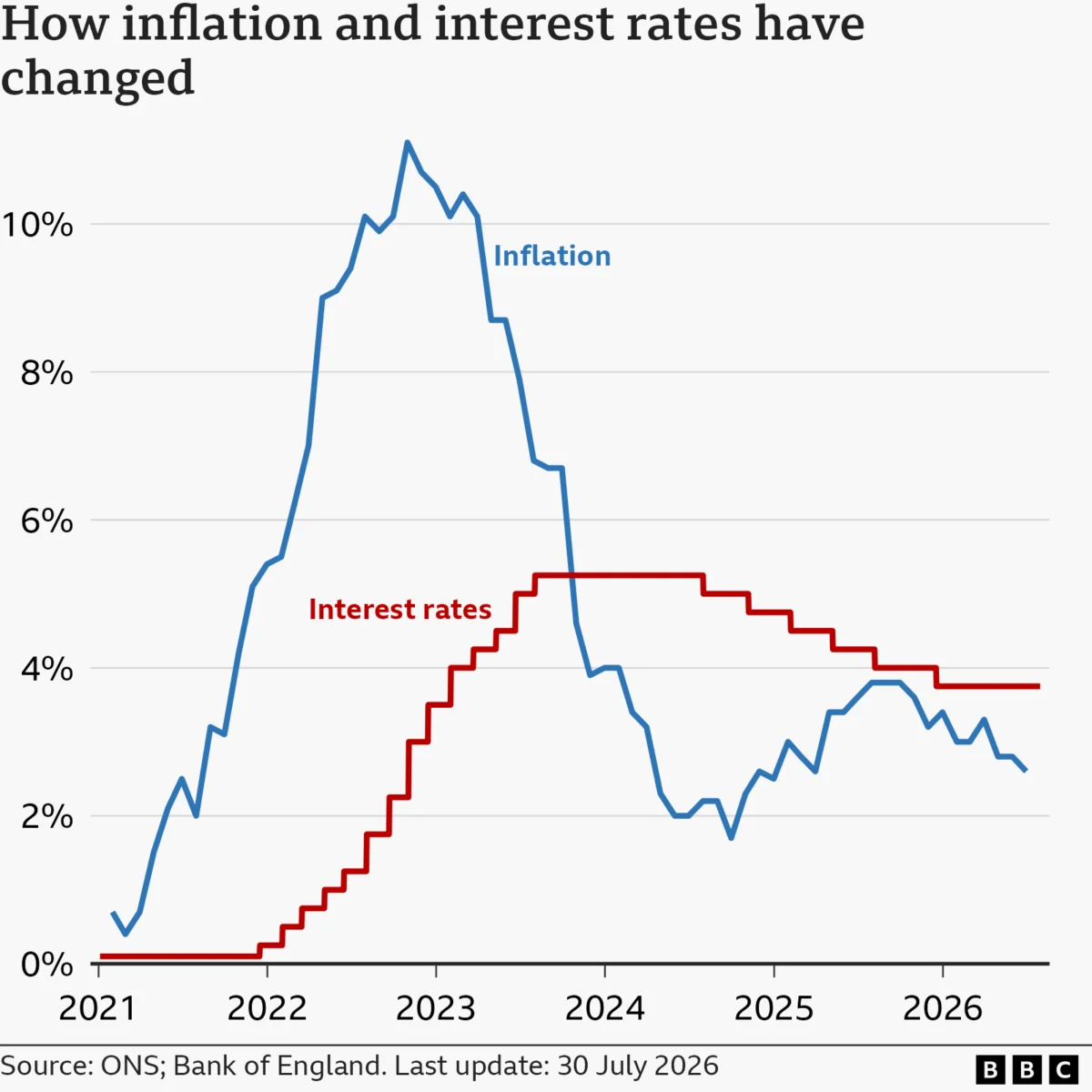
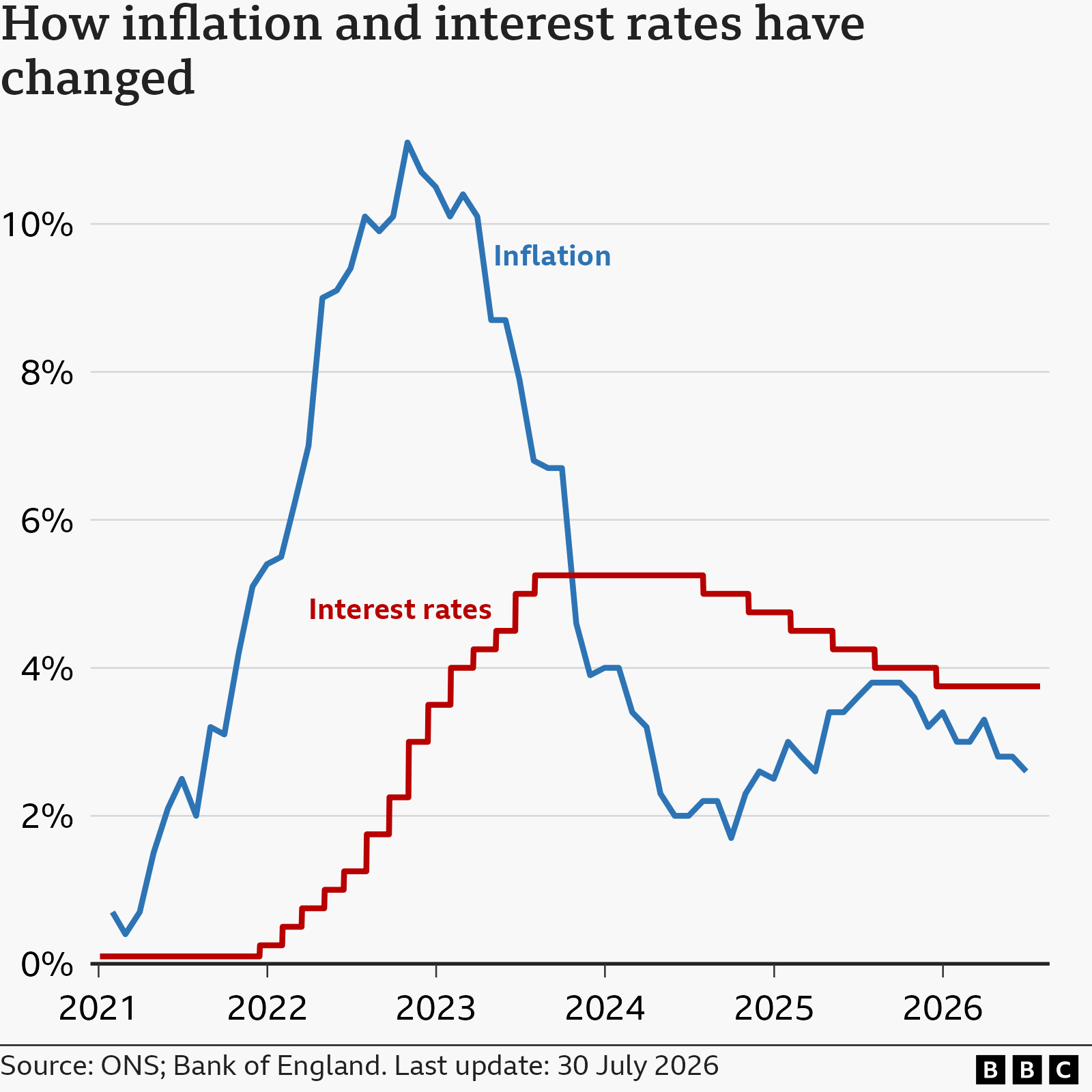
The Bank of England has maintained UK interest rates at 3.75% for the fifth consecutive time, a level last seen in February 2023. This decision, announced in late July 2026, reflects a cautious stance by the Monetary Policy Committee (MPC) amid persistent global economic volatility and domestic inflationary pressures. Earlier in the year, market analysts and economists had largely anticipated interest rate cuts throughout 2026. However, the unexpected outbreak and subsequent economic fallout from the US-Israeli conflict with Iran dramatically shifted these expectations. The geopolitical tensions have sent ripples across global supply chains, particularly impacting energy markets and pushing up inflation worldwide, making further rate reductions by central banks, including the Bank of England, appear increasingly improbable in the short term. For millions across the UK, these interest rate decisions directly influence the cost of borrowing for mortgages, credit cards, and personal loans, as well as the returns on their savings.
Understanding Interest Rates and Their Dynamics
At its core, an interest rate represents the cost of borrowing money or the return earned on saved funds. The Bank of England’s base rate, set by its nine-member Monetary Policy Committee (MPC), is the benchmark rate at which it lends to commercial banks and building societies. This base rate is crucial because it acts as a foundational influence on the rates that these financial institutions then offer to their own customers for various financial products.
The primary objective of the Bank of England in adjusting its base rate is to manage UK inflation – the rate at which the general level of prices for goods and services is rising – keeping it at or close to a 2% target. When inflation significantly exceeds this target, as it has in recent years, the Bank typically responds by raising the base rate. The rationale behind this tightening of monetary policy is to make borrowing more expensive and saving more attractive, thereby discouraging consumer and business spending. A reduction in overall demand for goods and services is intended to ease price pressures and bring inflation back down towards the target. Conversely, if inflation is too low or the economy is struggling, the Bank might cut rates to stimulate borrowing, spending, and investment.

The journey of UK interest rates has been particularly dynamic over the past few years. From historic lows of 0.1% in January 2021, the Bank embarked on a series of aggressive rate hikes starting in late 2021 to combat surging inflation, which was initially driven by post-pandemic supply chain issues and later exacerbated by the war in Ukraine and the ensuing energy crisis. The base rate peaked at 5.25% in August 2023, a level designed to aggressively curb inflationary spirals that had pushed the Consumer Prices Index (CPI) to double digits. Following this peak, as inflationary pressures began to show signs of easing, the Bank started to cautiously cut rates. The first reduction occurred in August 2024, followed by a series of five cuts that brought the base rate down to 4%. After holding steady in September and November 2025, a further cut in December 2025 brought the rate to its current level of 3.75%. However, subsequent meetings in January, March, April, June, and July 2026 saw the MPC vote to hold rates steady, signaling renewed caution.
The Evolving Inflation Landscape
Accompanying the shifts in interest rates, the main UK inflation measure, the Consumer Prices Index (CPI), has also seen significant fluctuations. After reaching a painful peak of 11.1% in October 2022, primarily due to the severe impact of the war in Ukraine on energy and food prices, CPI began a gradual descent. It touched a low of 1.7% in September 2024, momentarily dipping below the Bank’s 2% target. However, the path to sustained low inflation has proven challenging. By March 2026, inflation had risen again to 3.3%, largely influenced by lingering cost pressures. More recently, in the year to June 2026, CPI stood at 2.6%, a slight decrease from 2.8% the previous month.
The Office for National Statistics (ONS), which compiles UK inflation data, attributed this recent drop to lower fuel and food costs. However, experts widely regard these specific reductions as potentially temporary. The primary disruptor to the inflation outlook in 2026 has been the escalation of the US-Israeli conflict with Iran. This geopolitical event has profoundly impacted global energy and fuel markets, leading to increased costs that permeate through various sectors of the economy, accelerating overall price rises. Initially, oil prices surged sharply due to fears of supply disruptions in the Middle East, a region critical for global energy supplies. While various ceasefires brought temporary relief and saw oil prices recede, renewed attacks in the strategically vital Strait of Hormuz in July reignited concerns, pushing oil prices upwards once more. This volatility directly feeds into higher transportation costs for goods and increased household energy bills.
The Outlook for UK Interest Rates: A Precarious Balance

At the dawn of 2026, the consensus among economic forecasters was for at least two interest rate cuts by the Bank of England, with many anticipating the first reduction as early as March or April. This optimistic outlook was predicated on the assumption of a continued disinflationary trend. However, the emergence of the Middle Eastern conflict and its subsequent inflationary effects has completely upended these projections.
Andrew Bailey, the Governor of the Bank of England, articulated the MPC’s dilemma: "Inflation has fallen faster than we’d expected, but the conflict in the Middle East continues to mean high and volatile energy prices. That will cause inflation to rise again later this year. However the conflict unfolds, our job is to make sure any increase in inflation is temporary and that it comes back to our 2% target." This statement underscores the Bank’s commitment to its inflation mandate while acknowledging the significant external shocks.
Further compounding the domestic inflationary outlook, UK household energy bills experienced another rise following the latest increase in the energy price cap, which came into effect on 1 July. This increase is expected to exert upward pressure on headline inflation figures in the coming months. Given this confluence of international instability and domestic cost pressures, many analysts now believe that interest rates are likely to remain at 3.75% for the foreseeable future. There is even a growing, albeit less probable, possibility that the next move could be an upward adjustment rather than a cut, should inflationary pressures prove more stubborn or intensify further. The Bank’s forward guidance remains heavily dependent on incoming economic data and the geopolitical landscape.
Impact on Mortgages, Loans, and Savings
The Bank of England’s interest rate decisions have profound and varied consequences for millions of UK households.
Mortgages: Data from the government’s English Housing Survey indicates that just under a third of UK households currently hold a mortgage. The impact of interest rate changes on these homeowners varies significantly based on their mortgage type. Approximately 500,000 homeowners have "tracker" mortgages, which are directly linked to the Bank of England’s base rate. For these borrowers, any cut in the base rate translates almost immediately into a reduction in their monthly repayments. Similarly, another 500,000 homeowners are on standard variable rates (SVRs), where lenders may choose to pass on base rate changes, though this is at their discretion and often slower to materialise.
However, the vast majority of mortgage customers – an estimated 87% – are on fixed-rate deals. While their current monthly payments are insulated from immediate base rate fluctuations, the future cost of their borrowing is heavily influenced. Fixed rates are largely determined by swap rates, which reflect the market’s expectation of future interest rates over the fixed term, as well as lenders’ own funding costs and risk appetite. The recent environment of uncertainty has seen these rates climb. As of 30 July, the average rate for a new two-year fixed mortgage deal had risen to 5.62%, a notable increase from 4.83% at the beginning of March. Similarly, the average rate for a five-year fixed deal stood at 5.66%, up from 4.95% over the same period. For comparison, the average two-year tracker rate was 4.51%.
A significant concern for the housing market is the impending "mortgage cliff." Around 800,000 fixed-rate mortgages, many secured at interest rates of 3% or below during periods of lower borrowing costs, are projected to expire annually until the end of 2027. Borrowers coming off these historically low deals face the prospect of sharply increased monthly repayments, potentially impacting their disposable income and contributing to financial strain. This situation is expected to temper housing market activity and may even lead to an increase in forced sales in some instances.
Credit Cards and Loans: Beyond mortgages, the Bank of England’s base rate also influences the interest charged on various other forms of consumer credit, including credit cards, personal bank loans, and car finance. When the base rate changes, lenders adjust their own borrowing costs, which can, in turn, lead them to modify the rates they offer to customers. However, the pass-through of base rate changes to these products tends to be slower and less direct than for tracker mortgages, often reflecting competitive pressures and lenders’ risk assessments. While a sustained period of lower base rates would typically lead to cheaper consumer credit, the current environment of held rates means borrowing costs for these products are likely to remain elevated for the foreseeable future, potentially adding to household debt burdens.
Savings: For savers, the relationship with the base rate is the inverse of borrowers. A higher base rate generally translates into better returns on savings, while a falling base rate typically means a reduction in the interest offered by banks and building societies. With the Bank holding rates steady, savers can expect returns to remain relatively stable, albeit still significantly below the peak rates seen during the period of rapid hikes. As of 29 July, Moneyfacts reported the average rate for an easy access savings account on a balance of £10,000 at 2.55%, with an easy access cash ISA offering an average of 2.73%. For those willing to lock their money away for a year, the average fixed-term rate was 4.27%. While these rates provide a modest return, they still highlight the challenge for savers to outpace inflation, especially given the Bank’s expectation of inflation rising again later in the year. Those who rely on interest from their savings to supplement their income are particularly affected by these rate movements.

International Interest Rate Landscape
The UK’s interest rate policy does not operate in a vacuum, with decisions by other major central banks and global economic trends exerting considerable influence. In recent years, the UK has found itself with one of the highest interest rates among the G7, a group comprising the world’s seven largest advanced economies.
The European Central Bank (ECB), responsible for monetary policy across the Eurozone, began its own easing cycle in June 2024, cutting its main interest rate from an all-time high of 4% down to 2% by June 2025. This move reflected a more confident outlook on inflation control within the Eurozone at that time. However, mirroring the Bank of England’s dilemma, the ECB was forced to react to the broader economic implications of the Iran conflict, raising rates back to 2.25% in June 2026 as it contended with renewed inflationary pressures.
Across the Atlantic, the US central bank, the Federal Reserve, has also been navigating its own path. After a series of cuts since September 2025, it brought its benchmark interest rate to a range of 3.5% to 3.75%, its lowest level since 2022. The Fed most recently voted to hold rates at this level during its July meeting, the second such decision under its new chair, Kevin Warsh. This period has been marked by political commentary, with former US President Donald Trump having repeatedly criticised the previous Fed chair, Jerome Powell, for not cutting rates more aggressively. While Warsh is generally perceived as being more supportive of rate cuts, he, like his counterparts in the UK and Europe, faces the complex challenge of responding to the inflationary fallout from the ongoing conflict in the Middle East while balancing domestic economic considerations.
In summary, the UK’s interest rate environment and its implications for mortgages and broader consumer finance are currently defined by a delicate balance between a domestic economy showing signs of cooling and external geopolitical shocks reigniting inflationary concerns. The Bank of England’s decision to hold rates reflects this uncertainty, leaving millions of homeowners and savers in a state of watchful anticipation for what the coming months may bring.




 atisusanti
 Nana Banana
 George Anjay
 Ramos Leo