Roy Suryo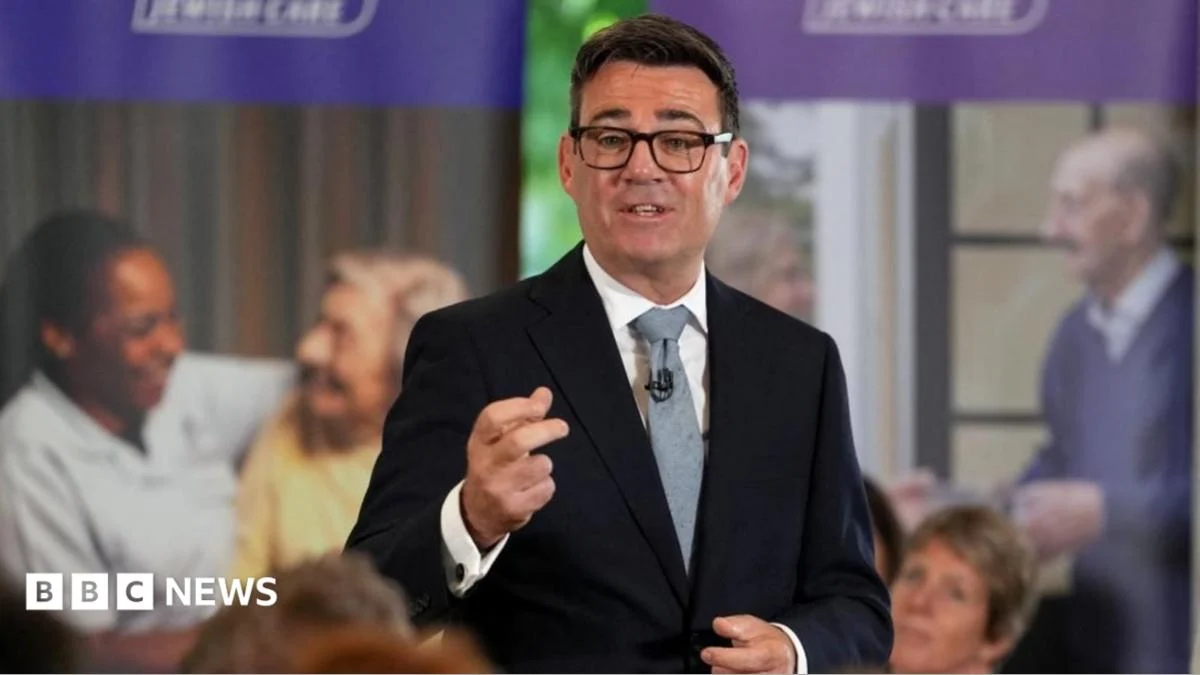
A key element of Burnham’s strategy is to forge cross-party consensus, a notoriously difficult feat in British politics, particularly on sensitive fiscal matters. He has already initiated preliminary discussions with the Liberal Democrats and Conservatives, aiming to garner their support for his vision. While Liberal Democrat leader Sir Ed Davey actively participated in these talks, the Conservative Party leader, Kemi Badenoch, was absent, represented instead by shadow health secretary Stuart Andrew. Andrew, in his remarks, underscored the need for any proposed reforms to be "backed by a clear, credible and fully costed plan that delivers better care for the public and value for taxpayers." This statement signals a cautious approach from the Conservatives, emphasizing fiscal responsibility and tangible benefits for the public purse.
Notably absent from Burnham’s initial round of discussions were the leaders of Reform UK and the Green Party of England and Wales. Both parties have publicly voiced their disappointment at this exclusion, suggesting that a truly comprehensive and collaborative approach requires broader engagement. Burnham’s justification for focusing on the larger parties appears rooted in the belief that achieving significant legislative change necessitates broad parliamentary backing.
Speaking at the care home, Burnham articulated a prevailing sentiment in Westminster: that the social care crisis is perceived as "too big a political risk" to address directly. He, however, has chosen to confront this challenge head-on, arguing that "the risks of failing to act are too great." He vividly illustrated the profound financial burden that care costs place on individuals and families, while simultaneously outlining the potential for significant savings and a strengthened National Health Service (NHS) through an integrated and effective social care system. The Prime Minister has also acknowledged the gravity of the situation, tasking Baroness Casey’s review with exploring funding mechanisms for a national care service and emphasizing the need for a system that is "highly integrated" with the NHS.
Burnham’s immediate priority, he stated, is to address the critical issues facing the social care workforce. He pointed to the impending fair pay agreement, scheduled to come into effect from 2028/29, as a "massive building block of a national care service." This agreement, he believes, will be instrumental in attracting and retaining skilled professionals, a vital component of any successful care model.
The concept of a universal social care system in England is not new for Andy Burnham. He first proposed such a system in 2009, during his tenure as health secretary under Prime Minister Gordon Brown. At that time, the proposal involved a compulsory levy to fund the system. The Brown government even floated the idea of allowing individuals to defer payment until after their death, a concept that was then derided by the Conservatives as a "death tax," highlighting the historical political sensitivities surrounding this issue.
During his press conference, Burnham was directly questioned about the prospect of tax rises in relation to his social care ambitions. He initially stressed the importance of maximizing existing resources, stating that the immediate issues he raised, particularly concerning the workforce, "will be fully funded." However, he did not shy away from the reality of more significant reforms. He acknowledged that "some of what we would want to do in the fuller sense will require difficult decisions but we will be honest with people about those, we will put them before the country at the right time, and we will hopefully proceed with people’s consent." This carefully worded response suggests a willingness to engage the public in a debate about the necessary sacrifices and to seek their mandate for any proposed tax increases.
Adult social care, as defined in the article, provides essential state support to enable individuals to live more independently, including assistance within their own homes. A crucial distinction between social care and the NHS is that the former is not free at the point of use. In England and Northern Ireland, individuals with savings exceeding £23,250 are ineligible for council assistance with care costs. Wales and Scotland operate under different eligibility criteria, underscoring the fragmented nature of social care provision across the UK.
Burnham was particularly critical of the current financial threshold for receiving social care support in England, likening its unfairness to the American healthcare system. He argued, "I think social care in England is as unfair as American healthcare. The vulnerable pay with everything and it can completely leave them with nothing." He lamented that the current savings threshold, which has been in place for an extended period, "common sense says it cannot be fair."
In an ideal scenario, Burnham expressed a strong desire to prevent individuals from being forced to sell their homes to finance their care, describing it as a "really awful process." He reiterated his previous proposals, which were designed to avert such a scenario. His vision is that "if everybody on the NHS principle contributed a little, it would mean everybody could protect the majority of what they’d worked for." He admitted that he is uncertain whether the public would embrace such an approach, suggesting that this is precisely the kind of question that needs to be addressed through public consultation.
Reflecting on the broader political landscape, Burnham highlighted the long history of inertia on this issue, noting that there have been "22 failed attempts to make progress in almost 30 years." He emphasized the necessity of finding common ground, stating, "We’re going to have to find common ground here if this is to be a lasting solution."
The political reaction to Burnham’s pronouncements has been swift and divided. Reform Treasury spokesman Robert Jenrick issued a stern warning, asserting, "Make no mistake, today Andy Burnham fired the starting gun on his scheme to raid the little money that hundreds of thousands of regular people have struggled to save over their lifetimes. That’s why he can’t rule out the new universal death tax." This statement clearly frames Burnham’s proposals as a threat to personal savings and resurrects the controversial "death tax" label.
Green Party social care spokesperson Ellie Chowns echoed the sentiment of exclusion, stating, "If Andy Burnham is serious about doing things differently and tackling the crisis in care, he must work collaboratively with the Greens and other parties to do so." This underscores the desire for a more inclusive approach to tackling the social care crisis, suggesting that a broader coalition of political forces might be necessary to achieve meaningful progress. The debate over how to fund social care remains a complex and politically charged issue, with Andy Burnham’s latest intervention signaling a renewed push for significant reform, even if it means venturing into potentially unpopular territory regarding taxation.



 Nakalama John
 George Anjay
 Ramos Leo
 atisusanti